
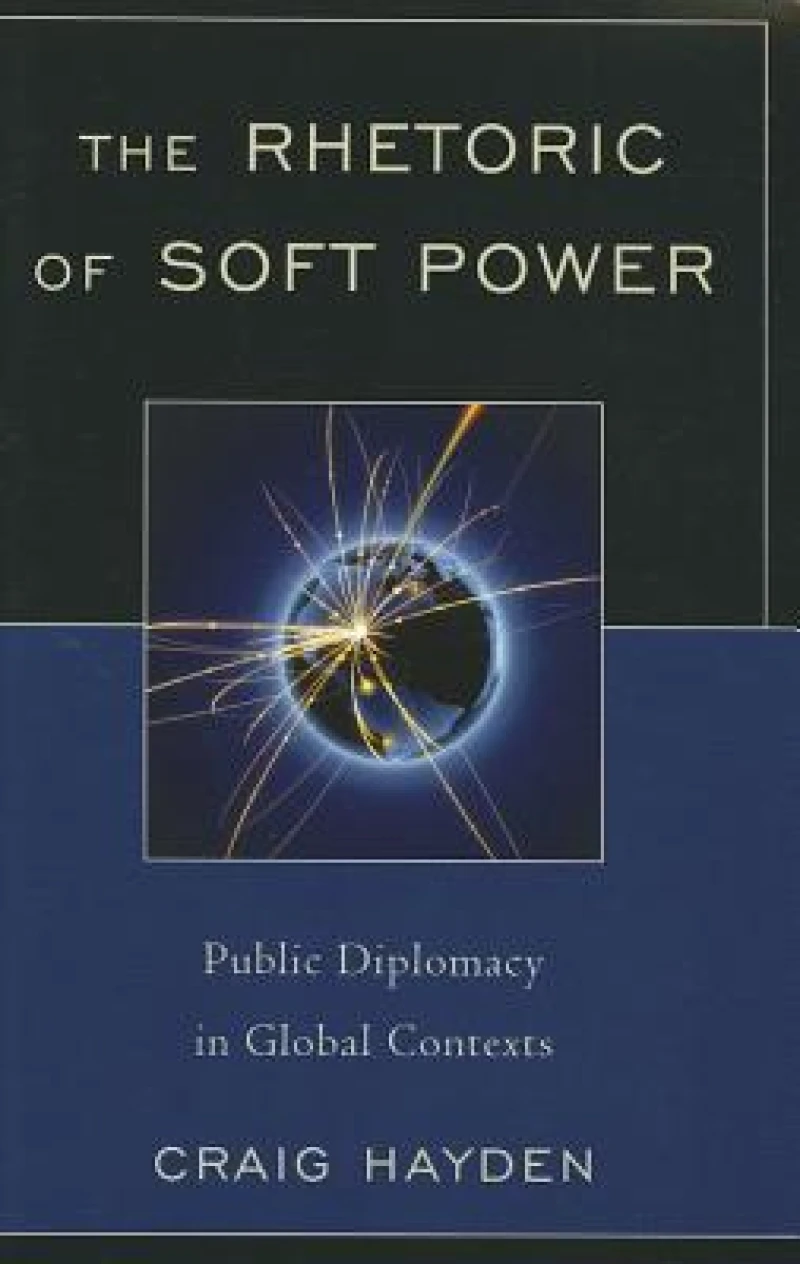
The Rhetoric of Soft Power : Public Diplomacy in Global Contexts
by
Craig Hayden
Book Details
Format
Paperback / Softback
Book Series
Lexington Studies in Political Communication
ISBN-10
0739142593
ISBN-13
9780739142592
Publisher
Bloomsbury Publishing Plc
Imprint
Lexington Books
Country of Manufacture
GB
Country of Publication
GB
Publication Date
Dec 21st, 2011
Print length
308 Pages
Weight
446 grams
Dimensions
22.70 x 16.40 x 2.50 cms
Product Classification:
Semantics, discourse analysis, etcInternational relationsDiplomacyWarfare & defence
Ksh 9,950.00
Manufactured on Demand
0 in stock
Delivery Location
Delivery fee: Select location
Secure
Quality
Fast
The Rhetoric of Soft Power: Public Diplomacy in Global Contexts provides a comparative assessment of public diplomacy and strategic communication initiatives, in order to portray how Joseph Nye’s notion of “soft power” has translated into context-specific strategies of international influence. The book examines four cases – Japan, Venezuela, China, and the United States – to illuminate the particular significance of culture, foreign publics, and communication technologies for the foreign policy ambitions of each country. The book explores the notion of soft power as set of theoretical arguments about power, and as a reflection of how each country perceives what is an increasingly necessary perspective on international relations in an age of ubiquitous global communication flows and encroaching networks of non-state actors. Soft power is discussed a means by which public diplomacy is justified and in the process, reflects arguments for how each state sees what is possible through soft power. Through an interpretive analysis of policy discourse, public diplomacy initiatives and related programs of strategic influence – soft power in each case represents a localized formation of assumptions about the requirements of persuasion, the relevance of foreign audiences to state goals, and the perception of what counts as a soft power resource. As the book demonstrates, each country articulates perspectives that challenge the universality of the soft power concept. Soft power has grown to be truly global concept that foregrounds the significance of international communication; soft power is a hybrid concept that retains the basic idea that international objectives can be achieved through non-coercive means, yet is inevitably refracted through the prism of local strategic concerns and history. The book contributes to the growing interdisciplinary community of scholars interested in soft power, public diplomacy, and international strategic communication. It provides an unprecedented comparative investigation of the relationship between soft power and public diplomacy.
The Rhetoric of Soft Power: Public Diplomacy in Global Contexts provides a comparative assessment of public diplomacy and strategic communication initiatives, in order to portray how Joseph Nye’s notion of “soft power” has translated into context-specific strategies of international influence. The book examines four cases – Japan, Venezuela, China, and the United States – to illuminate the particular significance of culture, foreign publics, and communication technologies for the foreign policy ambitions of each country. The book explores the notion of soft power as set of theoretical arguments about power, and as a reflection of how each country perceives what is an increasingly necessary perspective on international relations in an age of ubiquitous global communication flows and encroaching networks of non-state actors. Soft power is discussed a means by which public diplomacy is justified and in the process, reflects arguments for how each state sees what is possible through soft power. Through an interpretive analysis of policy discourse, public diplomacy initiatives and related programs of strategic influence – soft power in each case represents a localized formation of assumptions about the requirements of persuasion, the relevance of foreign audiences to state goals, and the perception of what counts as a soft power resource. As the book demonstrates, each country articulates perspectives that challenge the universality of the soft power concept. Soft power has grown to be truly global concept that foregrounds the significance of international communication; soft power is a hybrid concept that retains the basic idea that international objectives can be achieved through non-coercive means, yet is inevitably refracted through the prism of local strategic concerns and history. The book contributes to the growing interdisciplinary community of scholars interested in soft power, public diplomacy, and international strategic communication. It provides an unprecedented comparative investigation of the relationship between soft power and public diplomacy.
Get The Rhetoric of Soft Power by at the best price and quality guaranteed only at Werezi Africa's largest book ecommerce store. The book was published by Bloomsbury Publishing Plc and it has pages.

