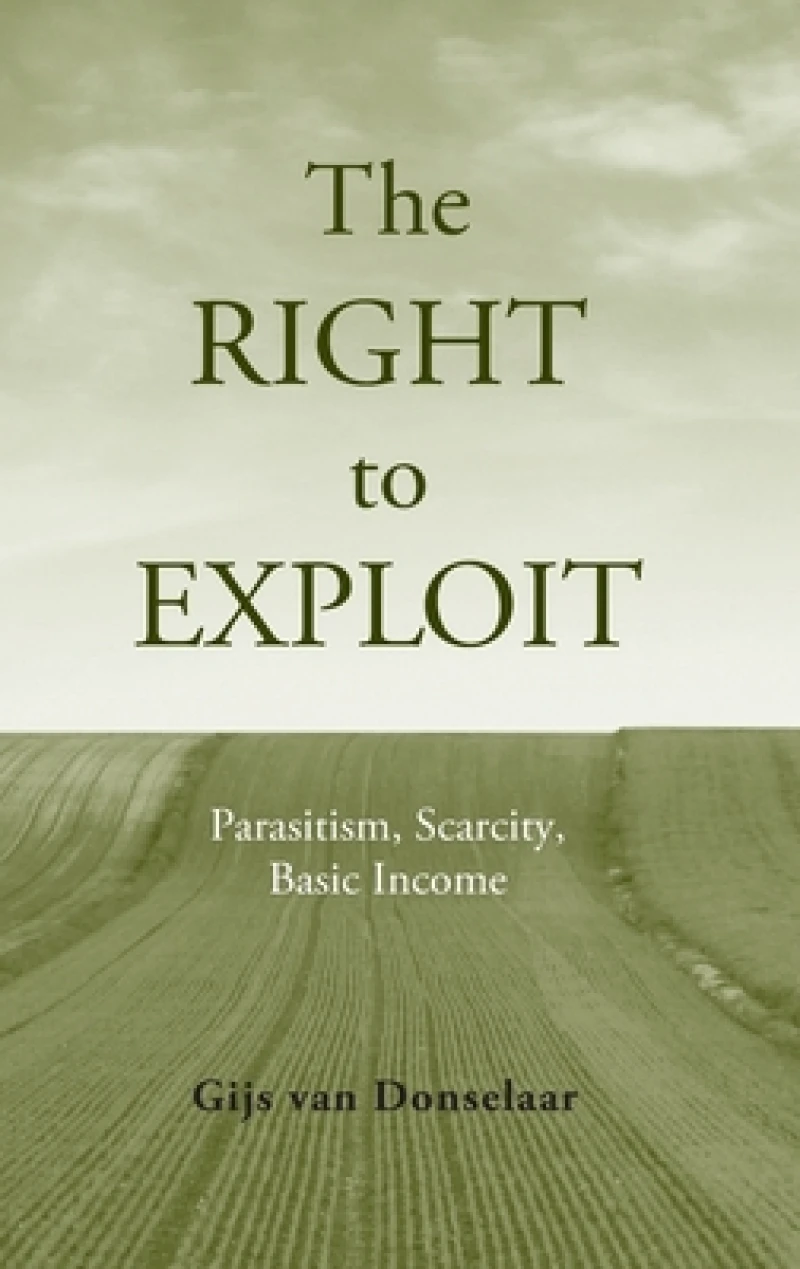
The Right to Exploit : Parasitism, Scarcity, and Basic Income
Book Details
Format
Hardback or Cased Book
ISBN-10
0195140397
ISBN-13
9780195140392
Publisher
Oxford University Press Inc
Imprint
Oxford University Press Inc
Country of Manufacture
GB
Country of Publication
GB
Publication Date
Sep 10th, 2009
Print length
208 Pages
Weight
344 grams
Dimensions
21.70 x 13.90 x 1.40 cms
Product Classification:
Social & political philosophyEconomic theory & philosophy
Ksh 17,450.00
Temporarily out of stock, due soon
0 in stock
Delivery Location
Delivery fee: Select location
Secure
Quality
Fast
This book explores how traditional theories of economic justice, both from the libertarian right and the egalitarian left, have failed to appreciate the objection against exploitative behavior that would be possible through the exercise of property rights. This failure also underlies the recent plea for a so-called unconditional basic income.
In 1895 an English farmer diverted the course of a stream that was flowing through his land, thereby cutting off the supply to the water reservoir of the neighboring community. The courts established that it had been his purpose to "injure the plaintiffs by carrying off the water and to compel them to buy him off." Regardless of what the law says, most people will feel that the farmer''s intentions were morally unjust; he was trying to abuse his property rights in order to take advantage of others. Yet, as Gijs van Donselaar explains, the major traditions in the theory of economic justice, both from the libertarian right and from the egalitarian left, have failed to appreciate the moral objection to exploitative behavior that this case displays. Those traditions entertain radically opposed views on how private property should be distributed, but they do not consider the legitimacy of constraints on the exercise of property rights-however they are distributed. The second part of the book demonstrates how this failure clears the way for a recent egalitarian argument, gaining in popularity, for a so-called unconditional basic income. If all have an initial right to an equal share of the resources of the world, then it soon seems to follow that all have a right to an equal share of the value of the resources of the world, which could be cashed in as a labor-free income. That inference is only valid if moral behavior similar to that of the farmer is tolerated. Van Donselaar argues that, ultimately, a confusion about the nature and value of freedom of choice is responsible for the odd conception of private rights in resources that would justify exploitation.
Get The Right to Exploit by at the best price and quality guaranteed only at Werezi Africa's largest book ecommerce store. The book was published by Oxford University Press Inc and it has pages.