
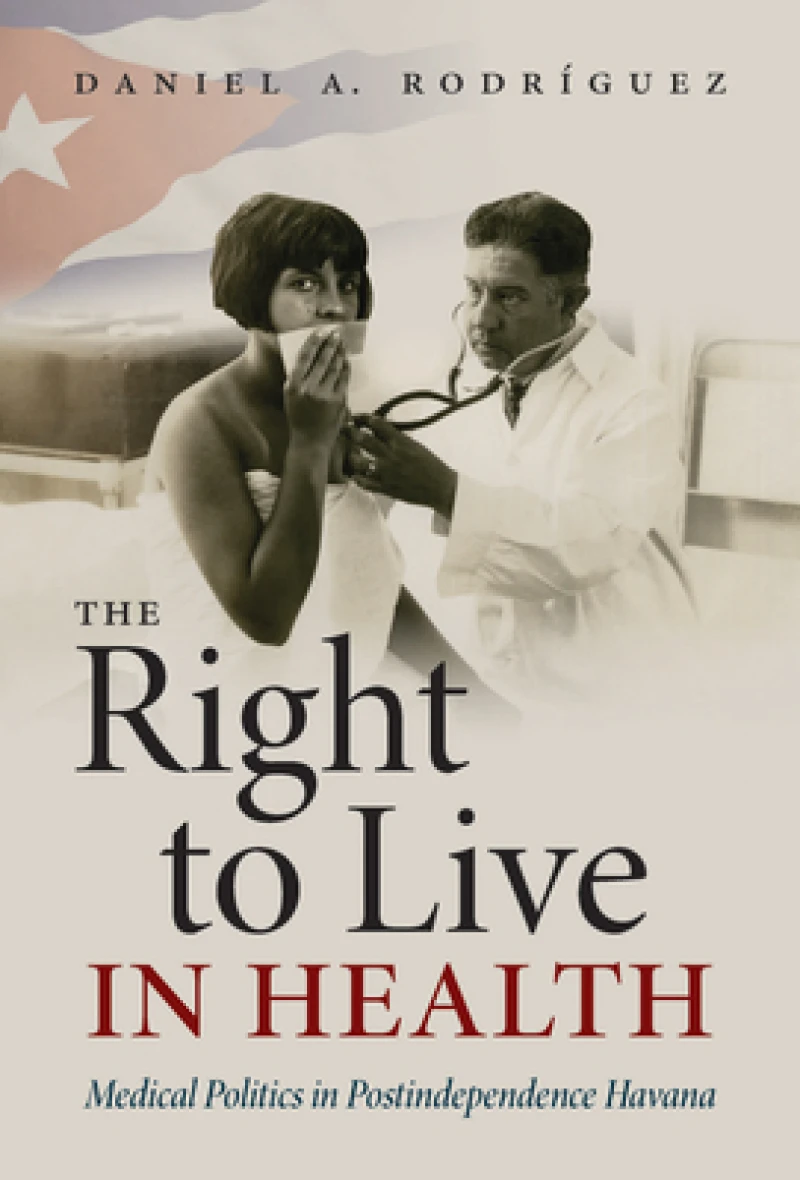
The Right to Live in Health : Medical Politics in Postindependence Havana
Book Details
Format
Hardback or Cased Book
Book Series
Envisioning Cuba
ISBN-10
1469659727
ISBN-13
9781469659725
Publisher
The University of North Carolina Press
Imprint
The University of North Carolina Press
Country of Manufacture
US
Country of Publication
GB
Publication Date
Aug 31st, 2020
Print length
288 Pages
Weight
585 grams
Dimensions
23.30 x 15.50 x 2.00 cms
Ksh 15,100.00
Werezi Extended Catalogue
0 in stock
Delivery Location
Delivery fee: Select location
Secure
Quality
Fast
This history of a newly independent Cuba shaking off the US occupation focuses on the intersection of public health and politics in Havana. While medical policies were often used to further American colonial power, in Cuba they evolved into important expressions of anticolonial nationalism as Cuba struggled to establish itself as a modern state.
Daniel A. Rodriguez's history of a newly independent Cuba shaking off the U.S. occupation focuses on the intersection of public health and politics in Havana. While medical policies were often used to further American colonial power, in Cuba, Rodriguez argues, they evolved into important expressions of anticolonialnationalismas Cuba struggled to establish itself as a modern state. A younger generation of Cuban medical reformers, including physicians, patients, and officials, imagined disease as a kind of remnant of colonial rule. These new medical nationalists, as Rodriguez calls them, looked to medical science to guide Cuba toward what they envisioned as a healthy and independent future.
Rodriguez describes how medicine and new public health projects infused republican Cuba's statecraft, powerfully shaping the lives of Havana's residents. He underscores how various stakeholders, including women and people of color, demanded robust government investment in quality medical care for all Cubans, a central national value that continues today. On a broader level, Rodriguez proposes that Latin America, at least as much as the United States and Europe, was an engine for the articulation of citizens' rights, including the right to health care, in the twentieth century.
Rodriguez describes how medicine and new public health projects infused republican Cuba's statecraft, powerfully shaping the lives of Havana's residents. He underscores how various stakeholders, including women and people of color, demanded robust government investment in quality medical care for all Cubans, a central national value that continues today. On a broader level, Rodriguez proposes that Latin America, at least as much as the United States and Europe, was an engine for the articulation of citizens' rights, including the right to health care, in the twentieth century.
Get The Right to Live in Health by at the best price and quality guaranteed only at Werezi Africa's largest book ecommerce store. The book was published by The University of North Carolina Press and it has pages.

