
Cart 0
The Road to Canada
Click to zoom

Share this book

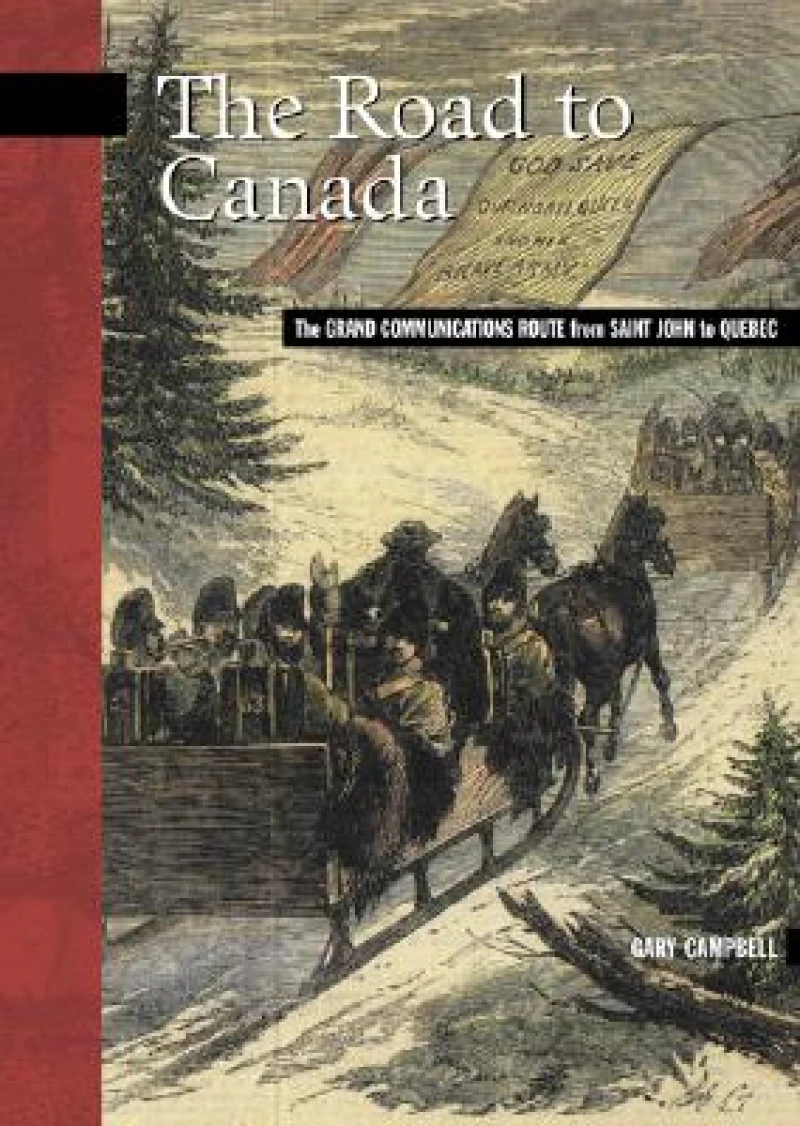
The Road to Canada : The Grand Communications Route from Saint John to Quebec

Book Details

Format Paperback / Softback
ISBN-10 0864924267
ISBN-13 9780864924261
Publisher Goose Lane Editions
Imprint Goose Lane Editions
Country of Manufacture CA
Country of Publication GB
Publication Date May 13th, 2005
Print length 120 Pages
Weight 134 grams
Dimensions 19.70 x 14.00 x 0.70 cms
Product Classification: History of the AmericasMilitary history
Ksh 2,500.00
Werezi Extended Catalogue Delivery in 28 days

Delivery Location

Delivery fee: Select location

Delivery in 28 days

Secure
Quality
Fast
Since the last Ice Age, the only safe route into Canada's interior during the winter started at the Bay of Fundy and followed the main rivers north to the St. Lawrence River through what is now New Brunswick. Aboriginal people used this route as a major highway in all seasons and the great imperial powers followed their lead. The Grand Communications Route, as it was then called, was the only conduit for people, information and goods passing back and forth between the interior settlements and the wider world and became the backbone of empire for both England and France in their centuries of warfare over this territory. It was Joseph Robineau de Villebon, a commandant in Acadie, who first made strategic use of the route in time of war because he understood its importance in the struggle for North America. A strategic link between the Atlantic colonies and Quebec, the French made extensive use of the route to communicate and move troops between the northern settlements and Fort Beauséjour, Louisbourg, and Port-Royal. The British put great effort into maintaining and fortifying the route, building major coastal forts at Saint John to guard its entrance and erecting garrisons and blockhouses all along the way to the St Lawrence, first as a defence against the French and then to ward off the Americans. The route also played a key role in the American Revolution as well as the Aroostook War of 1839 that saw bodies of troops lining each side of the border extending from St. Andrews (NB) and Calais (ME) to Madawaska. In 1842, the Grand Communications Route and the Webster-Ashburton Treaty determined the location of the Canada—US border. It is still in use today: the Trans-Canada Highway and Route 7 follow its path. As well as telling the story of the Grand Communications Route from the earliest human habitation of the area, The Road to Canada describes the historic sites, forts, blockhouses and other historic remains that can still be visited today, including Martello Tower (Saint John), the Fort Hughes blockhouse (Oromocto), the Fort Fairfield blockhouse (Fort Fairfield, ME), Le Fortin du Petit-Sault (Edmundston), the Fort Kent blockhouse (Fort Kent, ME) and Fort Ingall (Cabano, QC). The Road to Canada is volume 5 in the New Brunswick Military Heritage Series.

Since the last Ice Age, the only safe route into Canada''s interior during the winter started at the Bay of Fundy and followed the main rivers north to the St. Lawrence River through what is now New Brunswick. Aboriginal people used this route as a major highway in all seasons and the great imperial powers followed their lead.

The Grand Communications Route, as it was then called, was the only conduit for people, information and goods passing back and forth between the interior settlements and the wider world and became the backbone of empire for both England and France in their centuries of warfare over this territory. It was Joseph Robineau de Villebon, a commandant in Acadie, who first made strategic use of the route in time of war because he understood its importance in the struggle for North America. A strategic link between the Atlantic colonies and Quebec, the French made extensive use of the route to communicate and move troops between the northern settlements and Fort Beauséjour, Louisbourg, and Port-Royal. The British put great effort into maintaining and fortifying the route, building major coastal forts at Saint John to guard its entrance and erecting garrisons and blockhouses all along the way to the St Lawrence, first as a defence against the French and then to ward off the Americans.

The route also played a key role in the American Revolution as well as the Aroostook War of 1839 that saw bodies of troops lining each side of the border extending from St. Andrews (NB) and Calais (ME) to Madawaska. In 1842, the Grand Communications Route and the Webster-Ashburton Treaty determined the location of the Canada—US border.

It is still in use today: the Trans-Canada Highway and Route 7 follow its path. As well as telling the story of the Grand Communications Route from the earliest human habitation of the area, The Road to Canada describes the historic sites, forts, blockhouses and other historic remains that can still be visited today, including Martello Tower (Saint John), the Fort Hughes blockhouse (Oromocto), the Fort Fairfield blockhouse (Fort Fairfield, ME), Le Fortin du Petit-Sault (Edmundston), the Fort Kent blockhouse (Fort Kent, ME) and Fort Ingall (Cabano, QC).

The Road to Canada is volume 5 in the New Brunswick Military Heritage Series.


Get The Road to Canada by at the best price and quality guaranteed only at Werezi Africa's largest book ecommerce store. The book was published by Goose Lane Editions and it has pages.


Mind, Body, & Spirit

Price

Ksh 2,500.00

Shopping Cart

Africa largest book store

Sub Total:
Ebooks

Digital Library
Coming Soon

Our digital collection is currently being curated to ensure the best possible reading experience on Werezi. We'll be launching our Ebooks platform shortly.