
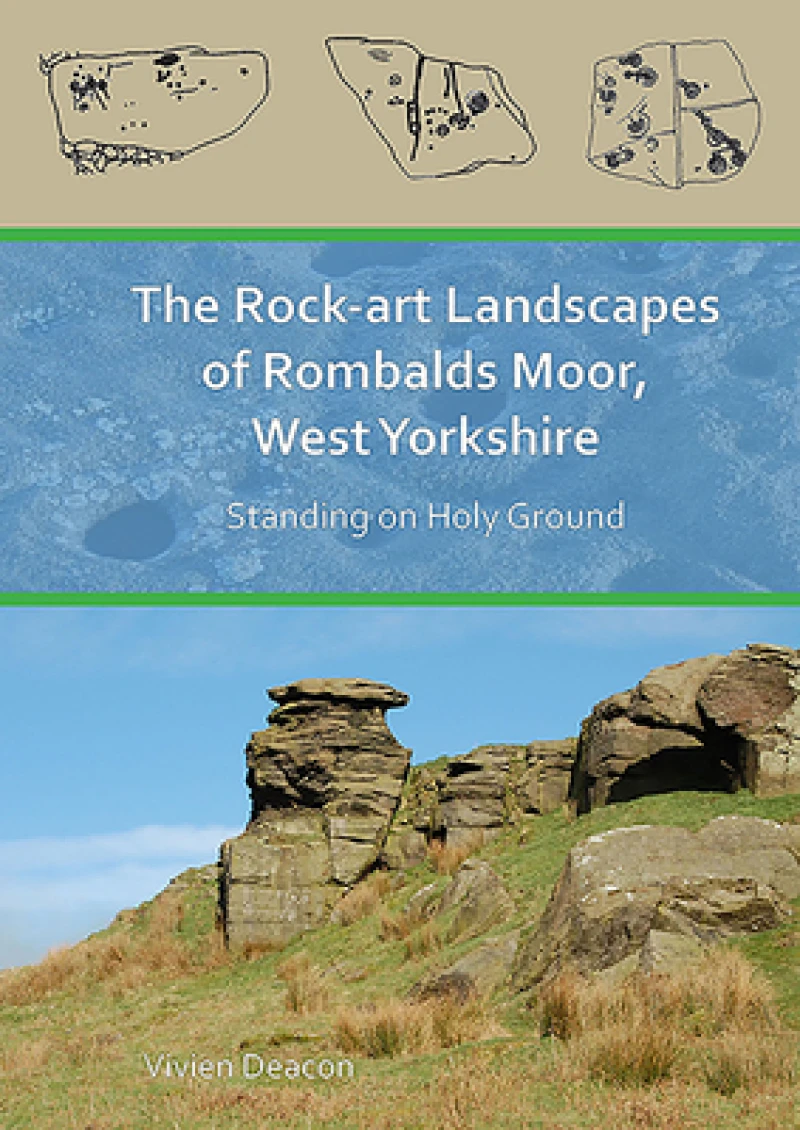
The Rock-Art Landscapes of Rombalds Moor, West Yorkshire : Standing on Holy Ground
Book Details
Format
Paperback / Softback
ISBN-10
1789694582
ISBN-13
9781789694581
Publisher
Archaeopress
Imprint
Archaeopress
Country of Manufacture
GB
Country of Publication
GB
Publication Date
Apr 30th, 2020
Print length
228 Pages
Weight
826 grams
Dimensions
20.40 x 29.00 x 3.60 cms
Product Classification:
History of art: pre-historyLandscape archaeology
Ksh 8,700.00
Publisher Out of Stock
0 in stock
Delivery Location
Delivery fee: Select location
Secure
Quality
Fast
This landscape study of the rock-art of Rombalds Moor, West Yorkshire, considers views of and from the sites. In an attempt to understand the rock-art landscapes of prehistory the study considered the environment of the moor and its archaeology along with the ethnography from the whole circumpolar region.
This landscape study of the rock-art of Rombalds Moor, West Yorkshire, considers views of and from the sites. In an attempt to understand the rock-art landscapes of prehistory the study considered the environment of the moor and its archaeology along with the ethnography from the whole circumpolar region.
All the rock-art sites were visited, and the sites, motifs and views recorded. The data was analysed at four spatial scales, from the whole moor down to the individual rock. Several large prominent and impressive carved rocks, interpreted as natural monuments, were found to feature in the views from many much smaller rock-art sites. Several clusters of rock-art sites were identified. An alignment was also identified, composed of carved stones perhaps moved into position. Other perhaps-moved carved stones were also identified. The possibility that far-distant views might be significant was also indicated by some of the findings.
The physicality of carving arose as a major theme. The natural monuments are all difficult or dangerous to carve; conversely, the more common, simple sites mostly required the carver to kneel or crouch down. This, unexpectedly for British rock-art, raises comparisons with some North American rock-art, where some highly visible sites were carved by religious specialists, and others, inconspicuous and much smaller, were carved by ordinary people.
All the rock-art sites were visited, and the sites, motifs and views recorded. The data was analysed at four spatial scales, from the whole moor down to the individual rock. Several large prominent and impressive carved rocks, interpreted as natural monuments, were found to feature in the views from many much smaller rock-art sites. Several clusters of rock-art sites were identified. An alignment was also identified, composed of carved stones perhaps moved into position. Other perhaps-moved carved stones were also identified. The possibility that far-distant views might be significant was also indicated by some of the findings.
The physicality of carving arose as a major theme. The natural monuments are all difficult or dangerous to carve; conversely, the more common, simple sites mostly required the carver to kneel or crouch down. This, unexpectedly for British rock-art, raises comparisons with some North American rock-art, where some highly visible sites were carved by religious specialists, and others, inconspicuous and much smaller, were carved by ordinary people.
Get The Rock-Art Landscapes of Rombalds Moor, West Yorkshire by at the best price and quality guaranteed only at Werezi Africa's largest book ecommerce store. The book was published by Archaeopress and it has pages.

