
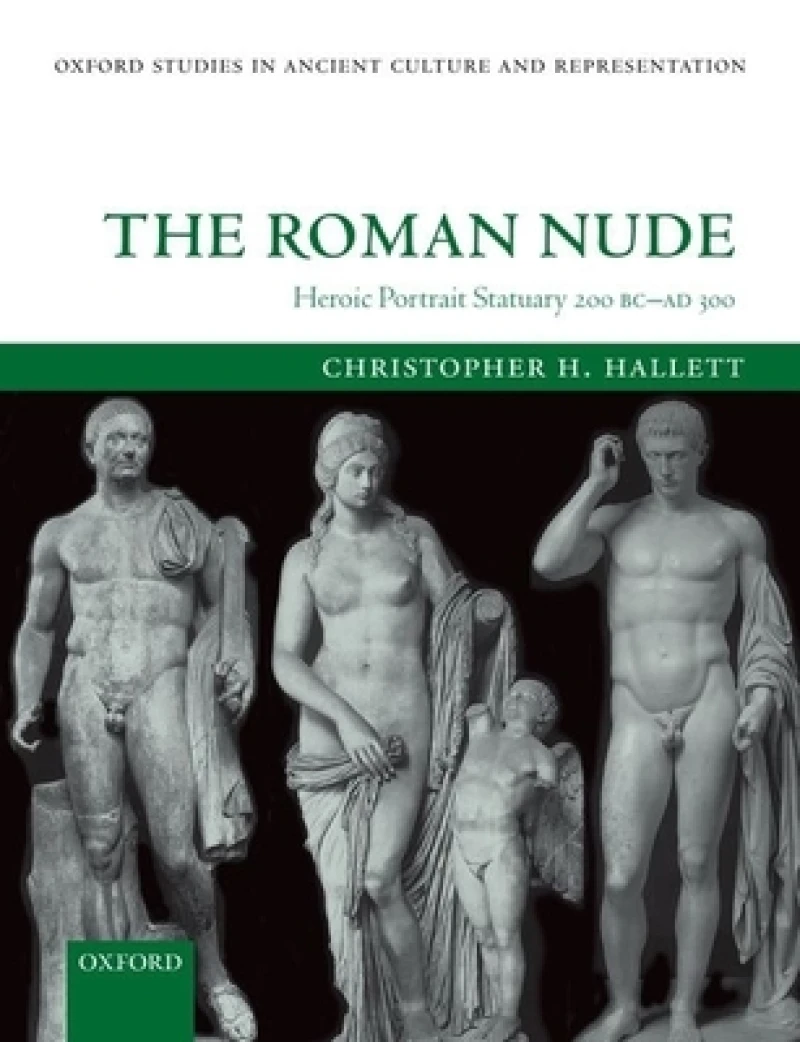
The Roman Nude : Heroic Portrait Statuary 200 BC - AD 300
Book Details
Format
Paperback / Softback
Book Series
Oxford Studies in Ancient Culture Representation
ISBN-10
019959970X
ISBN-13
9780199599707
Publisher
Oxford University Press
Imprint
Oxford University Press
Country of Manufacture
GB
Country of Publication
GB
Publication Date
Jan 20th, 2011
Print length
416 Pages
Weight
790 grams
Dimensions
24.50 x 18.90 x 2.20 cms
Product Classification:
Ancient RomeBCE period – ProtohistoryClassical styleHistory of art: ancient & classical art,BCE to c 500 CESculptureHistory of artLiterary studies: ancient, classical and medievalLiterary studies: classical, early & medievalEuropean historyAncient history: to c 500 CESocial & cultural historyAncient historyEuropean historySocial and cultural history
Ksh 14,950.00
Werezi Extended Catalogue
0 in stock
Delivery Location
Delivery fee: Select location
Secure
Quality
Fast
Nude statues of Roman emperors, generals, businessmen, and their wives survive from the ancient world in large numbers. This book explores the reasons why so many Romans chose to have themselves represented naked, and what this choice may tell us about Roman attitudes towards the self, the body, and personal identity.
Statues of important Romans frequently represented them nude. Men were portrayed naked holding weapons. The naked emperor might wield the thunderbolt of Jupiter, while Roman women assumed the guide of the nude love-goddess, Venus. When faced with these strange images, modern viewers are usually unsympathetic, finding them incongruous, even tasteless. They are mostly written off as just another example of Roman `bad taste''. This book offers a new approach. Comprehensively illustrated with black and white photographs of its subjects, it investigates how this tradition arose, and how the nudity of these portraits was meant to be understood by contemporary viewers. And, since the Romans also employed a range of costumes for their statues (toga, armour, Greek philosopher''s cloak), it asks, `What could the nude images express that other costumes could not?'' It is Christopher Hallett''s claim that - looked at in this way - these `Roman nudes'' turn out to be documents of the first importance for the cultural historian.
Get The Roman Nude by at the best price and quality guaranteed only at Werezi Africa's largest book ecommerce store. The book was published by Oxford University Press and it has pages.

