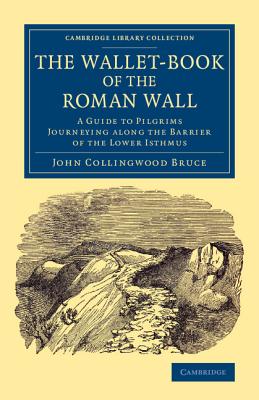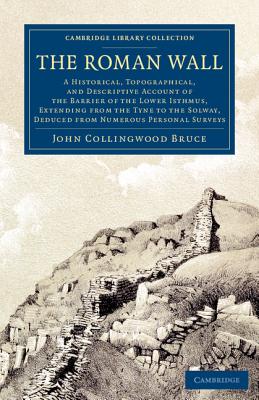
The Roman Wall : A Historical, Topographical, and Descriptive Account of the Barrier of the Lower Isthmus, Extending from the Tyne to the Solway, Deduced from Numerous Personal Surveys
Book Details
Format
Paperback / softback
Book Series
Cambridge Library Collection - Archaeology
ISBN-10
1108080642
ISBN-13
9781108080644
Publisher
Cambridge University Press
Imprint
Cambridge University Press
Country of Manufacture
GB
Country of Publication
GB
Publication Date
Dec 18th, 2014
Print length
540 Pages
Weight
704 grams
Dimensions
21.60 x 14.20 x 3.30 cms
Product Classification:
Archaeology by period / regionArchaeology by period / region
KSh 8,250.00
Currently unavailable
0 in stock
Delivery Location
Delivery fee: Select location
Secure
Quality
Fast
This 1851 work uses both the writings of medieval and recent historians, and the author's own and others' field surveys and excavations to describe the route of Hadrian's Wall, and the Roman artefacts discovered around it, which give insights into the lives of the soldiers stationed at this northern outpost.
Brought up in Newcastle-upon-Tyne, John Collingwood Bruce (1805–92) was fascinated by the antiquities of the north of England, and made an especial study of the impressive ruins of the 'Roman Wall'. He published this work in 1851, using both the writings of medieval and recent historians, and his own and others' field surveys and excavations. It describes the route of the wall from the Solway to Wallsend, and the surviving structures such as forts and milecastles along its length. Bruce also discusses and illustrates the Roman artefacts discovered around the wall, from pottery and nails to funerary monuments, which give insights into the lives of the soldiers from across the Roman empire who were stationed at this northern outpost. His argument that Hadrian was the builder of the wall reminds us that, until the mid-nineteenth century, it was thought to have been the idea of the later emperor Septimius Severus.
Get The Roman Wall by John Collingwood Bruce at the best price and quality guaranteed only at Werezi Africa's largest book ecommerce store. The book was published by Cambridge University Press and it has 540 pages.
Customers Who Bought This Also Bought
Andean Expressions
KSh 6,350.00

Forgotten
KSh 2,000.00
Ocmulgee Archaeology, 1936-1986
KSh 6,700.00
Mound Sites of the Ancient South
KSh 7,950.00
The Limits of Tyranny
KSh 11,500.00
Conquistador’s Wake
KSh 22,600.00
The Ancient Maya, 6th Edition
KSh 7,400.00
The Punic Mediterranean
KSh 21,600.00
The Palace of Minos
KSh 14,250.00
The Penetration of Arabia
KSh 8,300.00
Chogha Mish, Volume 2
KSh 15,300.00
A Primer of Assyriology
KSh 3,800.00