
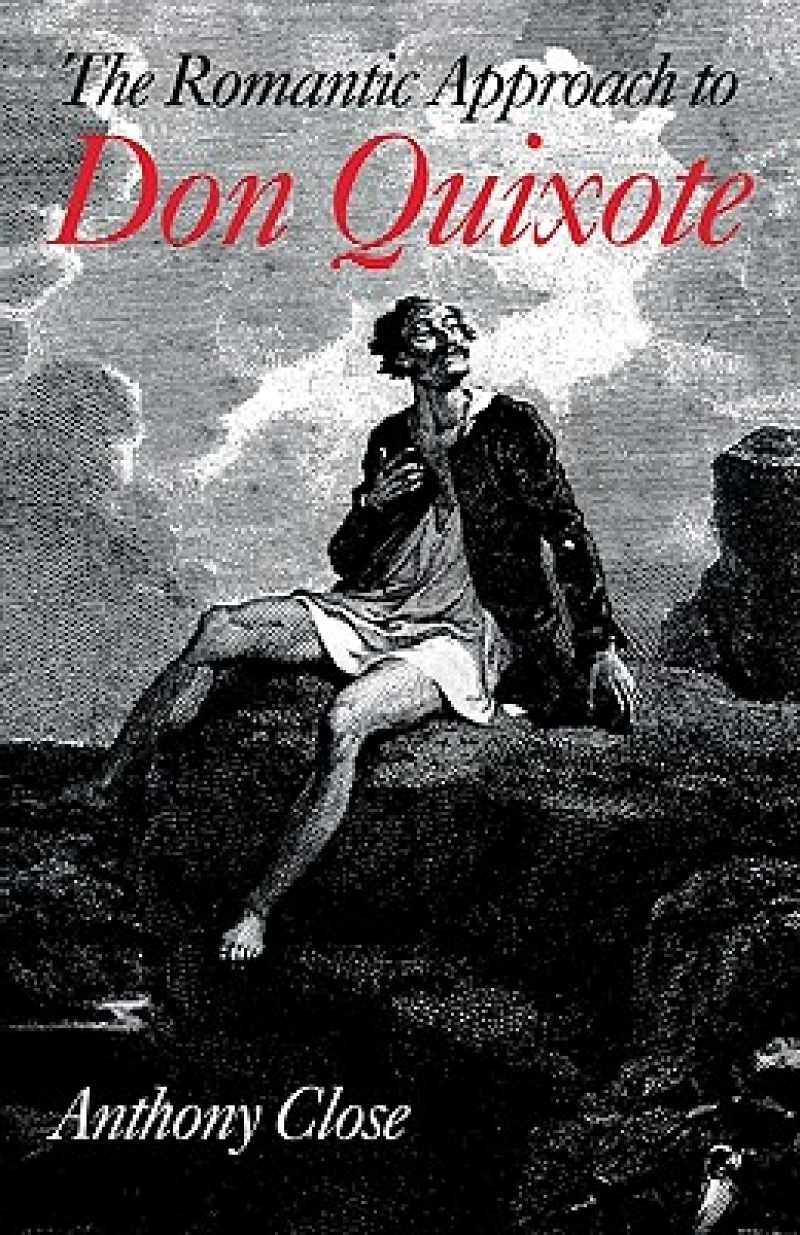
The Romantic Approach to ''Don Quixote'' : A Critical History of the Romantic Tradition in 'Quixote' Criticism
Book Details
Format
Paperback / Softback
ISBN-10
052114258X
ISBN-13
9780521142588
Publisher
Cambridge University Press
Imprint
Cambridge University Press
Country of Manufacture
GB
Country of Publication
GB
Publication Date
Apr 8th, 2010
Print length
300 Pages
Weight
396 grams
Dimensions
21.70 x 13.90 x 1.50 cms
Product Classification:
Literary studies: general
Ksh 7,550.00
Manufactured on Demand
0 in stock
Delivery Location
Delivery fee: Select location
Secure
Quality
Fast
Dr Close clarifies the complex reasons which have led Spaniards to see Don Quixote as a symbol of their cultural history and identity, and reveals how preoccupation with Spain's decadence has coloured the interpretation of the national classic by leading Spanish critics, scholars and philosophers.
Don Quixote has been widely read and discussed outside Spain. Interpreted before 1800 as a burlesque of chivalric romances, and implicitly described as such by Cervantes himself, it was given a sentimentalised and seriously philosophical interpretation by the German Romantics. Dr Close is essentially concerned with the question why this unhistorical and subjective reading of the novel prevailed, first in Europe, then in Spain. He examines the stages by which, from 1860, it progressively supplanted in Spain the hitherto dominant neo-classical interpretation, and shows how this process kept pace with increasing identification with movements of intellectual history, aesthetics, literary criticism and scholarship in Europe. He clarifies the complex reasons which have led Spaniards to see Don Quixote as a symbol of their cultural history and identity, and reveals how preoccupation with Spain's decadence has coloured the interpretation of the national classic by leading Spanish critics, scholars and philosophers.
Get The Romantic Approach to ''Don Quixote'' by at the best price and quality guaranteed only at Werezi Africa's largest book ecommerce store. The book was published by Cambridge University Press and it has pages.

