
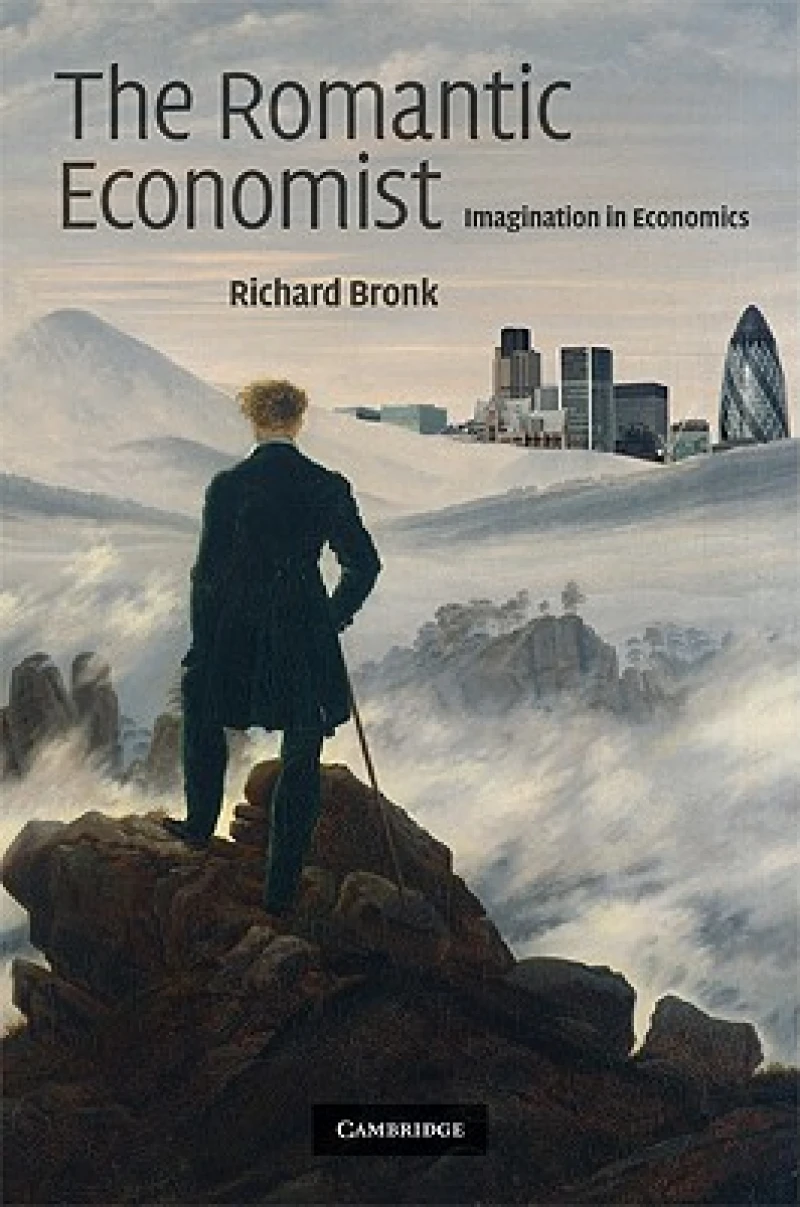
The Romantic Economist : Imagination in Economics
Book Details
Format
Hardback or Cased Book
ISBN-10
0521513847
ISBN-13
9780521513845
Publisher
Cambridge University Press
Imprint
Cambridge University Press
Country of Manufacture
GB
Country of Publication
GB
Publication Date
Feb 5th, 2009
Print length
402 Pages
Weight
720 grams
Dimensions
16.10 x 23.60 x 2.90 cms
Product Classification:
Economic theory & philosophyEconomic theory and philosophy
Ksh 13,850.00
Manufactured on Demand
0 in stock
Delivery Location
Delivery fee: Select location
Secure
Quality
Fast
Since economies are dynamic processes driven by creativity, social norms, and emotions as well as rational calculation, why do economists largely study them using static equilibrium models and narrow rationalistic assumptions? This book argues that economists should look for new techniques in Romantic poetry and philosophy.
Since economies are dynamic processes driven by creativity, social norms, and emotions as well as rational calculation, why do economists largely study them using static equilibrium models and narrow rationalistic assumptions? Economic activity is as much a function of imagination and social sentiments as of the rational optimisation of given preferences and goods. In this book, Richard Bronk argues that economists can best model and explain these creative and social aspects of markets by using new structuring assumptions and metaphors derived from the poetry and philosophy of the Romantics. By bridging the divide between literature and science, and between Romanticism and narrow forms of Rationalism, economists can access grounding assumptions, models, and research methods suitable for comprehending the creativity and social dimensions of economic activity. This is a guide to how economists and other social scientists can broaden their analytical repertoire to encompass the vital role of sentiments, language, and imagination.
Get The Romantic Economist by at the best price and quality guaranteed only at Werezi Africa's largest book ecommerce store. The book was published by Cambridge University Press and it has pages.

