
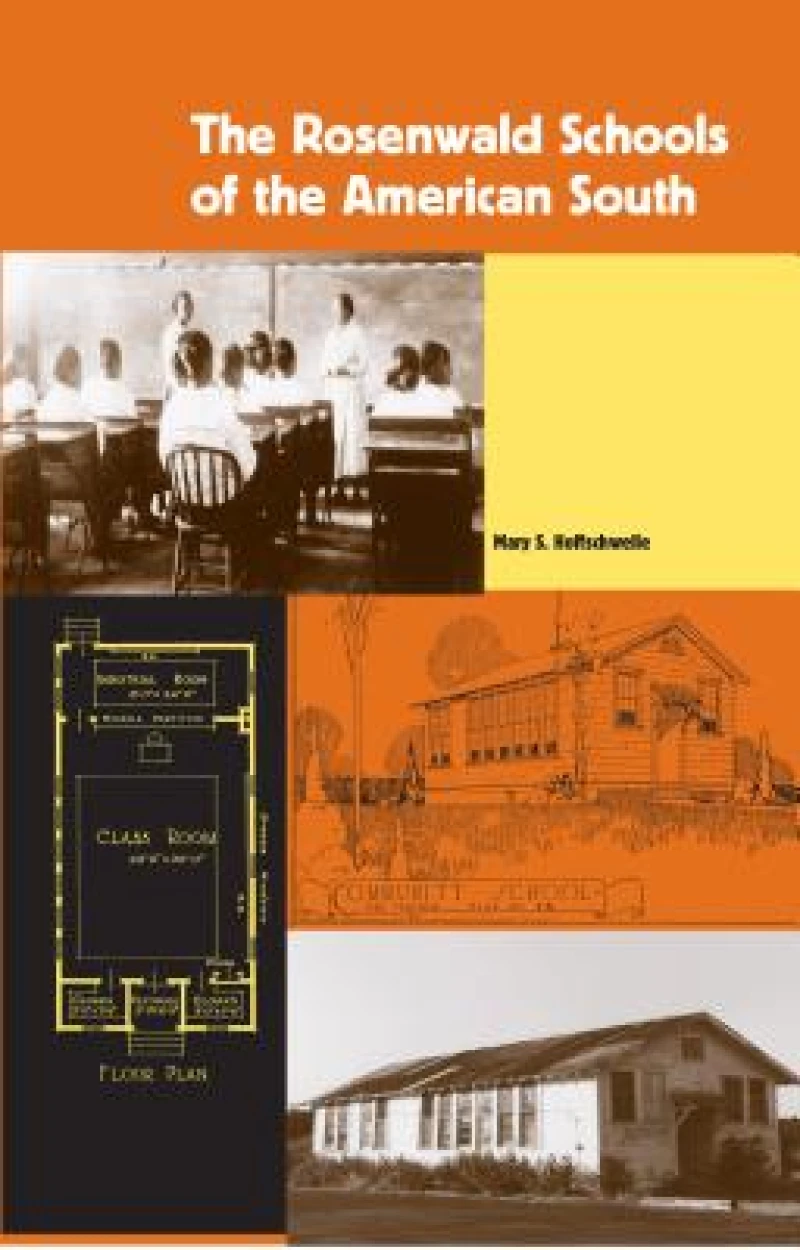
The Rosenwald Schools of the American South
Book Details
Format
Paperback / Softback
Book Series
New Perspectives on the History of the South
ISBN-10
0813060338
ISBN-13
9780813060330
Publisher
University Press of Florida
Imprint
University Press of Florida
Country of Manufacture
US
Country of Publication
GB
Publication Date
Aug 31st, 2014
Print length
432 Pages
Weight
333 grams
Dimensions
22.80 x 15.20 x 2.40 cms
Product Classification:
Social & cultural historyEthnic studies / EthnicityEthnic studiesSocial and cultural history
Ksh 4,650.00
Temporarily out of stock, due soon
0 in stock
Delivery Location
Delivery fee: Select location
Secure
Quality
Fast
"What a story! African American grassroots activists hungry for education, a generous gift from the Jewish CEO of mass-merchant Sears, Roebuck, public-private partnerships forged with white officials in thousands of counties across 15 southern states. Mary Hoffschwelle brings us a forgotten story of sacrifice and hope from the darkest days of early-twentieth century segregation."--Tom Hanchett, Levine Museum of the New SouthHoffschwelle tells the story of a remarkable partnership to build model schools for black children during the Jim Crow era in the South. The Rosenwald program, which erected more than 5,300 schools and auxiliary buildings between 1912 and 1932, began with Booker T. Washington, then principal of Tuskegee Institute, who turned for financing to Julius Rosenwald, president of Sears, Roebuck & Company. By requiring communities to raise matching funds, the two men inspired a grassroots movement that built schools in 15 southern states. The Rosenwald schools, scores of which still stand, exemplified the ideal educational environment--designed for efficiency, making full use of natural light to protect children''s eyesight, and providing sufficient space for learning. Ironically, these schools, which represented the social centers of their African American communities, also helped to set standards for white schools.Though the program''s funding ended with Rosenwald''s death in 1932, many continued as public institutions. The National Trust for Historic Preservation named Rosenwald Schools to its list of America''s Most Endangered Historic Places in 2002. Hoffschwelle examines these buildings as exemplars for school architecture and design, as community institutions and partnerships, and as a means of formalizing a state education program that, finally, would include black children. This story of extraordinary generosity and sacrifice will interest scholars of American and African-American history, educators, school planners, and preservationists. Mary S. Hoffschwelle is professor of history at Middle Tennessee State University.
Get The Rosenwald Schools of the American South by at the best price and quality guaranteed only at Werezi Africa's largest book ecommerce store. The book was published by University Press of Florida and it has pages.

