
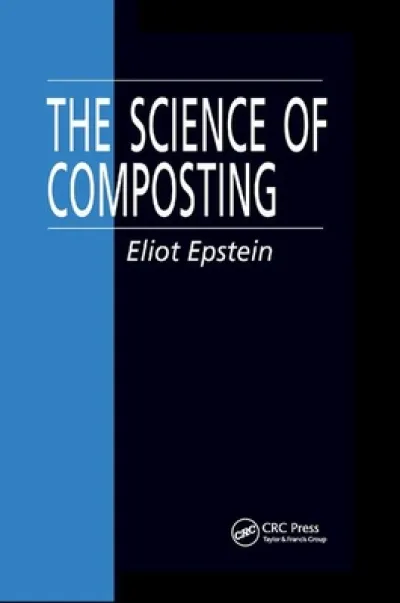
The Science of Composting
Book Details
Format
Paperback / Softback
ISBN-10
0367401126
ISBN-13
9780367401122
Publisher
Taylor & Francis Ltd
Imprint
CRC Press
Country of Manufacture
GB
Country of Publication
GB
Publication Date
Oct 7th, 2019
Print length
504 Pages
Weight
453 grams
Product Classification:
Waste management
Ksh 13,150.00
Werezi Extended Catalogue
0 in stock
Delivery Location
Delivery fee: Select location
Secure
Quality
Fast
Composting is the highest form of recycling and the reuse of resources. What greater benefit can be had by mankind to perpetuate the living soil, which provides us with sustenance, food, and life by returning and utilizing organic matter? What better utilization of organic wastes can be had than composting? This encyclopedic work provides comprehensive information on: the fundamentals: microbiology, biochemistry, physical/chemical aspects of composting; composting environmental and health issues; beneficial impacts of compost on soils; new and most effective compost uses; and Federal, State, and European government regulation of composting.
FROM THE PREFACE
The main objective of composting is to transform organic materials into a stable usable product. Often organic materials which may have limited beneficial use in their raw state or have regulatory disposal constraints can be transformed by composting into marketable products. The limits on beneficial reuse may be regulations or they may be due to the potential for materials to be putrescible or pathogenic. Composting can be a solution for each of these.
The implementation of composting on a large scale (in contrast to home or backyard composting) involves materials handling. Technological implementation of composting must be consistent with the biological demand of the system. If the biological system is violated, conditions will not be optimized for composting, and problems such as odor generation, insufficient aeration or moisture, or a combination of these conditions may result. Past problems and closure of facilities have been largely due to violations of the biological systems. Product quality with respect to particle size, inclusions, moisture content and other physical aspects are a function of engineering design. A well designed system must have the biological and engineering principles in harmony at all times.
The main objective of composting is to transform organic materials into a stable usable product. Often organic materials which may have limited beneficial use in their raw state or have regulatory disposal constraints can be transformed by composting into marketable products. The limits on beneficial reuse may be regulations or they may be due to the potential for materials to be putrescible or pathogenic. Composting can be a solution for each of these.
The implementation of composting on a large scale (in contrast to home or backyard composting) involves materials handling. Technological implementation of composting must be consistent with the biological demand of the system. If the biological system is violated, conditions will not be optimized for composting, and problems such as odor generation, insufficient aeration or moisture, or a combination of these conditions may result. Past problems and closure of facilities have been largely due to violations of the biological systems. Product quality with respect to particle size, inclusions, moisture content and other physical aspects are a function of engineering design. A well designed system must have the biological and engineering principles in harmony at all times.
Get The Science of Composting by at the best price and quality guaranteed only at Werezi Africa's largest book ecommerce store. The book was published by Taylor & Francis Ltd and it has pages.

