
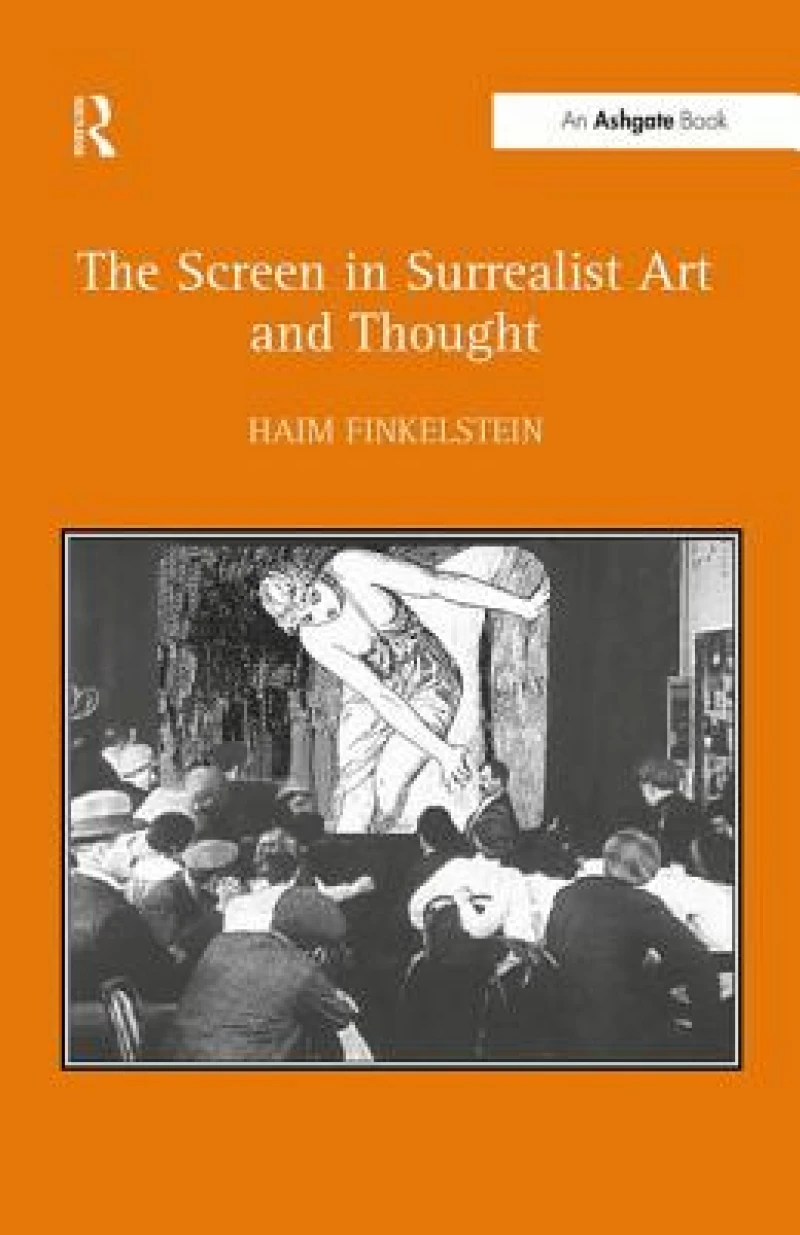
The Screen in Surrealist Art and Thought
Book Details
Format
Paperback / Softback
ISBN-10
1138275085
ISBN-13
9781138275089
Publisher
Taylor & Francis Ltd
Imprint
Routledge
Country of Manufacture
GB
Country of Publication
GB
Publication Date
Sep 9th, 2016
Print length
340 Pages
Weight
453 grams
Product Classification:
Art & design styles: Surrealism & DadaFilm theory & criticismLiterary studies: from c 1900 -
Ksh 11,350.00
Werezi Extended Catalogue
0 in stock
Delivery Location
Delivery fee: Select location
Secure
Quality
Fast
An interrogation of the notion of space in Surrealist theory and philosophy, this study analyzes the manifestations of space in Surrealist paintings and writings, with a specific focus on the "screen" as a spatial paradigm. Haim Finkelstein here extends discussion of the concepts at stake for Surrealist visual art into the context of literature and criticism. His study sheds new light on the way "film thinking" permeates Surrealist thought and aesthetics.
An interrogation of the notion of space in Surrealist theory and philosophy, this study analyzes the manifestations of space in the paintings and writings done in the framework of the Surrealist Movement. Haim Finkelstein introduces the ''screen'' as an important spatial paradigm that clarifies and extends the understanding of Surrealism as it unfolds in the 1920s, exploring the screen and layered depth as fundamental structuring principles associated with the representation of the mental space and of the internal processes that eventually came to be linked with the Surrealist concept of psychic automatism. Extending the discussion of the concepts at stake for Surrealist visual art into the context of film, literature and criticism, this study sheds new light on the way ''film thinking'' permeates Surrealist thought and aesthetics. In early chapters, Finkelstein looks at the concept of the screen as emblematic of a strand of spatial apprehension that informs the work of young writers in the 1920s, such as Robert Desnos and Louis Aragon. He goes on to explore the way the spatial character of the serial films of Louis Feuillade intimated to the Surrealists a related mode of vision, associated with perception of the mystery and the Marvelous lurking behind the surfaces of quotidian reality. The dialectics informing Surrealist thought with regard to the surfaces of the real (with walls, doors and windows as controlling images), are shown to be at the basis of André Breton''s notion of the picture as a window. Contrary to the traditional sense of this metaphor, Breton''s ''window'' is informed by the screen paradigm, with its surface serving as a locus of a dialectics of transparency and opacity, permeability and reflectivity. The main aesthetic and conceptual issues that come up in the consideration of Breton''s window metaphor lay the groundwork for an analysis of the work of Giorgio de Chirico, René Magritte, Max Ernst, André Masson, and Joan Miró. The concluding chapter considers several issues that dominate the Surrealist spatiality in the 1930s. Derived from the various spatial concepts associated with the screen paradigm, at times in contradistinction to them, these issues, as the author argues, reflect a gradual eclipse of the screen paradigm in the early years of the decade.
Get The Screen in Surrealist Art and Thought by at the best price and quality guaranteed only at Werezi Africa's largest book ecommerce store. The book was published by Taylor & Francis Ltd and it has pages.

