
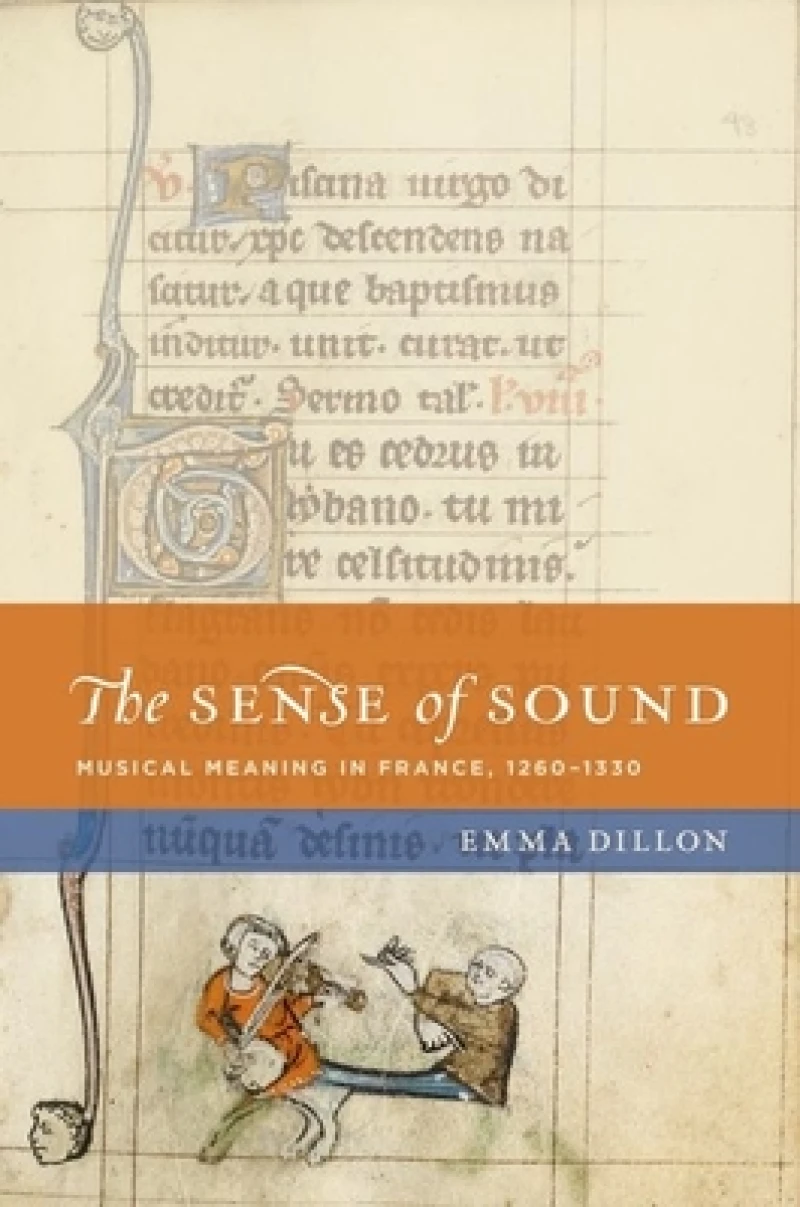
The Sense of Sound : Musical Meaning in France, 1260-1330
by
Emma Dillon
Book Details
Format
Hardback or Cased Book
Book Series
The New Cultural History of Music Series
ISBN-10
0199732957
ISBN-13
9780199732951
Publisher
Oxford University Press Inc
Imprint
Oxford University Press Inc
Country of Manufacture
US
Country of Publication
GB
Publication Date
May 31st, 2012
Print length
400 Pages
Weight
720 grams
Dimensions
23.60 x 16.40 x 3.20 cms
Product Classification:
Medieval & Renaissance music (c 1000 to c 1600)European historyMedieval history
Ksh 15,850.00
Manufactured on Demand
0 in stock
Delivery Location
Delivery fee: Select location
Secure
Quality
Fast
The Sense of Sound is a radical recontextualization of French song, 1260-1330. Situating musical sound against sonorities of the city, madness, charivari, and prayer, it argues that the effect of verbal confusion popular in music abounds with audible associations, and that there was meaning in what is often heard as nonsensical.
Among the most memorable innovations of music and poetry in thirteenth-century France was a genre that seemed to privilege sound over sense. The polytextual motet is especially well-known to scholars of the Middle Ages for its tendency to conceal complex allegorical meaning in a texture that, in performance, made words less, rather than more, audible. It is with such musical sound that this book is concerned. What did it mean to create a musical effect so potentially independent from the meaning of words? Is it possible such supermusical effects themselves had significance? The Sense of Sound offers a radical recontextualization of French song in the heyday of the motet c.1260-1330, and makes the case for listening to musical sound against a range of other potently meaningful sonorities, often premised on non-verbal meaning. In identifying new audible interlocutors to music, it opens our ears to a broad spectrum of sounds often left out of historical inquiry, from the hubbub of the medieval city; to the eloquent babble of madmen; to the violent clamor of charivari; to the charismatic chatter of prayer. Drawing on a rich array of artistic evidence (music, manuscripts, poetry, and images) and contemporary cultural theory, it locates musical production in this period within a larger cultural environment concerned with representing sound and its emotional, ethical, and social effects. In so doing, The Sense of Sound offers an experiment in how we might place central the most elusive aspect of music''s history: sound''s vibrating, living effect.
Get The Sense of Sound by at the best price and quality guaranteed only at Werezi Africa's largest book ecommerce store. The book was published by Oxford University Press Inc and it has pages.

