
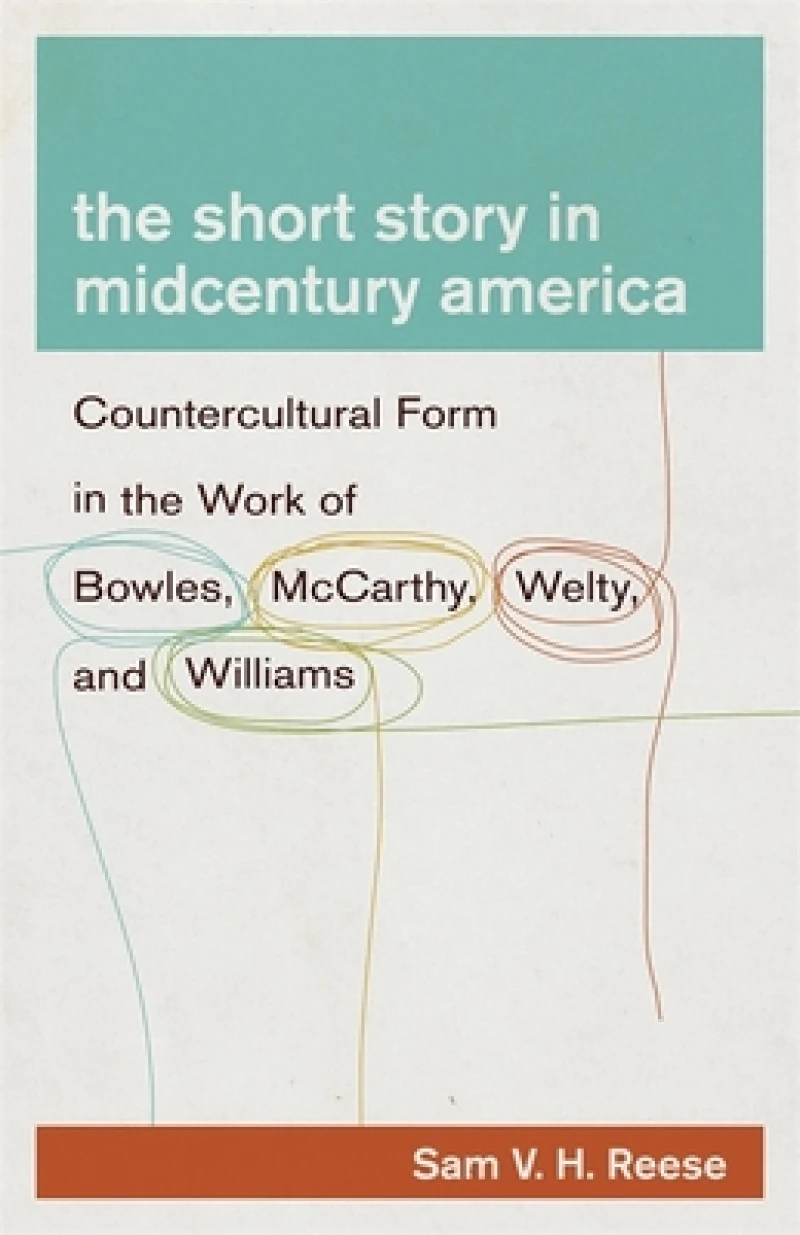
The Short Story in Midcentury America : Countercultural Form in the Work of Bowles, McCarthy, Welty, and Williams
Book Details
Format
Hardback or Cased Book
ISBN-10
080716576X
ISBN-13
9780807165768
Publisher
Louisiana State University Press
Imprint
Louisiana State University Press
Country of Manufacture
US
Country of Publication
GB
Publication Date
Jun 6th, 2017
Print length
224 Pages
Weight
418 grams
Dimensions
22.30 x 14.80 x 2.10 cms
Product Classification:
Literature: history & criticismLiterature: history and criticism
Ksh 6,250.00
Temporarily out of stock, due soon
0 in stock
Delivery Location
Delivery fee: Select location
Secure
Quality
Fast
Provides in-depth case studies of four major writers of the post-World War II era - Paul Bowles, Mary McCarthy, Eudora Welty, and Tennessee Williams - examining how they used the contained aesthetics of short fiction to map out an oppositional stance to the dominant narratives, both political and literary, of mid-twentieth century US culture.
The Short Story in Midcentury America provides in-depth case studies of four major writers of the post- World War II era- Paul Bowles, Mary McCarthy, Eudora Welty, and Tennessee Williams- examining how they used the contained aesthetics of short fiction to map out an oppositional stance to the dominant narratives, both political and literary, of mid-twentieth century U.S. culture.
Sam V. H. Reese presents a new understanding of the connections between politics, ideology, and literary form, arguing that writers employed the short story to critique the cultural mores of the early Cold War. The four authors under discussion found themselves socially marginalized by mainstream U.S. culture due to such factors as their gender, sexual orientation, religion, and foreign residence. Reese shows that each author embraced the short story's compressed form as a means of resisting political coercion and conformity, speaking out in support of freedom and open expression.
Reese argues that these four writers used the formal restrictions of the short story to develop a type of fiction that became recognizably countercultural, challenging the expansive, sprawling novels then receiving acclaim from critics. His analysis underscores the means by which each author's short stories utilized the aesthetic practices of mediums outside conventional narrative fiction: Bowles's career as a composer, McCarthy's criticism and memoirs, Williams's playwriting, and Welty's photography. By studying both their prose and its conceptualization, Reese reveals how writers resisted the political and stylistic pressures that defined U.S. literary culture in the early years of the Cold War.
In The Short Story in Midcentury America, Reese establishes a new framework for considering countercultural literature in the United States, reassessing the critical standing of the short story and re-evaluating the relationship between marginal social positions and literary form during the mid-twentieth century.
Sam V. H. Reese presents a new understanding of the connections between politics, ideology, and literary form, arguing that writers employed the short story to critique the cultural mores of the early Cold War. The four authors under discussion found themselves socially marginalized by mainstream U.S. culture due to such factors as their gender, sexual orientation, religion, and foreign residence. Reese shows that each author embraced the short story's compressed form as a means of resisting political coercion and conformity, speaking out in support of freedom and open expression.
Reese argues that these four writers used the formal restrictions of the short story to develop a type of fiction that became recognizably countercultural, challenging the expansive, sprawling novels then receiving acclaim from critics. His analysis underscores the means by which each author's short stories utilized the aesthetic practices of mediums outside conventional narrative fiction: Bowles's career as a composer, McCarthy's criticism and memoirs, Williams's playwriting, and Welty's photography. By studying both their prose and its conceptualization, Reese reveals how writers resisted the political and stylistic pressures that defined U.S. literary culture in the early years of the Cold War.
In The Short Story in Midcentury America, Reese establishes a new framework for considering countercultural literature in the United States, reassessing the critical standing of the short story and re-evaluating the relationship between marginal social positions and literary form during the mid-twentieth century.
Get The Short Story in Midcentury America by at the best price and quality guaranteed only at Werezi Africa's largest book ecommerce store. The book was published by Louisiana State University Press and it has pages.

