

The Shortest Path to Network Geometry : A Practical Guide to Basic Models and Applications
Book Details
Format
Paperback / softback
ISBN-10
1108791085
ISBN-13
9781108791083
Publisher
Cambridge University Press
Imprint
Cambridge University Press
Country of Manufacture
GB
Country of Publication
GB
Publication Date
Jan 6th, 2022
Print length
54 Pages
Weight
96 grams
Dimensions
15.20 x 22.80 x 0.70 cms
KSh 3,250.00
Currently unavailable
0 in stock
Delivery Location
Delivery fee: Select location
Secure
Quality
Fast
This Element reviews fundamental models and methods for the geometric description of real networks with a focus on applications of real network maps, including decentralized routing protocols, geometric community detection, and the self-similar multiscale unfolding of networks by geometric renormalization.
Real networks comprise from hundreds to millions of interacting elements and permeate all contexts, from technology to biology to society. All of them display non-trivial connectivity patterns, including the small-world phenomenon, making nodes to be separated by a small number of intermediate links. As a consequence, networks present an apparent lack of metric structure and are difficult to map. Yet, many networks have a hidden geometry that enables meaningful maps in the two-dimensional hyperbolic plane. The discovery of such hidden geometry and the understanding of its role have become fundamental questions in network science giving rise to the field of network geometry. This Element reviews fundamental models and methods for the geometric description of real networks with a focus on applications of real network maps, including decentralized routing protocols, geometric community detection, and the self-similar multiscale unfolding of networks by geometric renormalization.
Get The Shortest Path to Network Geometry by M. Ángeles Serrano, Marián Boguñá at the best price and quality guaranteed only at Werezi Africa's largest book ecommerce store. The book was published by Cambridge University Press and it has 54 pages.
Customers Who Bought This Also Bought

The Random Number Code
KSh 36,000.00

Iteration Stable Tessellations
KSh 30,350.00

Monoidal Functors, Species and Hopf Algebras
KSh 27,200.00

Knapsack Problems
KSh 39,600.00
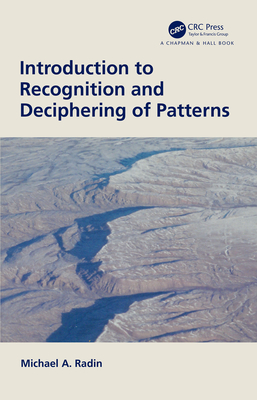
Introduction to Recognition and Deciphering of Patterns
KSh 9,700.00

Introduction to Data Science
KSh 24,300.00

The Baseball Mysteries
KSh 5,450.00
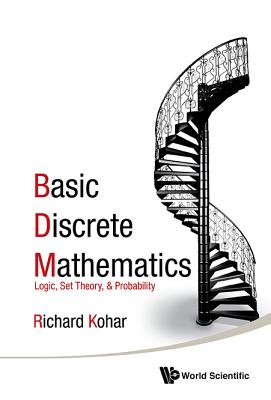
Basic Discrete Mathematics
KSh 11,700.00

New Digital Signal Processing Methods
KSh 25,200.00

The Shrikhande Graph
KSh 5,050.00

Neutrosophic Computing and Vague Data Analysis
KSh 22,500.00

Complexity and Evolution of Dissipative Systems
KSh 27,350.00