

The Silk Road Idea : Ancient Contact in the Modern Human Sciences
Book Details
Format
Paperback / softback
Book Series
Silk Roads
ISBN-10
022685258X
ISBN-13
9780226852584
Publisher
The University of Chicago Press
Imprint
University of Chicago Press
Country of Manufacture
GB
Country of Publication
GB
Publication Date
Nov 23rd, 2026
Print length
464 Pages
Weight
454 grams
KSh 5,300.00
Not Yet Published
0 in stock
Delivery Location
Delivery fee: Select location
Secure
Quality
Fast
Traces the rise and fall of a set of modern disciplinary fields devoted to premodern historical contact that drew on intellectual currents across and beyond China and Europe. In The Silk Road Idea, Tamara T. Chin examines the rise of interest in “the connected past” and its impact on key disciplines, focusing on the period from 1870 to 1970. Against the predominance of national studies, Chin argues that historical contact gradually came to be regarded as an object of inquiry over a century spanning imperialism, decolonization, and the Cold War. Interest in connected histories emerged from all corners: the colonialist and the anticolonial; the capitalist and the communist; the antiquarian and the activist. During the ascent of academic specialization, Chin contends, geography, history, philology, and linguistics domesticated contact through distinct frameworks and units of analysis, making it into something geographers mapped, historians narrated, philologists read, and linguists heard. But this also brought disruption. To historically connect Afro-Eurasia, disciplinary paradigms were questioned, and, in some cases, transformed. Intellectual debates in East Asia and Europe became entangled with those in South Asia and East Africa. Chin uses the concept of the “Silk Road” to capture the epistemological challenge of including China in a globally connected past, from the pursuit of civilizational origins to that of entangled empires. The Silk Road Idea revisits the stakes of premodern contact for the histories of colonialism, capitalism, and knowledge, showing how the connecting and reconfiguring of the modern world enabled and was enabled by a reimagination of antiquity.
Get The Silk Road Idea by Tamara T Chin at the best price and quality guaranteed only at Werezi Africa's largest book ecommerce store. The book was published by The University of Chicago Press and it has 464 pages.
Customers Who Bought This Also Bought
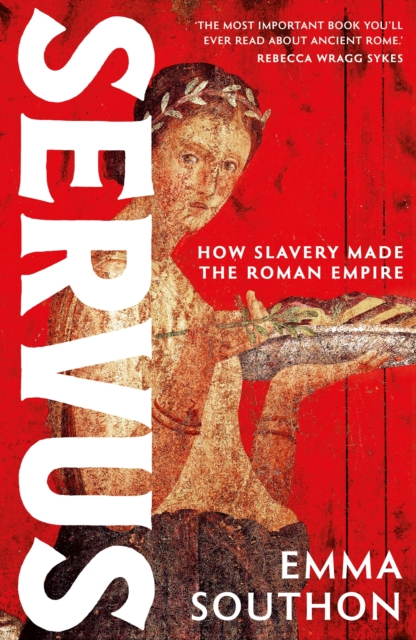
Servus
KSh 4,500.00
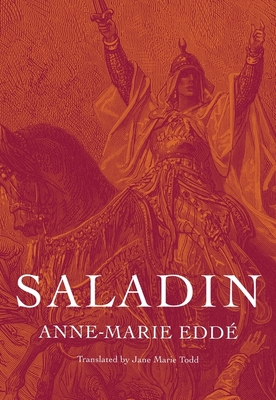
Saladin
KSh 5,000.00
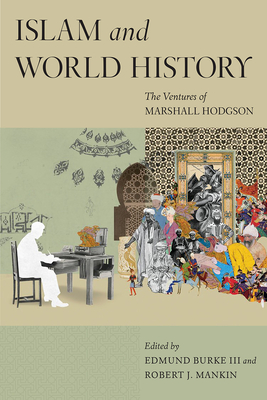
Islam and World History
KSh 5,050.00

Zionism
KSh 4,300.00

Theorising the Artist Interview
KSh 30,950.00

Echoes of the Marseillaise
KSh 2,700.00
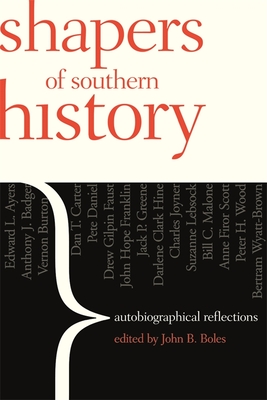
Shapers of Southern History
KSh 18,000.00
Thucydides
KSh 5,600.00
Hearing History
KSh 9,200.00
C. Vann Woodward, Southerner
KSh 6,300.00
At the Nexus of Philosophy and History
KSh 5,600.00
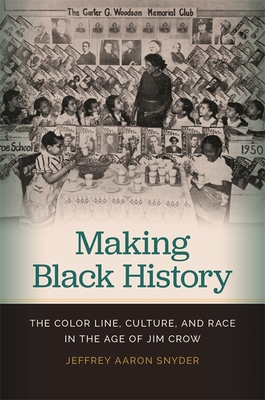
Making Black History
KSh 17,400.00

