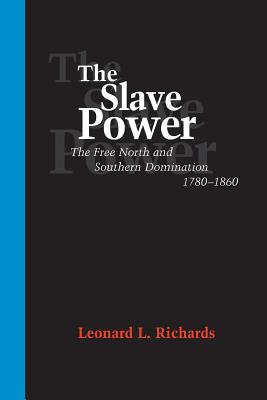
The Slave Power : The Free North and Southern Domination, 1780-1860
Book Details
Format
Paperback / softback
ISBN-10
0807126004
ISBN-13
9780807126004
Publisher
Louisiana State University Press
Imprint
Louisiana State University Press
Country of Manufacture
GB
Country of Publication
GB
Publication Date
Aug 1st, 2000
Print length
208 Pages
Weight
331 grams
Dimensions
23.00 x 15.30 x 1.30 cms
Product Classification:
History of the AmericasEarly modern history: c 1450/1500 to c 1700Modern history to 20th century: c 1700 to c 1900Slavery & abolition of slaveryConstitution: government & the stateConstitution: government and the stateHistoryHistory of the AmericasSlavery, enslaved persons and abolition of slavery
KSh 5,450.00
Currently unavailable
0 in stock
Delivery Location
Delivery fee: Select location
Secure
Quality
Fast
From the signing of the Constitution to the eve of the Civil War there persisted the belief that slaveholding southerners held the reins of the American national government and used their power to ensure the extension of slavery. Later termed the Slave Power theory, this idea was no mere figment of a lunatic fringe’s imagination.
From the signing of the Constitution to the eve of the Civil War there persisted the belief that slaveholding southerners held the reins of the American national government and used their power to ensure the extension of slavery. Later termed the Slave Power theory, this idea was no mere figment of a lunatic fringe's imagination. It was, as Leonard L. Richards shows in this innovative reexamination of the Slave Power, endorsed at midcentury by such eminent and circumspect men as Abraham Lincoln, William Henry Seward, Charles Sumner, the editors and owners of the New York Times and the Atlantic Monthly, and the president of Harvard College. With The Slave Power, Richards reopens a discussion effectively closed by historians since the 1920s- when the Slave Power theory was dismissed first as a distortion of reality and later as a manifestation of the ""paranoid style"" in the early Republic- and attempts to understand why such reputable leaders accepted this thesis wholeheartedly as truth and why hundreds of thousands of voters responded to their call to arms.
Through incisive biographical cameos and narrative vignettes, Richards explains the evolution of the Slave Power argument over time, tracing the oft-repeated scenario of northern outcry against the perceived slaveocracy, followed by still another ""victory"" for the South: the three-fifths rule in congressional representation; admission of Missouri as a slave state in 1820; the Indian removal of 1830; annexation of Texas in 1845; the Wilmot Proviso of 1847; the Fugitive Slave Law of 1850; and more. Richards probes inter- and intraparty strategies of the Democrats, Free-Soilers, Whigs, and Republicans and revisits national debates over sectional conflicts to elucidate just how the southern Democratic slaveholders- with the help of some northerners- assumed, protected, and eventually lost a dominance that extended from the White House to the Speaker's chair to the Supreme Court.
The Slave Power reveals in a direct and compelling way the importance of slavery in the structure of national politics from the earliest moments of the federal Union through the emergence of the Republican Party. Extraordinary in its research and interpretation, it will challenge and edify all readers of American history.
Through incisive biographical cameos and narrative vignettes, Richards explains the evolution of the Slave Power argument over time, tracing the oft-repeated scenario of northern outcry against the perceived slaveocracy, followed by still another ""victory"" for the South: the three-fifths rule in congressional representation; admission of Missouri as a slave state in 1820; the Indian removal of 1830; annexation of Texas in 1845; the Wilmot Proviso of 1847; the Fugitive Slave Law of 1850; and more. Richards probes inter- and intraparty strategies of the Democrats, Free-Soilers, Whigs, and Republicans and revisits national debates over sectional conflicts to elucidate just how the southern Democratic slaveholders- with the help of some northerners- assumed, protected, and eventually lost a dominance that extended from the White House to the Speaker's chair to the Supreme Court.
The Slave Power reveals in a direct and compelling way the importance of slavery in the structure of national politics from the earliest moments of the federal Union through the emergence of the Republican Party. Extraordinary in its research and interpretation, it will challenge and edify all readers of American history.
Get The Slave Power by Leonard L. Richards at the best price and quality guaranteed only at Werezi Africa's largest book ecommerce store. The book was published by Louisiana State University Press and it has 208 pages.
Customers Who Bought This Also Bought
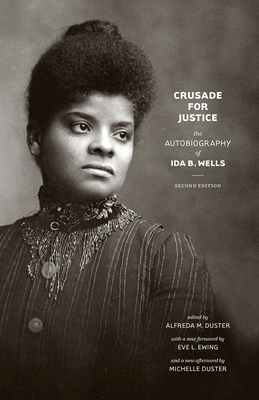
Crusade for Justice – The Autobiography of Ida B. Wells, Second Edition
KSh 4,050.00

Killers of the Flower Moon
KSh 2,000.00

Warmth of Other Suns
KSh 3,050.00
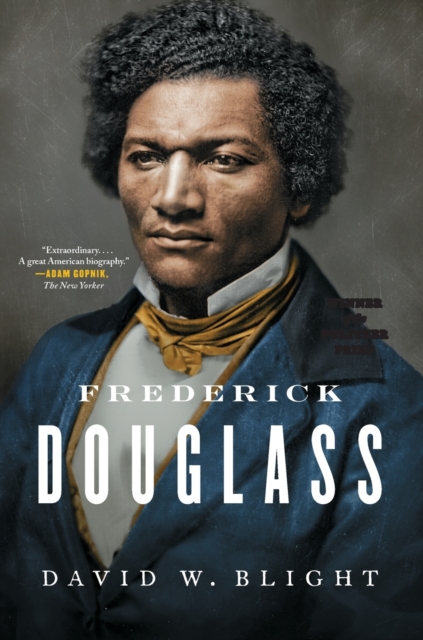
Frederick Douglass
KSh 3,350.00
107 Days
KSh 4,500.00

Second Treatise of Government – Norton Library
KSh 1,600.00

Tuesdays With Morrie
KSh 2,000.00
My Bondage and My Freedom
KSh 1,600.00

Hidden Figures
KSh 2,000.00
America, América
KSh 3,650.00
Holding the Line
KSh 2,000.00

Nuclear Folly
KSh 3,050.00