
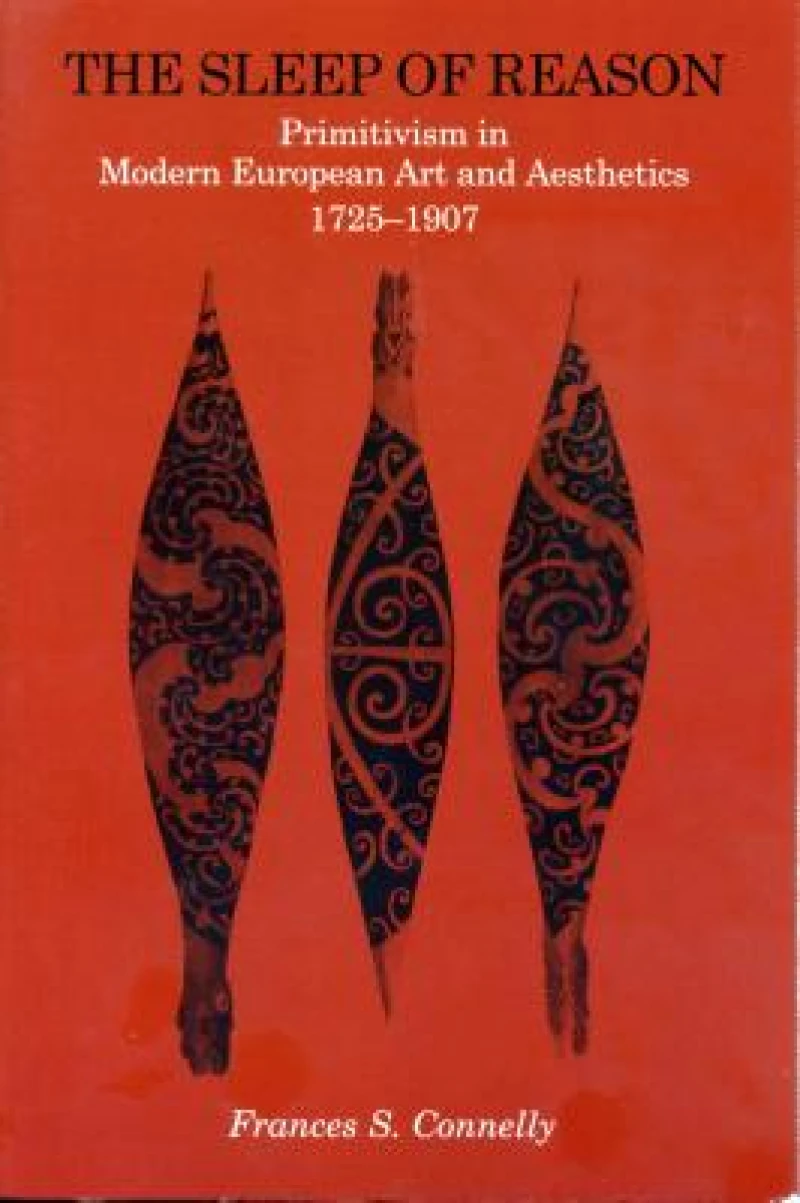
The Sleep of Reason – Primitivism in Modern European Art and Aesthetics, 1725–1907 : Primitivism in Modern European Art and Aesthetics, 1725–1907
Book Details
Format
Hardback or Cased Book
ISBN-10
0271013052
ISBN-13
9780271013053
Publisher
Pennsylvania State University Press
Imprint
Pennsylvania State University Press
Country of Manufacture
US
Country of Publication
GB
Publication Date
Dec 19th, 1994
Print length
176 Pages
Weight
514 grams
Dimensions
16.00 x 23.90 x 1.80 cms
Ksh 14,600.00
Werezi Extended Catalogue
Delivery in 14 days
1 copies in stock
Delivery Location
Delivery fee: Select location
Delivery in 14 days
Secure
Quality
Fast
In this work on what constitutes "primitive" art, Frances Connelly argues that "primitive" art was not a style at all, but a cultural construction by modern Europeans, a cluster of concepts principally forged during the Enlightenment concerning the nature of the origins of artistic expression.
Art historians have in the past narrowly defined primitivism, limiting their inquiry to examples of direct stylistic borrowing from African, Oceanic, or Native American imagery. The drawbacks of such an approach have become increasingly apparent, the most problematic being its perpetuation of the notion that certain traditions are indeed "primitive." Frances Connelly argues that "primitive" art was not a style at all, but a cultural construction by modern Europeans, a cluster of concepts principally forged during the Enlightenment concerning the nature of the origins of artistic expression. She contends that, instead of the paintings of Gauguin, the publication of Vico's New Science in 1725 lies much closer to the origins of primitivism because it first articulated the essential framework of ideas through which Europeans would understand "primitive" expression. Based upon a close reading of eighteenth- and nineteenth-century sources, including voyage accounts, ethnographies, aesthetic theories, and popular journals, The Sleep of Reason establishes that the term "primitive" art did not refer so much to actual stylistic traditions but to a collection of visual attributes that Europeans construed to be universal characteristics of "primitive" expression, specifically the hieroglyph, the grotesque, and the ornamental. Connelly provides case studies of artists and aestheticians who advocated, attempted, or realized the assimilation of these "primitive" characteristics, including some artists never before associated with primitivism as well as significant re-evaluations of Gauguin and Picasso.
Get The Sleep of Reason – Primitivism in Modern European Art and Aesthetics, 1725–1907 by at the best price and quality guaranteed only at Werezi Africa's largest book ecommerce store. The book was published by Pennsylvania State University Press and it has pages.

