
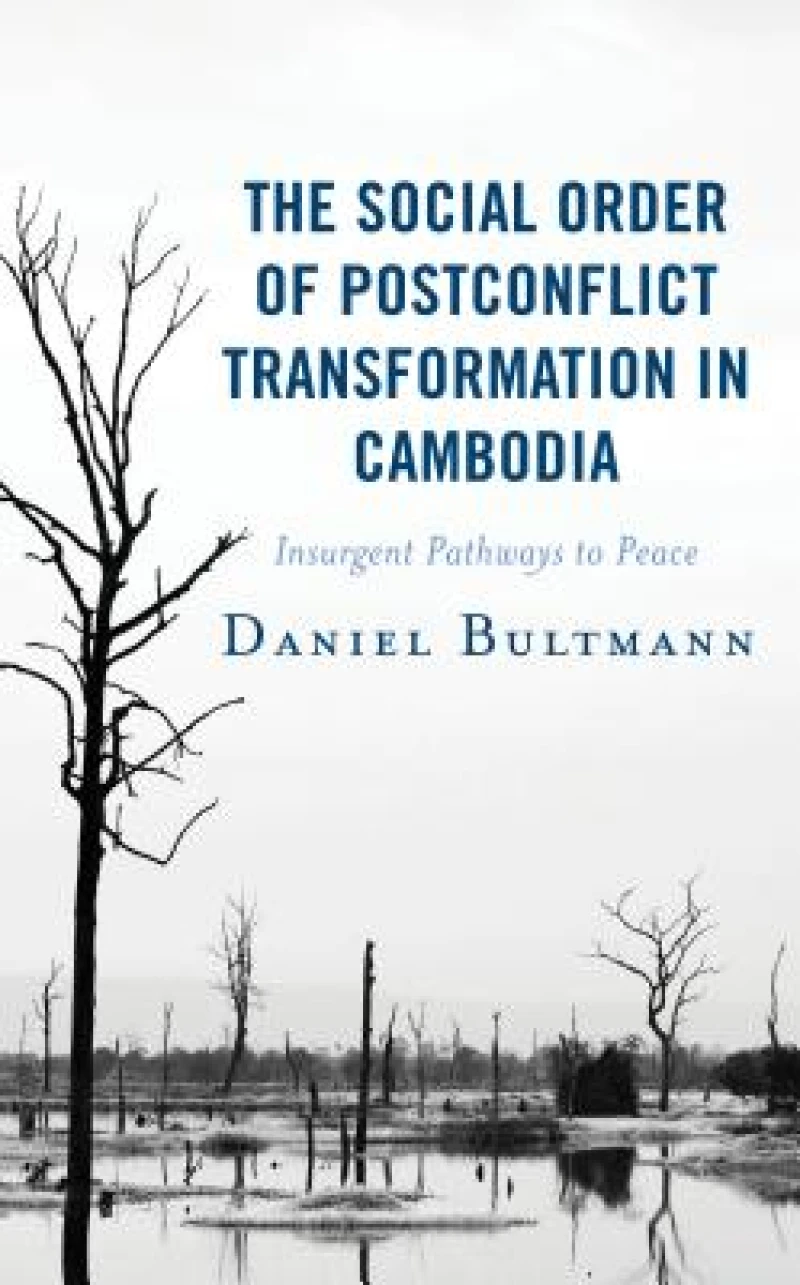
The Social Order of Postconflict Transformation in Cambodia : Insurgent Pathways to Peace
Book Details
Format
Hardback or Cased Book
Book Series
Modern Southeast Asia
ISBN-10
1498580548
ISBN-13
9781498580540
Publisher
Bloomsbury Publishing Plc
Imprint
Lexington Books
Country of Manufacture
GB
Country of Publication
GB
Publication Date
Nov 15th, 2018
Print length
182 Pages
Weight
352 grams
Dimensions
15.80 x 23.50 x 1.90 cms
Ksh 16,350.00
Manufactured on Demand
0 in stock
Delivery Location
Delivery fee: Select location
Secure
Quality
Fast
The book offers a sociological perspective on postconflict transitions. It dissects the inner ranks of three Cambodian insurgent groups and develops a theory explaining the path-dependencies of various social groups of former soldiers and commanders.
Drawing on data from three different insurgent groups within the Cambodian conflict, the book shows how the social backgrounds of combatants and commanders cause them to pursue different strategies during a decade-long transition into various postconflict settings, thereby creating different “pathways to peace.” By highlighting different vertical and horizontal ranks within the insurgent groups and the role of belligerents’ resources and networks, this qualitative study tackles an imbalance in the current research on Disarmament, Demobilization, and Reintegration (DDR), which tends to focus on top-down planning and the technicalities of reintegration programs. It helps explain why conflict dynamics and path-dependencies differ among various social groups within the field of insurgency. By analyzing the social position, life courses and postconflict trajectories of various groups within the insurgency, the book emphasizes the diversity of transitions to peace and “brings the social back in.”The study is grounded in in-depth fieldwork conducted in Cambodia and its diaspora, including 168 firsthand interviews with ex-combatants from groups as diverse as Buddhist monks and Christian converts, intellectuals, powerful warlords, civil servants, and female communist soldiers. Using these details, the book not only builds a theory of the social structure and internal logic of armed groups, but also emphasizes the crucial importance of fighters’ own narratives about their roles in society. Therefore, in addition to advancing a sociological perspective on post-conflict transitions, the study also provides the most detailed treatment to date of the social fields of the insurgents who fought in the civil war that followed the fall of the Khmer Rouge regime in 1979. These social fields continue to have a profound influence on Cambodian politics, even today.
Get The Social Order of Postconflict Transformation in Cambodia by at the best price and quality guaranteed only at Werezi Africa's largest book ecommerce store. The book was published by Bloomsbury Publishing Plc and it has pages.

