
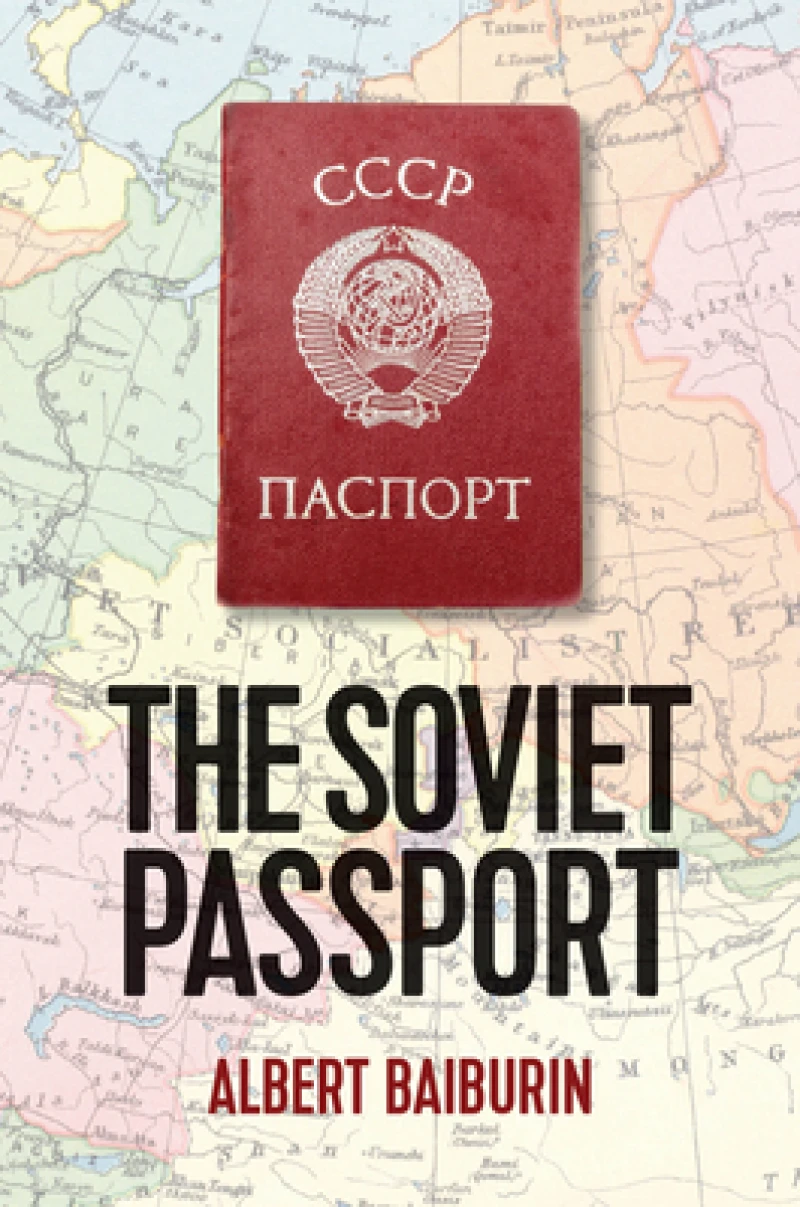
The Soviet Passport : The History, Nature and Uses of the Internal Passport in the USSR
Book Details
Format
Hardback or Cased Book
Book Series
New Russian Thought
ISBN-10
150954318X
ISBN-13
9781509543182
Publisher
John Wiley and Sons Ltd
Imprint
Polity Press
Country of Manufacture
GB
Country of Publication
GB
Publication Date
Nov 26th, 2021
Print length
455 Pages
Weight
864 grams
Dimensions
16.20 x 23.40 x 4.40 cms
Product Classification:
General & world history
Ksh 6,700.00
Werezi Extended Catalogue
0 in stock
Delivery Location
Delivery fee: Select location
Secure
Quality
Fast
In this remarkable book, Albert Baiburin provides the first in-depth study of the development and uses of the passport, or state identity card, in the former Soviet Union. First introduced in 1932, the Soviet passport took on an exceptional range of functions, extending not just to the regulation of movement and control of migrancy but also to the constitution of subjectivity and of social hierarchies based on place of residence, family background, and ethnic origin. While the basic role of the Soviet passport was to certify a person’s identity, it assumed a far greater significance in Soviet life. Without it, a person literally ‘disappeared’ from society. It was impossible to find employment or carry out everyday activities like picking up a parcel from the post office; a person could not marry or even officially die without a passport. It was absolutely essential on virtually every occasion when an individual had contact with officialdom because it was always necessary to prove that the individual was the person whom they claimed to be. And since the passport included an indication of the holder’s ethnic identity, individuals found themselves accorded a certain rank in a new hierarchy of nationalities where some ethnic categories were ‘normal’ and others were stigmatized. Passport systems were used by state officials for the deportation of entire population categories – the so-called ‘former people’, those from the pre-revolutionary elite, and the relations of ‘enemies of the people’. But at the same time, passport ownership became the signifier of an acceptable social existence, and the passport itself – the information it contained, the photographs and signatures – became part of the life experience and self-perception of those who possessed it. This meticulously researched and highly original book will be of great interest to students and scholars of Russia and the Soviet Union and to anyone interested in the shaping of identity in the modern world.
Get The Soviet Passport by at the best price and quality guaranteed only at Werezi Africa's largest book ecommerce store. The book was published by John Wiley and Sons Ltd and it has pages.

