
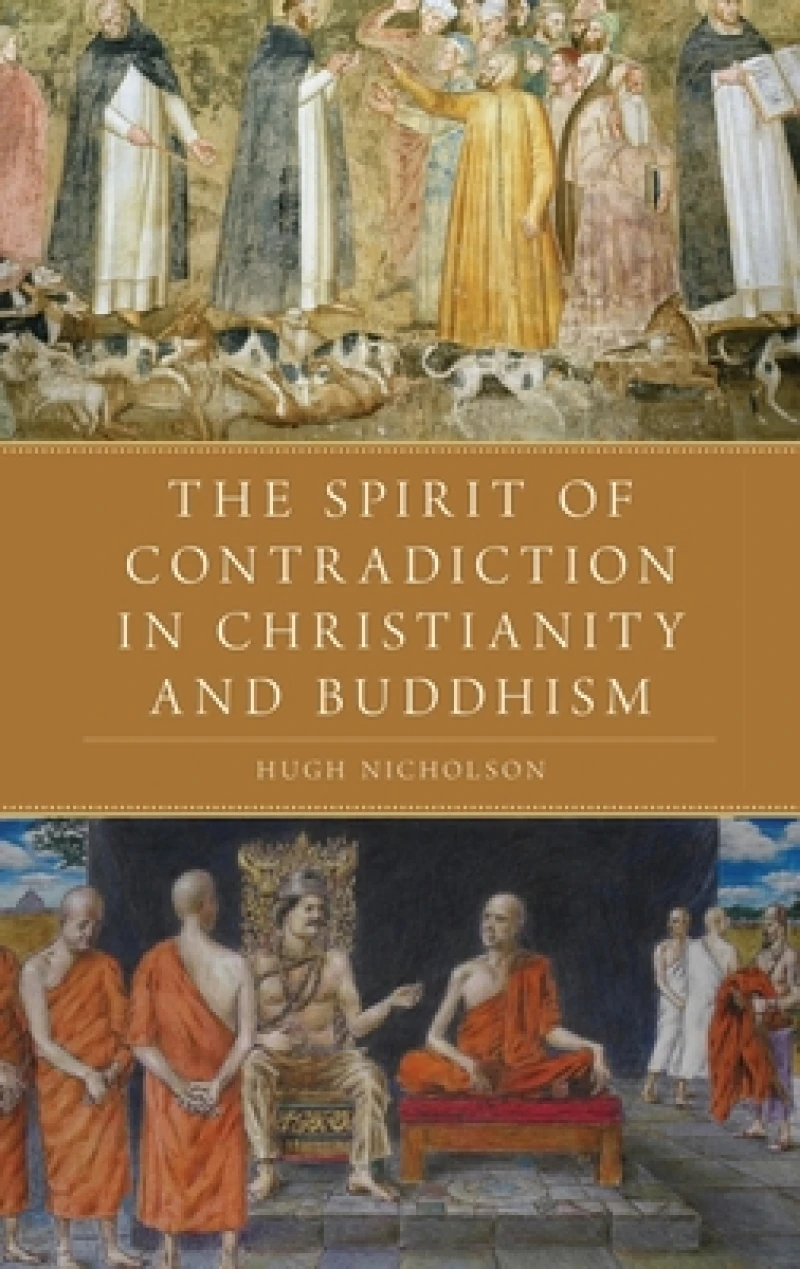
The Spirit of Contradiction in Christianity and Buddhism
Book Details
Format
Hardback or Cased Book
ISBN-10
0190455349
ISBN-13
9780190455347
Publisher
Oxford University Press Inc
Imprint
Oxford University Press Inc
Country of Manufacture
US
Country of Publication
GB
Publication Date
Mar 17th, 2016
Print length
344 Pages
Weight
601 grams
Dimensions
16.50 x 23.90 x 3.30 cms
Product Classification:
Comparative religionChristian theologyBuddhism
Ksh 13,900.00
Manufactured on Demand
0 in stock
Delivery Location
Delivery fee: Select location
Secure
Quality
Fast
In this book, Hugh Nicholson argues that seemingly counterintuitive and abstract religious concepts, such as the Christian Trinity and the Buddhist concept of No-self, have developed out of social identity processes - more specifically, as a result of hegemonic struggles and intra- and inter-religious rivalry.
In The Spirit of Contradiction in Christianity and Buddhism, Hugh Nicholson examines the role of social identity processes in the development of two religious concepts: the Christian doctrine of Consubstantiality and the Buddhist doctrine of No-self. Consubstantiality, the claim that the Son is of the same substance as the Father, forms the basis of the doctrine of the Trinity, while No-self, the claim that the personality is reducible to its impersonal physical and psychological constituents, is a defining tenet of Theravada Buddhism. Both doctrines are massively counterintuitive in that they violate our basic assumptions and understandings about the world. While cognitive approaches to the study of religion have explained why these doctrines have difficulty taking root in popular religious thought, they are largely silent on the question of why these concepts have developed in the first place. Nicholson aims to fill this gap by examining the historical development of these two concepts. Nicholson argues that both of these doctrines were the products of hegemonic struggles in which one faction tried to get the upper hand over the other by maximizing the contrast with the dominant subgroup. Thus the "pro-Nicene" theologians of the fourth century developed the concept of Consubstantiality in an effort to maximize, against their "Arian" rivals, the contrast with Christianity''s archetypal "other," Judaism. Similarly, the No-self doctrine stemmed from an effort to maximize, against the so-called Personalist schools of Buddhism, the contrast with Brahmanical Hinduism, symbolized by its doctrine of the deathless self. In this way, Nicholson demonstrates how, to the extent that religious traditions are driven by social identity processes, they back themselves into doctrinal positions that they must then retrospectively justify.
Get The Spirit of Contradiction in Christianity and Buddhism by at the best price and quality guaranteed only at Werezi Africa's largest book ecommerce store. The book was published by Oxford University Press Inc and it has pages.

