
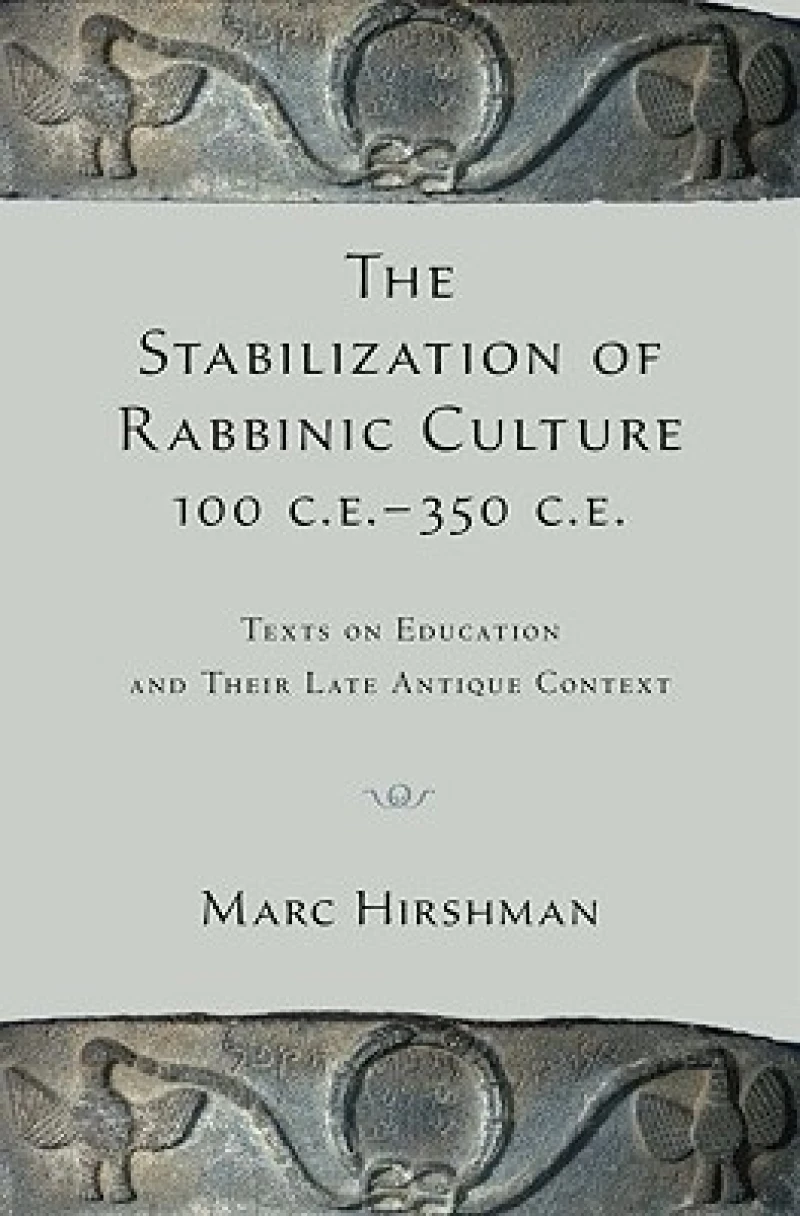
The Stabilization of Rabbinic Culture, 100 C.E. -350 C.E. : Texts on Education and Their Late Antique Context
Book Details
Format
Hardback or Cased Book
ISBN-10
0195387740
ISBN-13
9780195387742
Publisher
Oxford University Press Inc
Imprint
Oxford University Press Inc
Country of Manufacture
US
Country of Publication
GB
Publication Date
Nov 12th, 2009
Print length
208 Pages
Weight
478 grams
Dimensions
24.10 x 16.70 x 2.10 cms
Product Classification:
JudaismJudaism: sacred textsJewish studies
Ksh 5,100.00
Manufactured on Demand
0 in stock
Delivery Location
Delivery fee: Select location
Secure
Quality
Fast
In the first five centuries of the common era, in Roman Palestine and Sasanid Persia, a small group of perhaps a couple of thousand Jewish scholars and rabbis were able to secure and sustain a thriving national and educational culture. They procured loyalty to the national language and oversaw the retention of a significant national identity. This accomplishment was unique in the Roman Near East. Few physical artifacts remain to attest to this achievement. But the paucity of physical remains of late antique Jewish learning is in inverse proportion to the scope of the oral teaching, which was committed to writing only in the middle ages. The content of this oral teaching remains the staple of Jewish learning through modern times. Marc Hirshman traces and outlines the ideals and practices of rabbinic learning as presented in the relatively few late antique sources that discuss the processes and ideals of learning in depth . Though oral learning was common in many ancient cultures, the Jewish approach has a different theoretical basis and different aims. Hirshman explores the evolution and institutionalization of Jewish culture in both Babylonian and Palestinian sources. At its core, he argues, the Jewish cultural thrust in the first centuries of the common era was a sustained effort to preserve the language of its culture in its most pristine form. This was done by the rabbis in a very conscious cultural conflict with their surrounding cultures.
In the first five centuries of the common era, in Roman Palestine and Sasanid Persia, a small group of perhaps a couple of thousand Jewish scholars and rabbis were able to secure and sustain a thriving national and educational culture. They procured loyalty to the national language and oversaw the retention of a significant national identity. This accomplishment was unique in the Roman Near East. Few physical artifacts remain to attest to this achievement. But the paucity of physical remains of late antique Jewish learning is in inverse proportion to the scope of the oral teaching, which was committed to writing only in the middle ages. The content of this oral teaching remains the staple of Jewish learning through modern times. Marc Hirshman traces and outlines the ideals and practices of rabbinic learning as presented in the relatively few late antique sources that discuss the processes and ideals of learning in depth . Though oral learning was common in many ancient cultures, the Jewish approach has a different theoretical basis and different aims. Hirshman explores the evolution and institutionalization of Jewish culture in both Babylonian and Palestinian sources. At its core, he argues, the Jewish cultural thrust in the first centuries of the common era was a sustained effort to preserve the language of its culture in its most pristine form. This was done by the rabbis in a very conscious cultural conflict with their surrounding cultures.
Get The Stabilization of Rabbinic Culture, 100 C.E. -350 C.E. by at the best price and quality guaranteed only at Werezi Africa's largest book ecommerce store. The book was published by Oxford University Press Inc and it has pages.

