
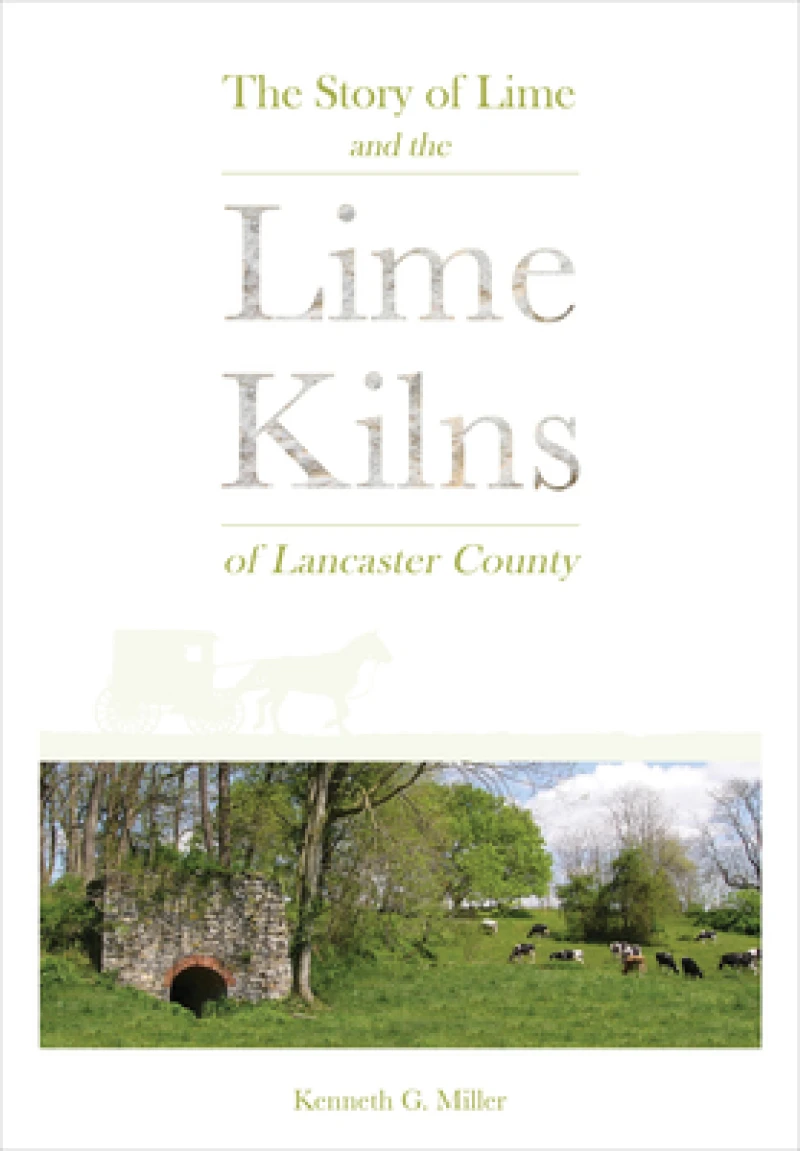
The Story of Lime and the Lime Kilns of Lancaster County
Book Details
Format
Hardback or Cased Book
ISBN-10
0764360736
ISBN-13
9780764360732
Publisher
Schiffer Publishing Ltd
Imprint
Schiffer Publishing Ltd
Country of Manufacture
IN
Country of Publication
GB
Publication Date
Nov 28th, 2020
Print length
192 Pages
Weight
1,225 grams
Dimensions
25.40 x 17.80 x 1.90 cms
Product Classification:
Social & cultural history
Ksh 6,150.00
Werezi Extended Catalogue
0 in stock
Delivery Location
Delivery fee: Select location
Secure
Quality
Fast
Lime is a white, powdery substance widely used in construction, agriculture, and industry. It is manufactured by heating limestone. Small amounts may be produced in an open fire but more effectively when enclosed. Early pits were lined with stone and in time enclosed in an oven or kiln. The 19th-century lime kiln, of Roman design, was a large "pot" dug into a hillside, surrounded by a stone box resembling a huge fireplace. Many thousands were built in the Susquehanna River valley. During settlement of "Penn's Woods," large tracts were subdivided many times, and by 1925 we find 12,000 farms in Lancaster County alone, and nearly every farmer wanted to produce his own lime to sweeten the fields and make mortar, plaster, and whitewash. In the most recent record, the 1875 county atlas, we find more than 500 kilns, a peak time for "do it yourself" lime burning. Commercialization relieved the farmer of the hard and dangerous work of lime burning, and the kilns fell idle around the turn of the century. Today we find evidence of 128 extant kilns in the county. Some are little more than remnants of former stonework, but others remain sturdy and sound. Their photos in this book reveal the art and labor of our ancestors who played a major role in the development of our nation.
Lime is a white, powdery substance widely used in construction, agriculture, and industry. It is manufactured by heating limestone. Small amounts may be produced in an open fire but more effectively when enclosed. Early pits were lined with stone and in time enclosed in an oven or kiln. The 19th-century lime kiln, of Roman design, was a large "pot" dug into a hillside, surrounded by a stone box resembling a huge fireplace. Many thousands were built in the Susquehanna River valley. During settlement of "Penn''s Woods," large tracts were subdivided many times, and by 1925 we find 12,000 farms in Lancaster County alone, and nearly every farmer wanted to produce his own lime to sweeten the fields and make mortar, plaster, and whitewash. In the most recent record, the 1875 county atlas, we find more than 500 kilns, a peak time for "do it yourself" lime burning. Commercialization relieved the farmer of the hard and dangerous work of lime burning, and the kilns fell idle around the turn of the century. Today we find evidence of 128 extant kilns in the county. Some are little more than remnants of former stonework, but others remain sturdy and sound. Their photos in this book reveal the art and labor of our ancestors who played a major role in the development of our nation.
Get The Story of Lime and the Lime Kilns of Lancaster County by at the best price and quality guaranteed only at Werezi Africa's largest book ecommerce store. The book was published by Schiffer Publishing Ltd and it has pages.

