
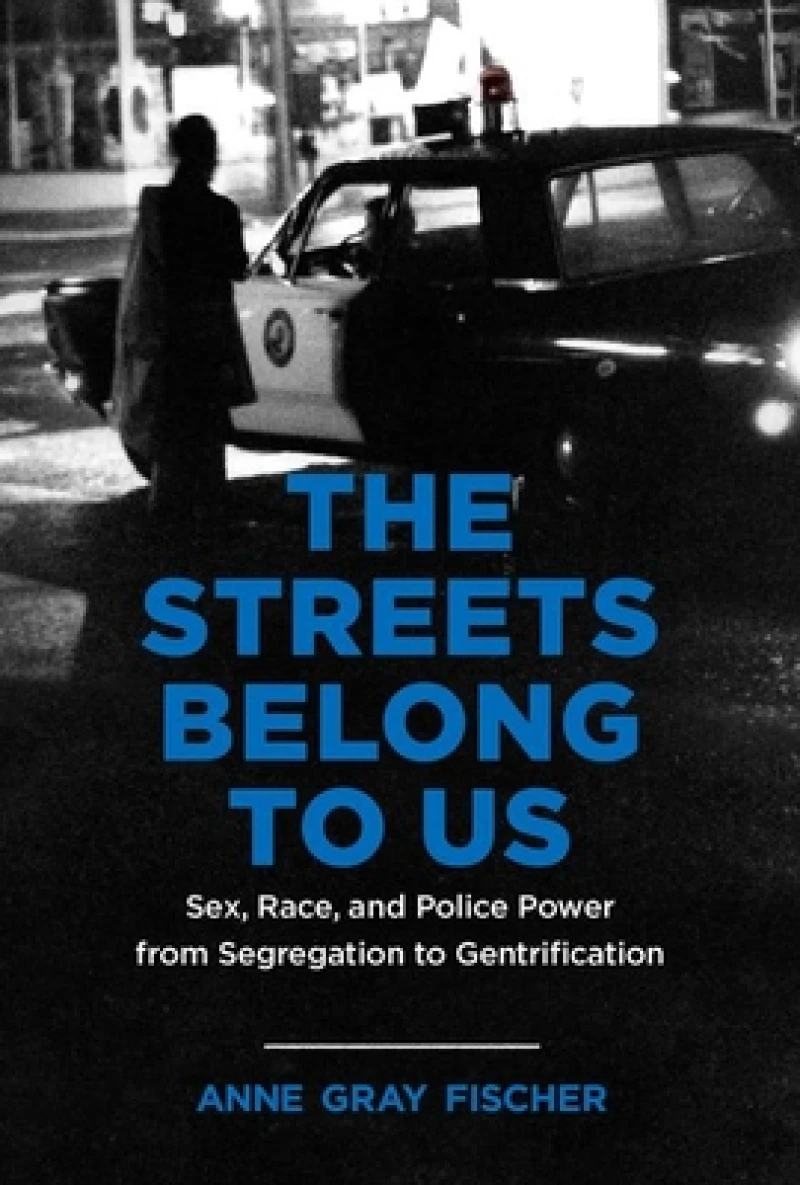
The Streets Belong to Us : Sex, Race, and Police Power from Segregation to Gentrification
Book Details
Format
Hardback or Cased Book
Book Series
Justice, Power, and Politics
ISBN-10
1469665042
ISBN-13
9781469665047
Publisher
The University of North Carolina Press
Imprint
The University of North Carolina Press
Country of Manufacture
GB
Country of Publication
GB
Publication Date
Mar 22nd, 2022
Print length
312 Pages
Weight
596 grams
Dimensions
16.40 x 24.40 x 2.70 cms
Ksh 5,250.00
Werezi Extended Catalogue
0 in stock
Delivery Location
Delivery fee: Select location
Secure
Quality
Fast
Women are treated as marginal, if not overlooked altogether, in histories of the criminal legal system. In this history - the first on the relationship between women and police in the modern United States - Anne Gray Fischer narrates how sexual policing fuelled a dramatic expansion of police power.
Police power was built on women's bodies. Men, especially Black men, often stand in as the ultimate symbol of the mass incarceration crisis in the United States. Women are treated as marginal, if not overlooked altogether, in histories of the criminal legal system. In this history—the first on the relationship between women and police in the modern United States—Anne Gray Fischer narrates how sexual policing fueled a dramatic expansion of police power. The enormous discretionary power that police officers wield to surveil, target, and arrest anyone they deem suspicious was tested, legitimized, and legalized through the policing of women's sexuality and right to move freely through city streets.
Throughout the twentieth century, police departments achieved a stunning consolidation of urban authority through the strategic discretionary enforcement of morals laws, including disorderly conduct, vagrancy, and other prostitution-related misdemeanors. Between Prohibition in the 1920s and the rise of "broken windows" policing in the 1980s, police targeted white and Black women in distinct but interconnected ways.
These tactics reveal the centrality of racist and sexist myths to the justification and deployment of state power. Sexual policing did not just enhance police power. It also transformed cities from segregated sites of "urban vice" into the gentrified sites of Black displacement and banishment we live in today.
Throughout the twentieth century, police departments achieved a stunning consolidation of urban authority through the strategic discretionary enforcement of morals laws, including disorderly conduct, vagrancy, and other prostitution-related misdemeanors. Between Prohibition in the 1920s and the rise of "broken windows" policing in the 1980s, police targeted white and Black women in distinct but interconnected ways.
These tactics reveal the centrality of racist and sexist myths to the justification and deployment of state power. Sexual policing did not just enhance police power. It also transformed cities from segregated sites of "urban vice" into the gentrified sites of Black displacement and banishment we live in today.
Get The Streets Belong to Us by at the best price and quality guaranteed only at Werezi Africa's largest book ecommerce store. The book was published by The University of North Carolina Press and it has pages.

