
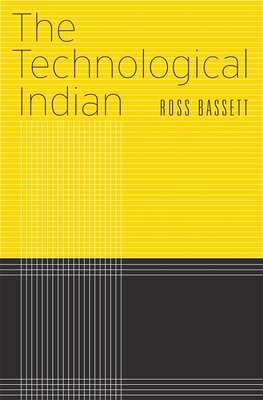
The Technological Indian
by
Ross Bassett
Book Details
Format
Paperback / softback
ISBN-10
0674245970
ISBN-13
9780674245976
Publisher
Harvard University Press
Imprint
Harvard University Press
Country of Manufacture
US
Country of Publication
GB
Publication Date
Aug 14th, 2019
Print length
400 Pages
Weight
616 grams
Dimensions
23.40 x 15.70 x 2.60 cms
Product Classification:
Asian history20th century history: c 1900 to c 2000Technology, engineering, agriculture
KSh 6,850.00
Currently unavailable
0 in stock
Delivery Location
Delivery fee: Select location
Secure
Quality
Fast
In the late 1800s, Indians seemed to be a people left behind by the Industrial Revolution, dismissed as “not a mechanical race.” Today Indians are among the world’s leaders in engineering and technology. In this international history spanning nearly 150 years, Ross Bassett—drawing on a unique database of every Indian to graduate from the Massachusetts Institute of Technology between its founding and 2000—charts their ascent to the pinnacle of high-tech professions. As a group of Indians sought a way forward for their country, they saw a future in technology. Bassett examines the tensions and surprising congruences between this technological vision and Mahatma Gandhi’s nonindustrial modernity. India’s first prime minister, Jawaharlal Nehru, sought to use MIT-trained engineers to build an India where the government controlled technology for the benefit of the people. In the private sector, Indian business families sent their sons to MIT, while MIT graduates established India’s information technology industry. By the 1960s, students from the Indian Institutes of Technology (modeled on MIT) were drawn to the United States for graduate training, and many of them stayed, as prominent industrialists, academics, and entrepreneurs. The MIT-educated Indian engineer became an integral part of a global system of technology-based capitalism and focused less on India and its problems—a technological Indian created at the expense of a technological India.
Get The Technological Indian by Ross Bassett at the best price and quality guaranteed only at Werezi Africa's largest book ecommerce store. The book was published by Harvard University Press and it has 400 pages.
Customers Who Bought This Also Bought

From Third World to First
KSh 3,200.00

Breakneck
KSh 4,500.00

India After Gandhi
KSh 4,850.00

Anarchy
KSh 2,700.00

On China
KSh 3,400.00

Apostles of Development
KSh 5,600.00

Shattered Lands
KSh 2,000.00

Indira Gandhi and the Years that Transformed India
KSh 5,050.00

India: A Wounded Civilization
KSh 2,000.00

Shattered Lands
KSh 3,200.00

Games without Rules
KSh 2,900.00

Ghost Nation
KSh 3,950.00
