
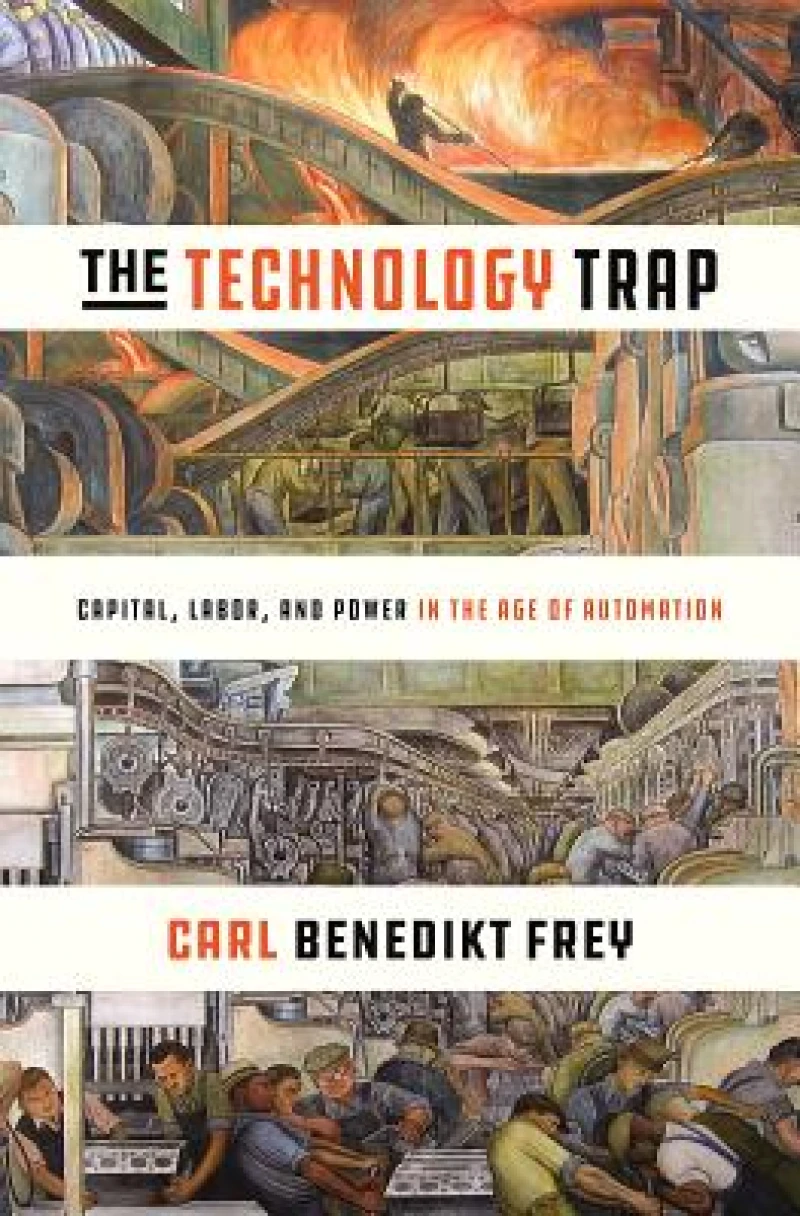
The Technology Trap – Capital, Labor, and Power in the Age of Automation : Capital, Labor, and Power in the Age of Automation
Book Details
Format
Hardback or Cased Book
ISBN-10
069117279X
ISBN-13
9780691172798
Publisher
Princeton University Press
Imprint
Princeton University Press
Country of Manufacture
US
Country of Publication
GB
Publication Date
Jun 18th, 2019
Print length
480 Pages
Weight
980 grams
Dimensions
23.40 x 17.40 x 3.90 cms
Product Classification:
Research methods / methodologyResearch methods: generalEconomicsLabour / income economicsLabour economicsScience: general issuesScience funding & policyScience funding and policyDigital and information technologies: social and ethical aspectsEthical & social aspects of ITArtificial intelligenceArtificial intelligence (AI)
Ksh 5,000.00
Werezi Extended Catalogue
Delivery in 14 days
3 copies in stock
Delivery Location
Delivery fee: Select location
Delivery in 14 days
Secure
Quality
Fast
How the history of technological revolutions can help us better understand economic and political polarization in the age of automation From the Industrial Revolution to the age of artificial intelligence, The Technology Trap takes a sweeping look at the history of technological progress and how it has radically shifted the distribution of econ
"Made me look at the industrial revolution, invention, sleeping beauties, contexts and the forces that shape our societies differently."—David Byrne, New York Times Book ReviewHow the history of technological revolutions can help us better understand economic and political polarization in the age of automation From the Industrial Revolution to the age of artificial intelligence, The Technology Trap takes a sweeping look at the history of technological progress and how it has radically shifted the distribution of economic and political power among society’s members. As Carl Benedikt Frey shows, the Industrial Revolution created unprecedented wealth and prosperity over the long run, but the immediate consequences of mechanization were devastating for large swaths of the population. Middle-income jobs withered, wages stagnated, the labor share of income fell, profits surged, and economic inequality skyrocketed. These trends, Frey documents, broadly mirror those in our current age of automation, which began with the Computer Revolution. Just as the Industrial Revolution eventually brought about extraordinary benefits for society, artificial intelligence systems have the potential to do the same. But Frey argues that this depends on how the short term is managed. In the nineteenth century, workers violently expressed their concerns over machines taking their jobs. The Luddite uprisings joined a long wave of machinery riots that swept across Europe and China. Today’s despairing middle class has not resorted to physical force, but their frustration has led to rising populism and the increasing fragmentation of society. As middle-class jobs continue to come under pressure, there’s no assurance that positive attitudes to technology will persist. The Industrial Revolution was a defining moment in history, but few grasped its enormous consequences at the time. The Technology Trap demonstrates that in the midst of another technological revolution, the lessons of the past can help us to more effectively face the present.
Get The Technology Trap – Capital, Labor, and Power in the Age of Automation by at the best price and quality guaranteed only at Werezi Africa's largest book ecommerce store. The book was published by Princeton University Press and it has pages.

