
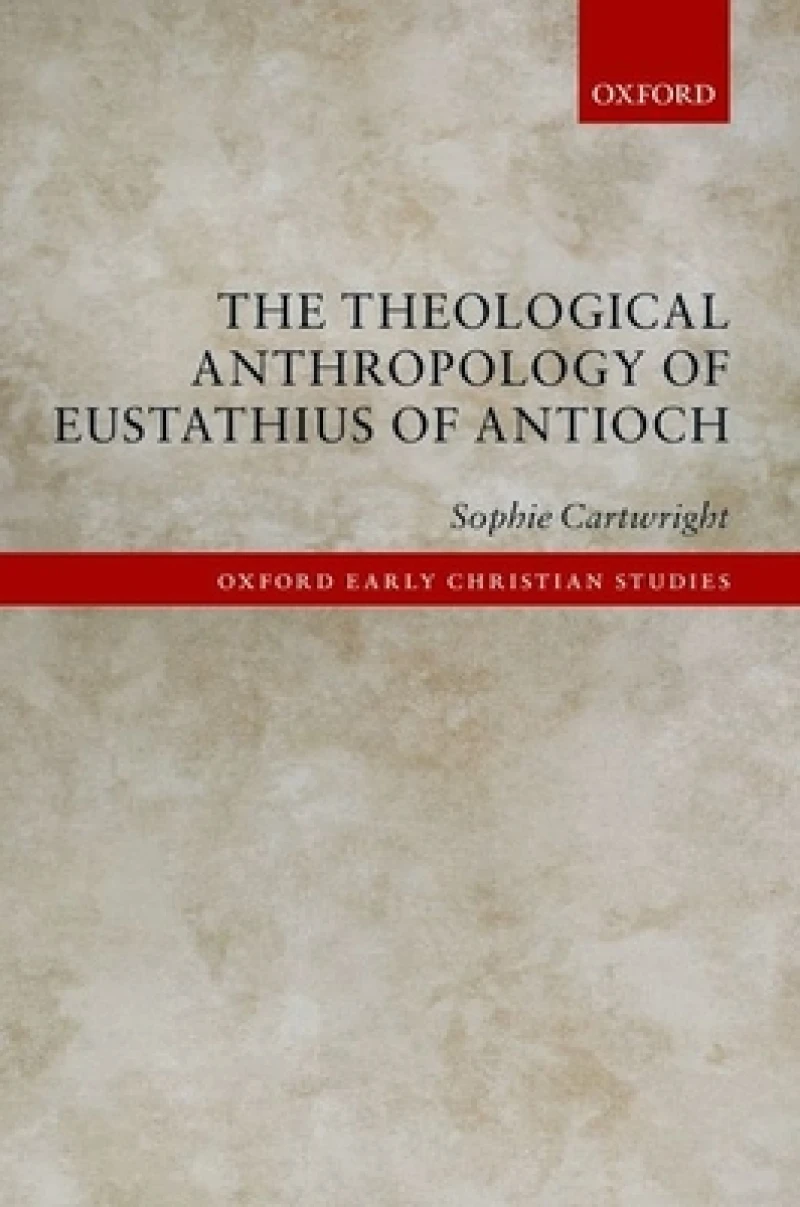
The Theological Anthropology of Eustathius of Antioch
Book Details
Format
Hardback or Cased Book
Book Series
Oxford Early Christian Studies
ISBN-10
0198744552
ISBN-13
9780198744559
Publisher
Oxford University Press
Imprint
Oxford University Press
Country of Manufacture
GB
Country of Publication
GB
Publication Date
Oct 1st, 2015
Print length
294 Pages
Weight
624 grams
Dimensions
16.70 x 24.10 x 2.60 cms
Product Classification:
BCE period – ProtohistoryChurch historyChristian theologyChristianityChristianity
Ksh 27,900.00
Manufactured on Demand
0 in stock
Delivery Location
Delivery fee: Select location
Secure
Quality
Fast
This is a study of Eustathius, Bishop of Antioch from c.324 to c.327, a leading figure at the Council of Nicaea and opponent of Arianism. Sophie Cartwright considers in particular Eustathius' theological anthropology with chapters devoted to body and soul, the image of God, soteriology, and eschatology.
This authoritative study explores Eustathius of Antioch''s theological anthropology, offering insight into one of the most important thinkers of the early Arian controversy. Sophie Cartwright situates Eustathius'' thought in relation to the early ''Arian'' controversy, the Constaninian Revolution, the theological legacies of Irenaeus and Origen, and the philosophical commentary tradition. She also locates Eustathius within his historical context and provides a detailed overview of the sources for his complex and fragmented corpus.Eustathius'' anthropology is indebted to a tradition shaped by the theology of Irenaeus, that had already come into conversation with Origen. Dr Cartwright suggests that Origen''s own thought was indebted to Irenaeus but that he had a radically different cosmology; this shaped subsequent engagement with both thinkers. Eustathius'' theology of embodiment draws on Irenaeus, in opposition to what he perceives as the Origenist and Platonist anthropology which, in his anti-Arian works, he associates with Eusebius of Caesarea. However, he is deeply indebted to Origen for his doctrine of Christ''s human soul and, consequently, his wider psychology. He places humanity at a great distance from God and seeks to give humanity autonomous value, especially in his discourse on God''s image. This represents one logical negotiation of the rejection of Origen''s eternal intelligible world. Eustathius'' divisive Christology offers a picture of Christ as the perfect human being that echoes Irenaeus'' Adam-Christ typology, fleshed out by an Origenian discourse on Christ''s human soul and infused with a keen awareness of the chasm between God and humankind. He proffers a doctrine of inherited sinfulness as an alternative to Origen''s doctrine of the fall and looks to a corporeal eschatological kingdom ruled over by the human Christ; this eschatology probably reflects discomfiture with Constantine''s role in the church.
Get The Theological Anthropology of Eustathius of Antioch by at the best price and quality guaranteed only at Werezi Africa's largest book ecommerce store. The book was published by Oxford University Press and it has pages.

