
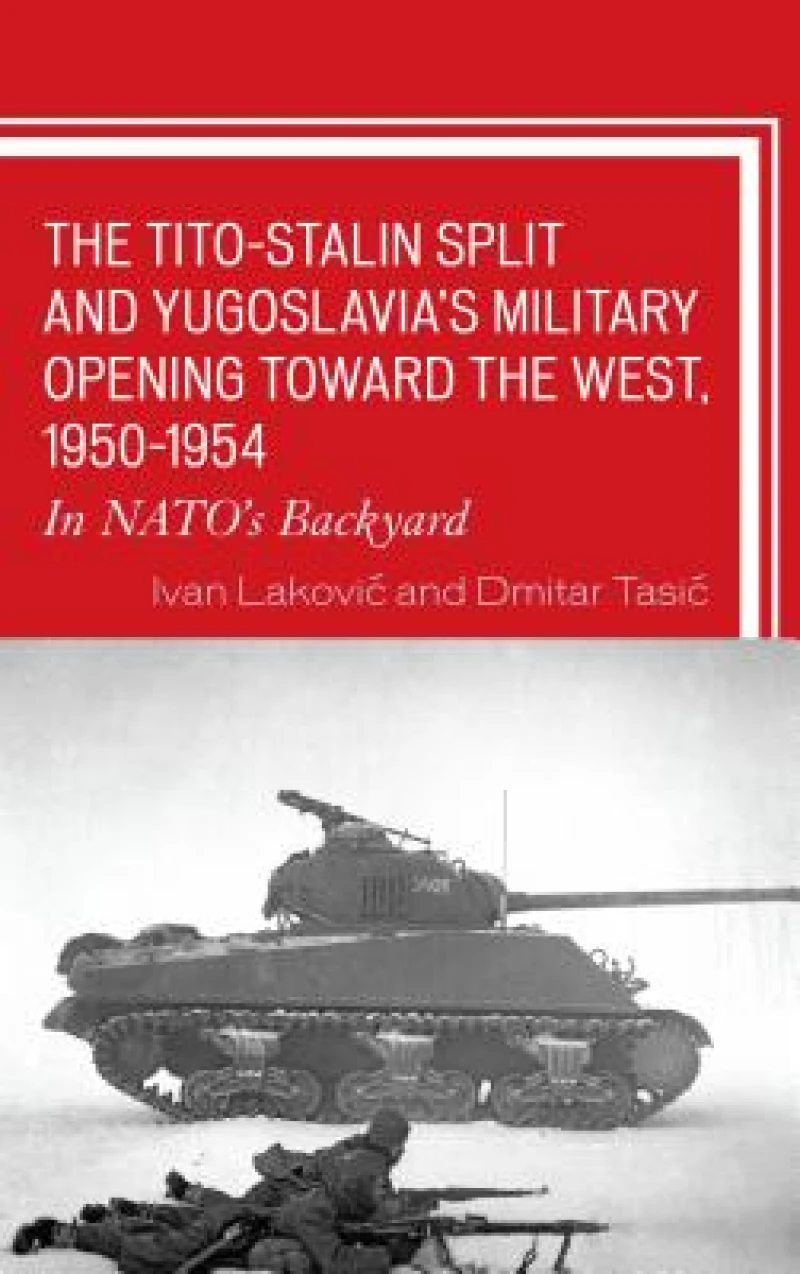
The Tito–Stalin Split and Yugoslavia's Military Opening toward the West, 1950–1954 : In NATO's Backyard
Book Details
Format
Hardback or Cased Book
Book Series
The Harvard Cold War Studies Book Series
ISBN-10
1498539335
ISBN-13
9781498539333
Publisher
Bloomsbury Publishing Plc
Imprint
Lexington Books
Country of Manufacture
GB
Country of Publication
GB
Publication Date
Jul 14th, 2016
Print length
300 Pages
Weight
608 grams
Dimensions
16.10 x 23.60 x 2.80 cms
Product Classification:
European historyMilitary historyDefence strategy, planning & research
Ksh 18,600.00
Manufactured on Demand
0 in stock
Delivery Location
Delivery fee: Select location
Secure
Quality
Fast
This book examines the development of relations between Yugoslavia and the United States following the Tito–Stalin split. A major focus of this study is the planning and execution of U.S. military support, in particular the direct supply of military equipment and Yugoslavia’s recruitment into Western-aligned military alliances.
Yugoslav military cooperation with West emerged after the country’s split with the U.S.S.R. and its allies in 1948. It came as a surprise for many, since Yugoslavia used to be one of the staunchest followers of Soviet politics. However, faced with possible military escalation of the ideological, political, and economic worsening of relations with the East, the Yugoslav leadership quickly turned to their former “class enemies.” For the United States, it presented an opportunity to acquire many unexpected political benefits. Yugoslav alienation from the Kremlin provided territorial consolidation of the southern flank of NATO, denial of direct approach to the Adriatic Sea and Northern Italy to Soviet troops, and dealt a strong political blow to the homogeneity of the Eastern bloc. While not insisting on changing the ideological nature of Yugoslav state, the United States provided much needed material and financial aid, developing the base for entering into sphere of military cooperation. It had two main categories—direct support for Yugoslav forces through shipments of military equipment, as well as Yugoslavia entering into defensive, military alliance (the Balkan Pact) with Greece and Turkey, already full members of NATO. Such trends, aiming towards closer Yugoslav bonding with Western military and political structures, ended in the mid-1950s with Stalin’s death, the outbreak of the Trieste crisis, and Tito’s reconciliation with Soviet leadership. Developing the new policy of non-alignment with either of the confronting blocs, Yugoslavia stepped out from the program of Western military aid, while the Balkan Pact slowly faded in growing animosity between Greece and Turkey.
Get The Tito–Stalin Split and Yugoslavia's Military Opening toward the West, 1950–1954 by at the best price and quality guaranteed only at Werezi Africa's largest book ecommerce store. The book was published by Bloomsbury Publishing Plc and it has pages.

