
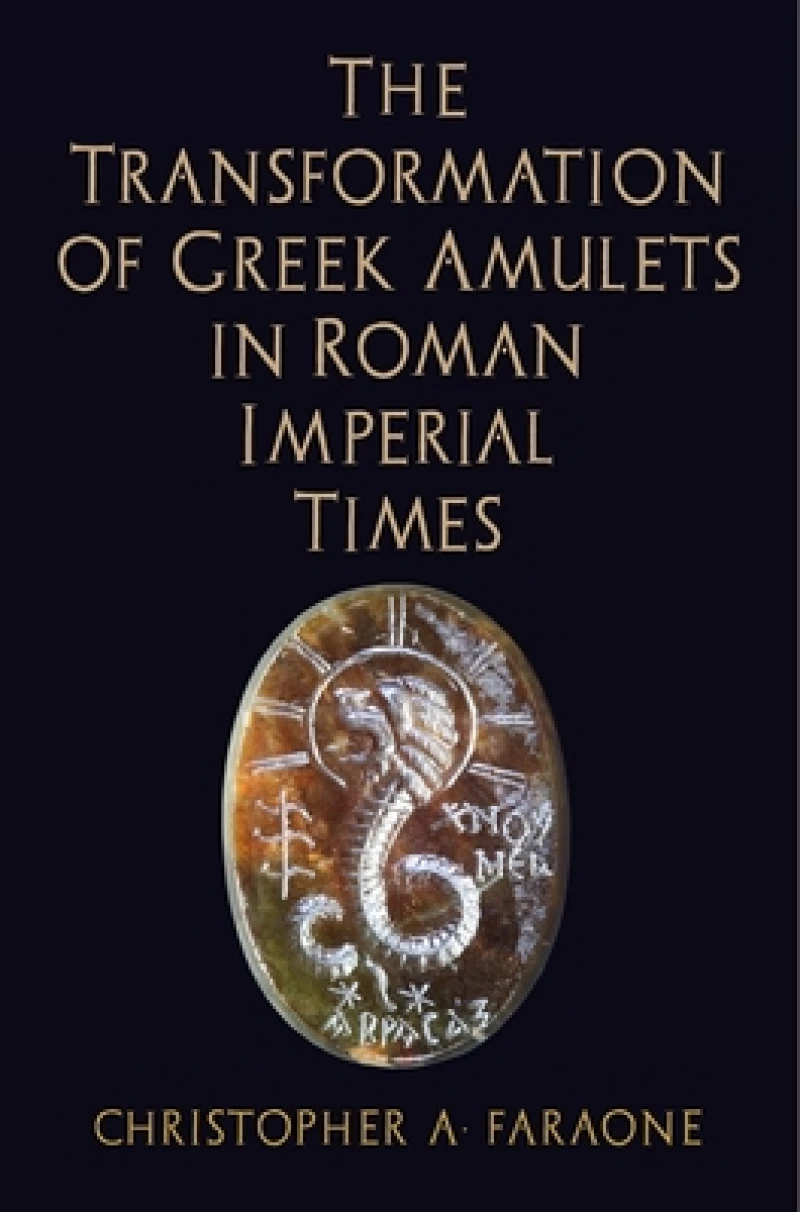
The Transformation of Greek Amulets in Roman Imperial Times
Book Details
Format
Hardback or Cased Book
Book Series
Empire and After
ISBN-10
0812249356
ISBN-13
9780812249354
Publisher
University of Pennsylvania Press
Imprint
University of Pennsylvania Press
Country of Manufacture
US
Country of Publication
GB
Publication Date
Apr 20th, 2018
Print length
512 Pages
Weight
1,266 grams
Dimensions
18.90 x 26.10 x 4.10 cms
Ksh 15,850.00
Werezi Extended Catalogue
0 in stock
Delivery Location
Delivery fee: Select location
Secure
Quality
Fast
The era of the Roman Empire was distinguished by an explosion of images and texts in a variety of media-metal, papyrus, mosaic, gemstone-all designed to protect, heal, or grant some abstract benefit to the persons who wore them on their bodies or placed them in their homes. In the past scholars have explained this proliferation of readily identifiable amulets by a sudden need for magic or by a precipitous rise in superstition or anxiety in this period, connected, perhaps, with the internal breakdown of Greek rationalism or the migration of superstitious peoples from the East. Christopher A. Faraone argues, instead, that these amulets were not invented in this period as a result of an alteration in the Roman worldview or a tidal wave of "oriental" influence, but rather that they only become visible to us in the archaeological record as a result of a number of technical innovations and transformations: the increased epigraphic habit of the Imperial period, the miniaturization of traditional domestic amulets, like the triple-faced Hecate, on durable gems, or the utilization of newly crafted Egyptianizing iconography. In short, it is only when explicitly protective or curative texts, or strange new images, are added to traditional Greek amulets, that modern observers realize that these objects were thought to have the power to protect or heal all along. The real question addressed by the book, then, is not why we can identify so many amulets in the Roman Imperial period but, rather, why we have failed to identify them in artifacts of the preceding centuries. Featuring more than 120 illustrations, The Transformation of Greek Amulets in Roman Imperial Times is not only a tremendous resource for those working in the fields of ancient magic and religion but also an essential reference for those interested in the religion, culture, and history of the ancient Mediterranean.
Get The Transformation of Greek Amulets in Roman Imperial Times by at the best price and quality guaranteed only at Werezi Africa's largest book ecommerce store. The book was published by University of Pennsylvania Press and it has pages.

