
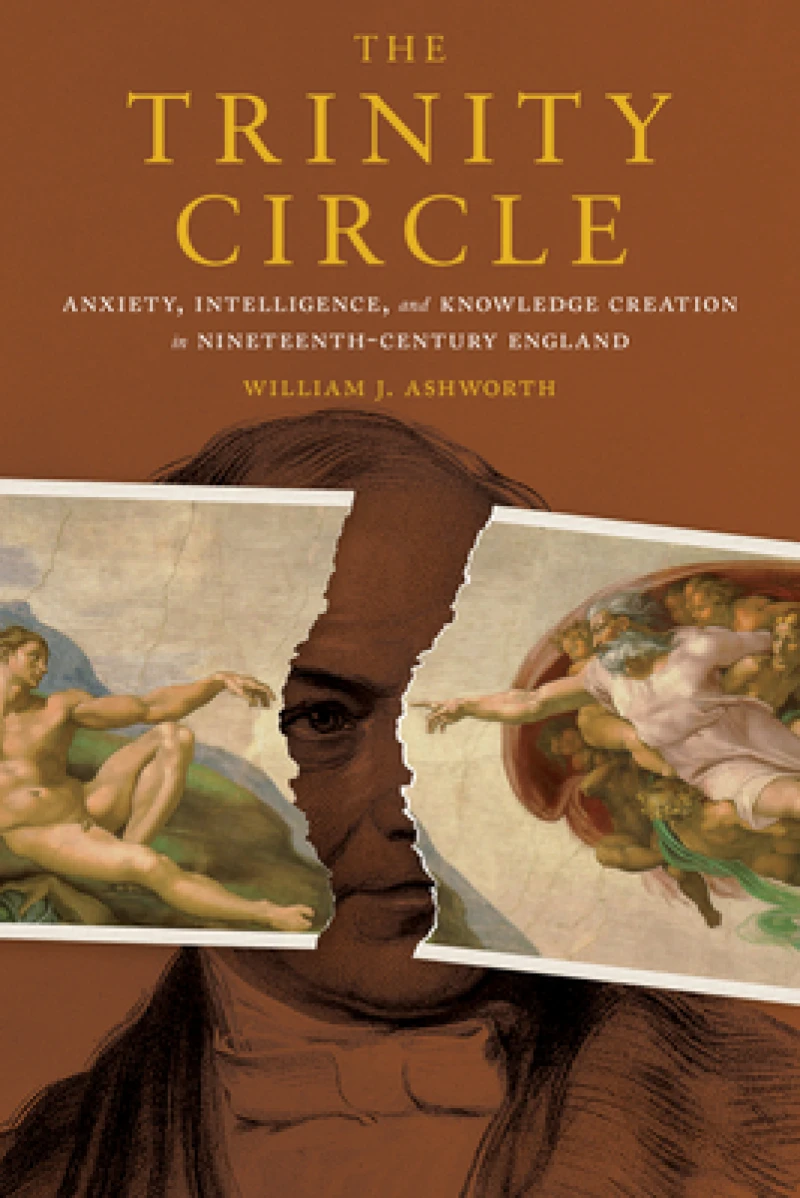
The Trinity Circle : Anxiety, Intelligence, and Knowledge Creation in Nineteenth-Century England
Book Details
Format
Hardback or Cased Book
Book Series
Sci & Culture in the Nineteenth Century
ISBN-10
0822946874
ISBN-13
9780822946878
Publisher
University of Pittsburgh Press
Imprint
University of Pittsburgh Press
Country of Manufacture
GB
Country of Publication
GB
Publication Date
Aug 17th, 2021
Print length
312 Pages
Product Classification:
Social & cultural historyReligion & scienceSocial and cultural historyReligion and science
Ksh 9,650.00
Temporarily out of stock, due soon
0 in stock
Delivery Location
Delivery fee: Select location
Secure
Quality
Fast
Explores science and religion at a time when new ways of thinking threatened to divide England.
The Trinity Circle explores the creation of knowledge in nineteenth-century England, when any notion of a recognizably modern science was still nearly a century off, religion still infused all ways of elite knowing, and even those who denied its relevance had to work extremely hard to do so. The rise of capitalism during this period—embodied by secular faith, political radicalism, science, commerce, and industry—was, according to Anglican critics, undermining this spiritual world and challenging it with a superficial material one: a human-centric rationalist society hell-bent on measurable betterment via profit, consumption, and a prevalent notion of progress. Here, William J. Ashworth places the politics of science within a far more contested context. By focusing on the Trinity College circle, spearheaded from Cambridge by the polymath William Whewell, he details an ongoing struggle between the Established Church and a quest for change to the prevailing social hierarchy. His study presents a far from unified view of science and religion at a time when new ways of thinking threatened to divide England and even the Trinity College itself.
Get The Trinity Circle by at the best price and quality guaranteed only at Werezi Africa's largest book ecommerce store. The book was published by University of Pittsburgh Press and it has pages.

