
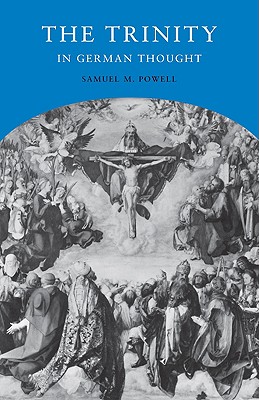
The Trinity in German Thought
Book Details
Format
Paperback / softback
ISBN-10
0521092922
ISBN-13
9780521092920
Publisher
Cambridge University Press
Imprint
Cambridge University Press
Country of Manufacture
GB
Country of Publication
GB
Publication Date
Jan 8th, 2009
Print length
292 Pages
Weight
394 grams
Dimensions
21.30 x 14.10 x 1.90 cms
Product Classification:
Christian theologyChristianity
KSh 7,900.00
Currently unavailable
0 in stock
Delivery Location
Delivery fee: Select location
Secure
Quality
Fast
This book, published in 2000, is about the Christian doctrine of the Trinity as it has developed in Germany: the way in which it is seen as similar to the human self and how differing understandings of revelation and of the conception of history have affected people's attitude toward the doctrine.
The Trinity in German Thought, published in 2000, describes the three ideas that govern modern German Trinitarian thought: the ideas of reflective selfhood, of revelation and of history. 'Reflective selfhood' designates the attempt at finding an analogy between the Trinity and the structure of the human self. Such attempts, following the lead of Augustine, typically see the structure of self-consciousness as an especially apt analogy of the Trinity. 'Revelation' points to two questions: what is the Word of God? and can the idea of the Trinity be derived from the Word? From Martin Luther to the present, Trinitarian thought has depended on the way in which theologians conceived of the Word. 'History' designates the impact that historical modes of thought have had on Trinitarian thought. For some, 'history' has meant a critical approach to Scripture and creeds; for others, it has meant God's own participation in history.
Get The Trinity in German Thought by Samuel M. Powell at the best price and quality guaranteed only at Werezi Africa's largest book ecommerce store. The book was published by Cambridge University Press and it has 292 pages.
Customers Who Bought This Also Bought

Problem of Pain
KSh 2,000.00

Screwtape Letters
KSh 2,000.00

Great Divorce
KSh 2,000.00

Miracles
KSh 2,000.00
The Holiness of God
KSh 2,950.00
Making Sense of God
KSh 2,350.00

Reason for God
KSh 2,350.00

Total Forgiveness
KSh 2,350.00
What Is Reformed Theology?
KSh 2,700.00

Pilgrims Regress
KSh 2,000.00

Four Loves
KSh 2,000.00

How to Be Christian
KSh 2,000.00
