
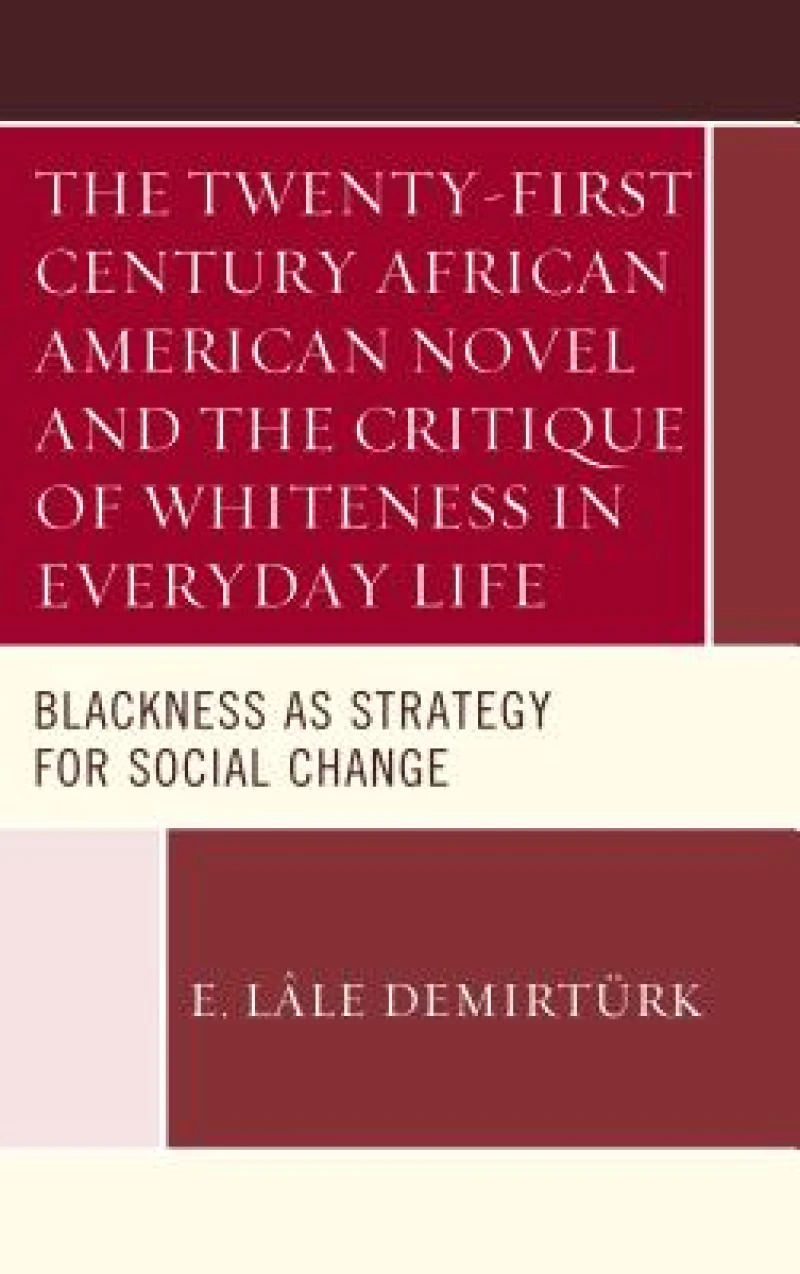
The Twenty-first Century African American Novel and the Critique of Whiteness in Everyday Life : Blackness as Strategy for Social Change
Book Details
Format
Hardback or Cased Book
ISBN-10
1498534821
ISBN-13
9781498534826
Publisher
Bloomsbury Publishing Plc
Imprint
Lexington Books
Country of Manufacture
GB
Country of Publication
GB
Publication Date
May 25th, 2016
Print length
314 Pages
Weight
682 grams
Dimensions
16.10 x 23.70 x 2.80 cms
Product Classification:
Literature: history & criticismEthnic minorities & multicultural studies
Ksh 21,450.00
Manufactured on Demand
0 in stock
Delivery Location
Delivery fee: Select location
Secure
Quality
Fast
This book examines the post-9/11 African American novels, developing a new critical discourse on everyday discursive practices of whiteness. It examines not only how instances of racialization are generated through the embodied practices of whiteness in everyday interracial social encounters, but also how whiteness is undone by and through the black embodied practices of black people, who find different ways of practicing their agency to work for social change.
This book examines the post-9/11 African American novels, developing a new critical discourse on everyday discursive practices of whiteness. The critique of everyday life in the racial context of post-9/11 American society is important in considering diverse forms of the lived experiences and subjectivities of black people in the novels. They help us see that African American representations of the city have political significance in that the neo-urban novel explores the possibility of a black dialogic communication to build a transformative social change. Since the real power of Whiteness lies in its discursive power, the book reveals the urgency to understand not only how whiteness works in everyday life in American society. But it also explores how to cultivate new possibilities of configuring and performing Blackness differently, as a response to the post-9/11 configurations of the culture of fear, to produce new ways of interactional social relations that can eventually open up the space of critical awareness for white people to work against rather than reinforce discursive practices of White supremacy in everyday life.
This book explores how the multiple subjectivities and transformative acts of blackness can offer ways of subverting the discursive power of the white embodied practices. What defines post-9/11 America as a nation that is consumed by the fear of racialized terrorists is its roots in the fear of (uncontrollable) Blackness as excess and ominous threat in the domestic terrain through which the ideology of White supremacy has constructed for governing through Whiteness. African-American urban novels published in the twenty-first century respond to the discursive power of normative Whiteness that regulates black bodies, selves and lives. This book demonstrates how black people contest white dominant social spaces as sites of black criminality and exclusion in an attempt to re-signify them as the sites of black transformative change through personal and grassroots activism through their performativity of Blackness as an agential identity formation in their interpersonal urban social encounters with white people. Hence, the vulnerable spaces of Whiteness in interracial urban encounters, as it pervasively addresses those moments of transformative change, enacted by Black characters, in the face of the discursive practices of whiteness in the everyday life. These novels celebrate multifarious representations of black individuals, who are capable of using their agency to subvert White discursive power, in finding ways in their personal and grassroots activism to transform the culture of fear that locates Blackness as such in an attempt to make a difference in the American society at large.
This book explores how the multiple subjectivities and transformative acts of blackness can offer ways of subverting the discursive power of the white embodied practices. What defines post-9/11 America as a nation that is consumed by the fear of racialized terrorists is its roots in the fear of (uncontrollable) Blackness as excess and ominous threat in the domestic terrain through which the ideology of White supremacy has constructed for governing through Whiteness. African-American urban novels published in the twenty-first century respond to the discursive power of normative Whiteness that regulates black bodies, selves and lives. This book demonstrates how black people contest white dominant social spaces as sites of black criminality and exclusion in an attempt to re-signify them as the sites of black transformative change through personal and grassroots activism through their performativity of Blackness as an agential identity formation in their interpersonal urban social encounters with white people. Hence, the vulnerable spaces of Whiteness in interracial urban encounters, as it pervasively addresses those moments of transformative change, enacted by Black characters, in the face of the discursive practices of whiteness in the everyday life. These novels celebrate multifarious representations of black individuals, who are capable of using their agency to subvert White discursive power, in finding ways in their personal and grassroots activism to transform the culture of fear that locates Blackness as such in an attempt to make a difference in the American society at large.
Get The Twenty-first Century African American Novel and the Critique of Whiteness in Everyday Life by at the best price and quality guaranteed only at Werezi Africa's largest book ecommerce store. The book was published by Bloomsbury Publishing Plc and it has pages.

