
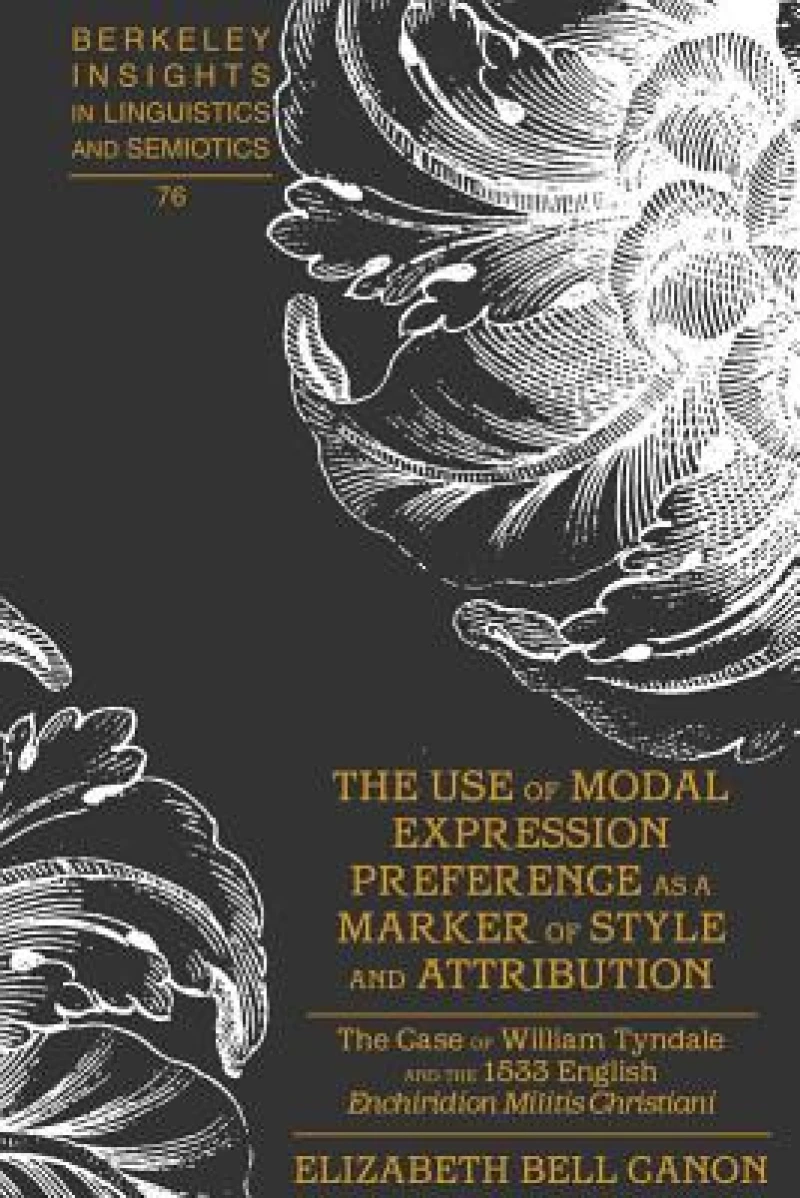
The Use of Modal Expression Preference as a Marker of Style and Attribution : The Case of William Tyndale and the 1533 English "Enchiridion Militis Christiani"
New
Book Details
Format
Hardback or Cased Book
Book Series
Berkeley Insights in Linguistics and Semiotics
ISBN-10
1433108321
ISBN-13
9781433108327
Edition
New
Publisher
Peter Lang Publishing Inc
Imprint
Peter Lang Publishing Inc
Country of Manufacture
US
Country of Publication
GB
Publication Date
Jun 17th, 2010
Print length
169 Pages
Weight
432 grams
Dimensions
23.30 x 25.40 x 1.80 cms
Ksh 12,550.00
Manufactured on Demand
0 in stock
Delivery Location
Delivery fee: Select location
Secure
Quality
Fast
Can an author's preference for expressing modality be quantified and then used as a marker of attribution? This book explores the possibility of using the subjunctive mood as an indicator of style and a marker of authorship in Early Modern English texts.
Can an author’s preference for expressing modality be quantified and then used as a marker of attribution? This book explores the possibility of using the subjunctive mood as an indicator of style and a marker of authorship in Early Modern English texts. Using three works by the sixteenth-century biblical translator and polemicist, William Tyndale, Elizabeth Bell Canon establishes a predictable preference for certain types of modal expression. The theory of subjunctive use as a marker of attribution was then tested on the anonymous 1533 English translation of Erasmus’ Enchiridion Militis Christiani. Also included in this book is a modern English spelling version Tyndale’s The Parable of the Wicked Mammon.
Get The Use of Modal Expression Preference as a Marker of Style and Attribution by at the best price and quality guaranteed only at Werezi Africa's largest book ecommerce store. The book was published by Peter Lang Publishing Inc and it has pages.

