
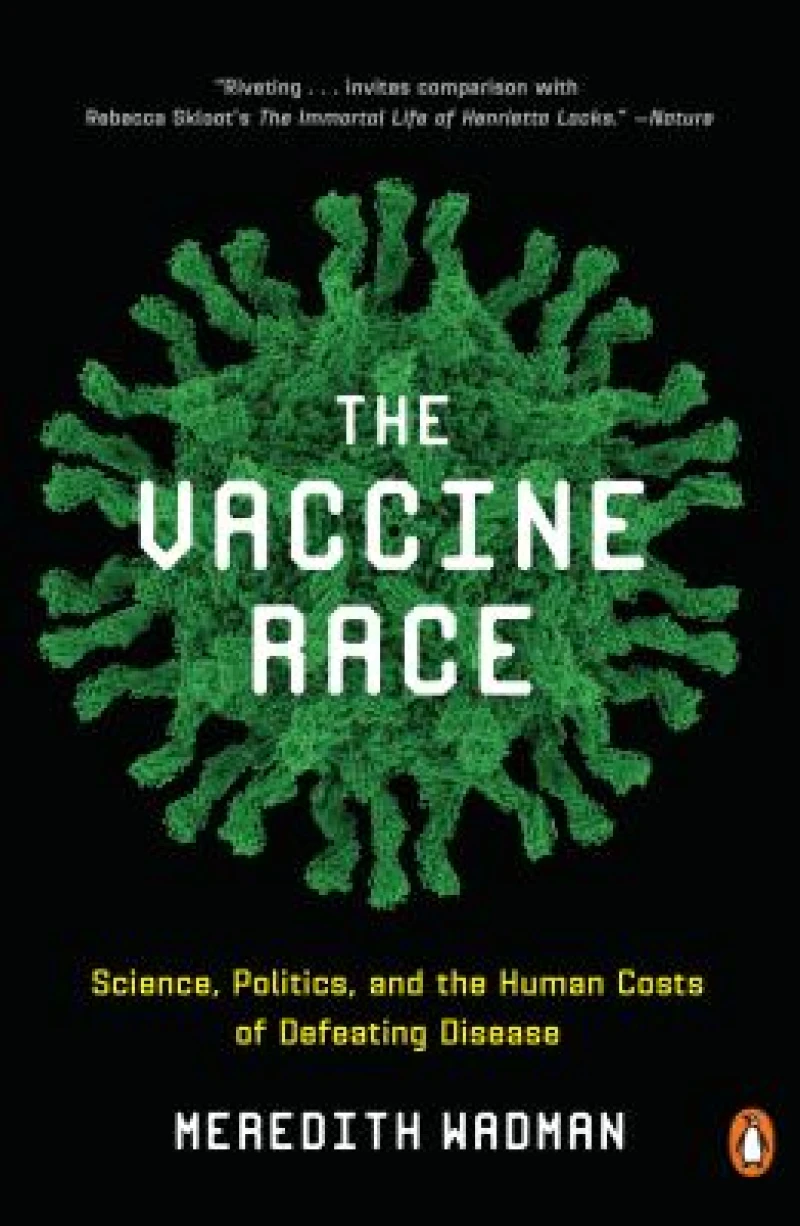
The Vaccine Race : Science, Politics, and the Human Costs of Defeating Disease
Book Details
Format
Paperback / Softback
ISBN-10
0143111310
ISBN-13
9780143111313
Publisher
Random House
Imprint
Penguin Group USA
Country of Manufacture
US
Country of Publication
GB
Publication Date
Sep 4th, 2018
Print length
436 Pages
Weight
432 grams
Dimensions
13.90 x 21.30 x 2.90 cms
Product Classification:
History of science
Ksh 3,400.00
Temporarily out of stock, due soon
0 in stock
Delivery Location
Delivery fee: Select location
Secure
Quality
Fast
"A real jewel of science history...brims with suspense and now-forgotten catastrophe and intrigue...Wadman's smooth prose calmly spins a surpassingly complicated story into a real tour de force." The New York Times
?Riveting . . . [The Vaccine Race] invites comparison with Rebecca Skloot's 2007 The Immortal Life of Henrietta Lacks.? Nature
The epic and controversial story of a major breakthrough in cell biology that led to the conquest of rubella and other devastating diseases.
Until the late 1960s, tens of thousands of American children suffered crippling birth defects if their mothers had been exposed to rubella, popularly known as German measles, while pregnant; there was no vaccine and little understanding of how the disease devastated fetuses. In June 1962, a young biologist in Philadelphia, using tissue extracted from an aborted fetus from Sweden, produced safe, clean cells that allowed the creation of vaccines against rubella and other common childhood diseases. Two years later, in the midst of a devastating German measles epidemic, his colleague developed the vaccine that would one day wipe out homegrown rubella. The rubella vaccine and others made with those fetal cells have protected more than 150 million people in the United States, the vast majority of them preschoolers. The new cells and the method of making them also led to vaccines that have protected billions of people around the world from polio, rabies, chicken pox, measles, hepatitis A, shingles and adenovirus.
Meredith Wadman's masterful account recovers not only the science of this urgent race, but also the political roadblocks that nearly stopped the scientists. She describes the terrible dilemmas of pregnant women exposed to German measles and recounts testing on infants, prisoners, orphans, and the intellectually disabled, which was common in the era. These events take place at the dawn of the battle over using human fetal tissue in research, during the arrival of big commerce in campus labs, and as huge changes take place in the laws and practices governing who ?owns? research cells and the profits made from biological inventions. It is also the story of yet one more unrecognized woman whose cells have been used to save countless lives.
With another frightening virus--measles--on the rise today, no medical story could have more human drama, impact, or urgency than The Vaccine Race.
?Riveting . . . [The Vaccine Race] invites comparison with Rebecca Skloot's 2007 The Immortal Life of Henrietta Lacks.? Nature
The epic and controversial story of a major breakthrough in cell biology that led to the conquest of rubella and other devastating diseases.
Until the late 1960s, tens of thousands of American children suffered crippling birth defects if their mothers had been exposed to rubella, popularly known as German measles, while pregnant; there was no vaccine and little understanding of how the disease devastated fetuses. In June 1962, a young biologist in Philadelphia, using tissue extracted from an aborted fetus from Sweden, produced safe, clean cells that allowed the creation of vaccines against rubella and other common childhood diseases. Two years later, in the midst of a devastating German measles epidemic, his colleague developed the vaccine that would one day wipe out homegrown rubella. The rubella vaccine and others made with those fetal cells have protected more than 150 million people in the United States, the vast majority of them preschoolers. The new cells and the method of making them also led to vaccines that have protected billions of people around the world from polio, rabies, chicken pox, measles, hepatitis A, shingles and adenovirus.
Meredith Wadman's masterful account recovers not only the science of this urgent race, but also the political roadblocks that nearly stopped the scientists. She describes the terrible dilemmas of pregnant women exposed to German measles and recounts testing on infants, prisoners, orphans, and the intellectually disabled, which was common in the era. These events take place at the dawn of the battle over using human fetal tissue in research, during the arrival of big commerce in campus labs, and as huge changes take place in the laws and practices governing who ?owns? research cells and the profits made from biological inventions. It is also the story of yet one more unrecognized woman whose cells have been used to save countless lives.
With another frightening virus--measles--on the rise today, no medical story could have more human drama, impact, or urgency than The Vaccine Race.
"A real jewel of science history...brims with suspense and now-forgotten catastrophe and intrigue...Wadmans smooth prose calmly spins a surpassingly complicated story into a real tour de force."The New York Times
Riveting . . . [The Vaccine Race] invites comparison with Rebecca Skloot''s 2007 The Immortal Life of Henrietta Lacks.Nature
The epic and controversial story of a major breakthrough in cell biology that led to the conquest of rubella and other devastating diseases.
Until the late 1960s, tens of thousands of American children suffered crippling birth defects if their mothers had been exposed to rubella, popularly known as German measles, while pregnant; there was no vaccine and little understanding of how the disease devastated fetuses. In June 1962, a young biologist in Philadelphia, using tissue extracted from an aborted fetus from Sweden, produced safe, clean cells that allowed the creation of vaccines against rubella and other common childhood diseases. Two years later, in the midst of a devastating German measles epidemic, his colleague developed the vaccine that would one day wipe out homegrown rubella. The rubella vaccine and others made with those fetal cells have protected more than 150 million people in the United States, the vast majority of them preschoolers. The new cells and the method of making them also led to vaccines that have protected billions of people around the world from polio, rabies, chicken pox, measles, hepatitis A, shingles and adenovirus.
Meredith Wadmans masterful account recovers not only the science of this urgent race, but also the political roadblocks that nearly stopped the scientists. She describes the terrible dilemmas of pregnant women exposed to German measles and recounts testing on infants, prisoners, orphans, and the intellectually disabled, which was common in the era. These events take place at the dawn of the battle over using human fetal tissue in research, during the arrival of big commerce in campus labs, and as huge changes take place in the laws and practices governing who owns research cells and the profits made from biological inventions. It is also the story of yet one more unrecognized woman whose cells have been used to save countless lives.
With another frightening virus--measles--on the rise today, no medical story could have more human drama, impact, or urgency than The Vaccine Race.
Riveting . . . [The Vaccine Race] invites comparison with Rebecca Skloot''s 2007 The Immortal Life of Henrietta Lacks.Nature
The epic and controversial story of a major breakthrough in cell biology that led to the conquest of rubella and other devastating diseases.
Until the late 1960s, tens of thousands of American children suffered crippling birth defects if their mothers had been exposed to rubella, popularly known as German measles, while pregnant; there was no vaccine and little understanding of how the disease devastated fetuses. In June 1962, a young biologist in Philadelphia, using tissue extracted from an aborted fetus from Sweden, produced safe, clean cells that allowed the creation of vaccines against rubella and other common childhood diseases. Two years later, in the midst of a devastating German measles epidemic, his colleague developed the vaccine that would one day wipe out homegrown rubella. The rubella vaccine and others made with those fetal cells have protected more than 150 million people in the United States, the vast majority of them preschoolers. The new cells and the method of making them also led to vaccines that have protected billions of people around the world from polio, rabies, chicken pox, measles, hepatitis A, shingles and adenovirus.
Meredith Wadmans masterful account recovers not only the science of this urgent race, but also the political roadblocks that nearly stopped the scientists. She describes the terrible dilemmas of pregnant women exposed to German measles and recounts testing on infants, prisoners, orphans, and the intellectually disabled, which was common in the era. These events take place at the dawn of the battle over using human fetal tissue in research, during the arrival of big commerce in campus labs, and as huge changes take place in the laws and practices governing who owns research cells and the profits made from biological inventions. It is also the story of yet one more unrecognized woman whose cells have been used to save countless lives.
With another frightening virus--measles--on the rise today, no medical story could have more human drama, impact, or urgency than The Vaccine Race.
Get The Vaccine Race by at the best price and quality guaranteed only at Werezi Africa's largest book ecommerce store. The book was published by Random House and it has pages.

