
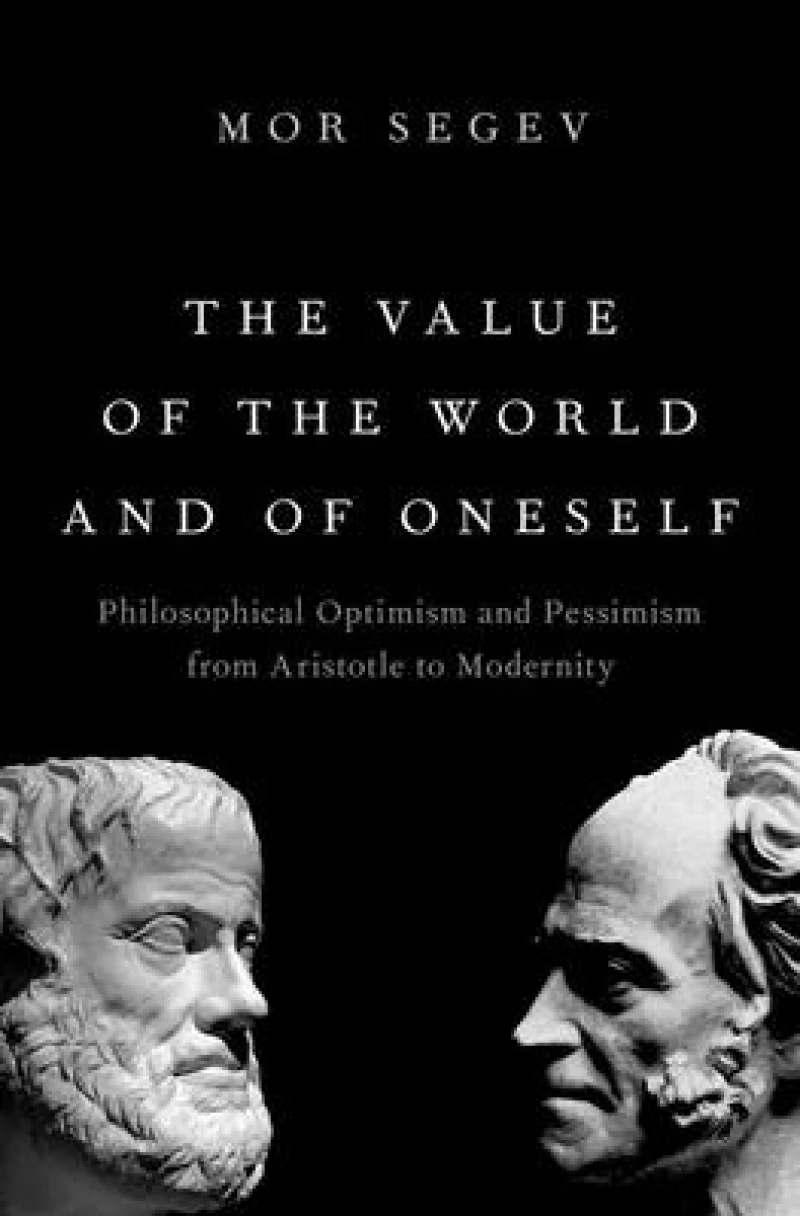
The Value of the World and of Oneself : Philosophical Optimism and Pessimism from Aristotle to Modernity
Book Details
Format
Hardback or Cased Book
ISBN-10
0197634079
ISBN-13
9780197634073
Publisher
Oxford University Press Inc
Imprint
Oxford University Press Inc
Country of Manufacture
GB
Country of Publication
GB
Publication Date
Oct 17th, 2022
Print length
272 Pages
Weight
522 grams
Dimensions
14.70 x 21.80 x 2.50 cms
Product Classification:
PhilosophyWestern philosophy: Ancient, to c 500History of ideas
Ksh 15,300.00
Werezi Extended Catalogue
0 in stock
Delivery Location
Delivery fee: Select location
Secure
Quality
Fast
A wide-ranging, razor sharp exploration of the debate between optimism and pessimism throughout the history of philosophy, author Mor Segev's The Value of the World and of Oneself considers the question of existence and recounts what our greatest thinkers--Aristotle, Maimonides, Spinoza, Schopenhauer, Nietzsche, Camus--have made of the matter.
Philosophical optimists maintain that the world is optimally arranged and is accordingly valuable, and that the existence of human beings is preferable to their nonexistence. Philosophical pessimists, by contrast, would prefer human nonexistence, considering the world to be in a woeful condition and ultimately valueless. The Value of the World and of Oneself examines the longstanding debate between philosophical optimism and pessimism in the history of philosophy, focusing on Aristotle, Maimonides, Spinoza, Schopenhauer, Nietzsche, and Camus. Author Mor Segev examines how Schopenhauer criticizes the optimism he locates in the Hebrew Bible and in Spinoza for being unable to square the presumed perfection of the world and its parts, including human life, with the suffering and misfortunes observable in them, and for leading to egoism and thereby to cruelty. Nietzsche, in turn, criticizes Schopenhauer''s overtly pessimistic view for furtively positing a perfect state for one to aspire to, thus being latently optimistic. Similarly, Camus charges Nietzsche, who announces his rejection of both optimism and pessimism, with deifying the world and oneself, thereby reverting to optimism. Aristotle countenances an optimistic theory, later adopted and developed by Maimonides, that is arguably capable of facing Schopenhauer''s challenge. Aristotelian optimism, Segev argues, accounts for the perfection of the world in terms of a hierarchy of value between its parts, with human beings ranked relatively low, and recommends an attitude congruent with that ranking. A wide-ranging survey of the major theorists of optimism and pessimism, The Value of the World and of Oneself reorients our interpretations of crucial thinkers via Segev''s remarkable grasp of the philosophical canon''s multi-millennial history.
Get The Value of the World and of Oneself by at the best price and quality guaranteed only at Werezi Africa's largest book ecommerce store. The book was published by Oxford University Press Inc and it has pages.

