
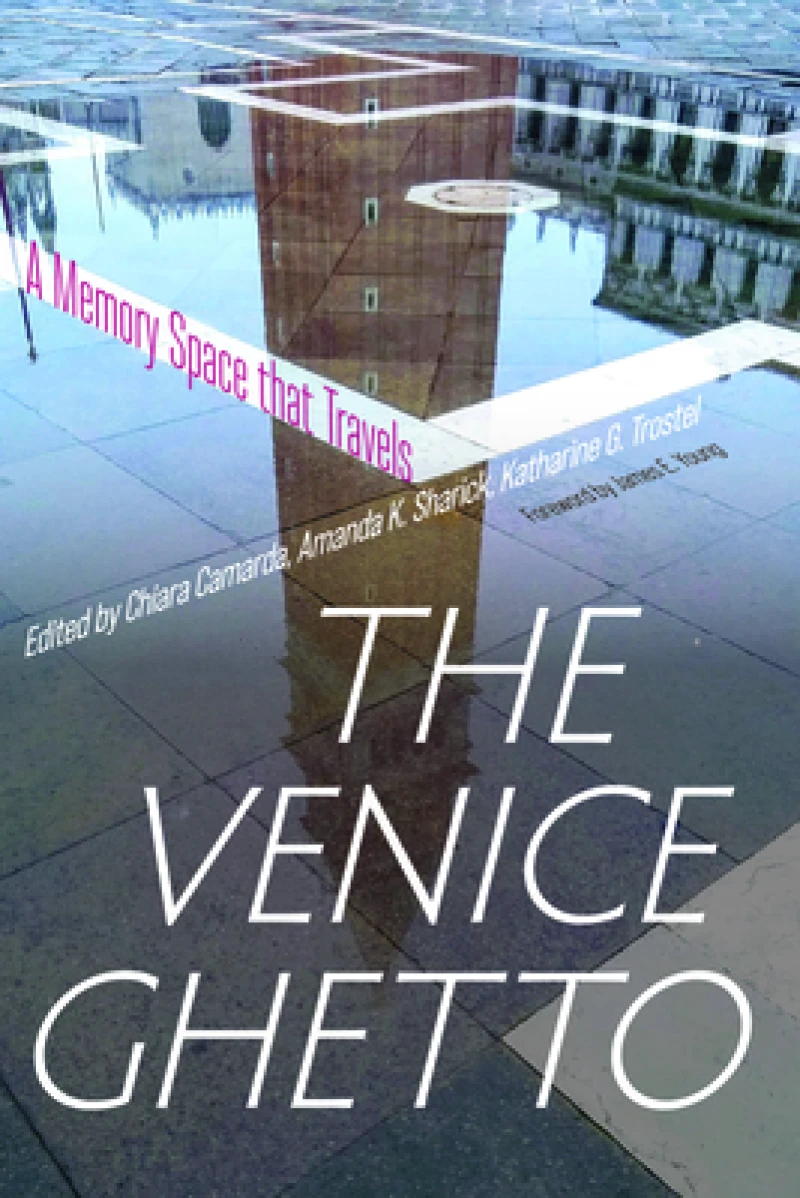
The Venice Ghetto : A Memory Space That Travels
Book Details
Format
Hardback or Cased Book
ISBN-10
162534614X
ISBN-13
9781625346148
Publisher
University of Massachusetts Press
Imprint
University of Massachusetts Press
Country of Manufacture
GB
Country of Publication
GB
Publication Date
Feb 25th, 2022
Print length
296 Pages
Weight
484 grams
Dimensions
23.10 x 15.20 x 2.50 cms
Ksh 12,950.00
Temporarily out of stock, due soon
0 in stock
Delivery Location
Delivery fee: Select location
Secure
Quality
Fast
The Venice Ghetto was founded in 1516 by the Venetian government as a segregated area of the city in which Jews were compelled to live. This interdisciplinary collection engages with questions about the history, conditions, and lived experience of the Ghetto, including its legacy as a compulsory, segregated, and enclosed space.
The Venice Ghetto was founded in 1516 by the Venetian government as a segregated area of the city in which Jews were compelled to live. The world's first ghetto and the origin of the English word, the term simultaneously works to mark specific places and their histories, and as a global symbol that evokes themes of identity, exile, marginalization, and segregation. To capture these multiple meanings, the editors of this volume conceptualize the ghetto as a "memory space that travels" through both time and space.
This interdisciplinary collection engages with questions about the history, conditions, and lived experience of the Venice Ghetto, including its legacy as a compulsory, segregated, and enclosed space. Contributors also consider the ghetto's influence on the figure of the Renaissance moneylender, the material culture of the ghetto archive, the urban form of North Africa's mellah and hara, and the ghetto's impact on the writings of Primo Levi and Marjorie Agosín.
In addition to the volume editors, The Venice Ghetto features a foreword from James E. Young and contributions from Shaul Bassi, Murray Baumgarten, Margaux Fitoussi, Dario Miccoli, Andrea Yaakov Lattes, Federica Ruspio, Michael Shapiro, Clive Sinclair, and Emanuela Trevisan Semi.
This interdisciplinary collection engages with questions about the history, conditions, and lived experience of the Venice Ghetto, including its legacy as a compulsory, segregated, and enclosed space. Contributors also consider the ghetto's influence on the figure of the Renaissance moneylender, the material culture of the ghetto archive, the urban form of North Africa's mellah and hara, and the ghetto's impact on the writings of Primo Levi and Marjorie Agosín.
In addition to the volume editors, The Venice Ghetto features a foreword from James E. Young and contributions from Shaul Bassi, Murray Baumgarten, Margaux Fitoussi, Dario Miccoli, Andrea Yaakov Lattes, Federica Ruspio, Michael Shapiro, Clive Sinclair, and Emanuela Trevisan Semi.
Get The Venice Ghetto by at the best price and quality guaranteed only at Werezi Africa's largest book ecommerce store. The book was published by University of Massachusetts Press and it has pages.

