
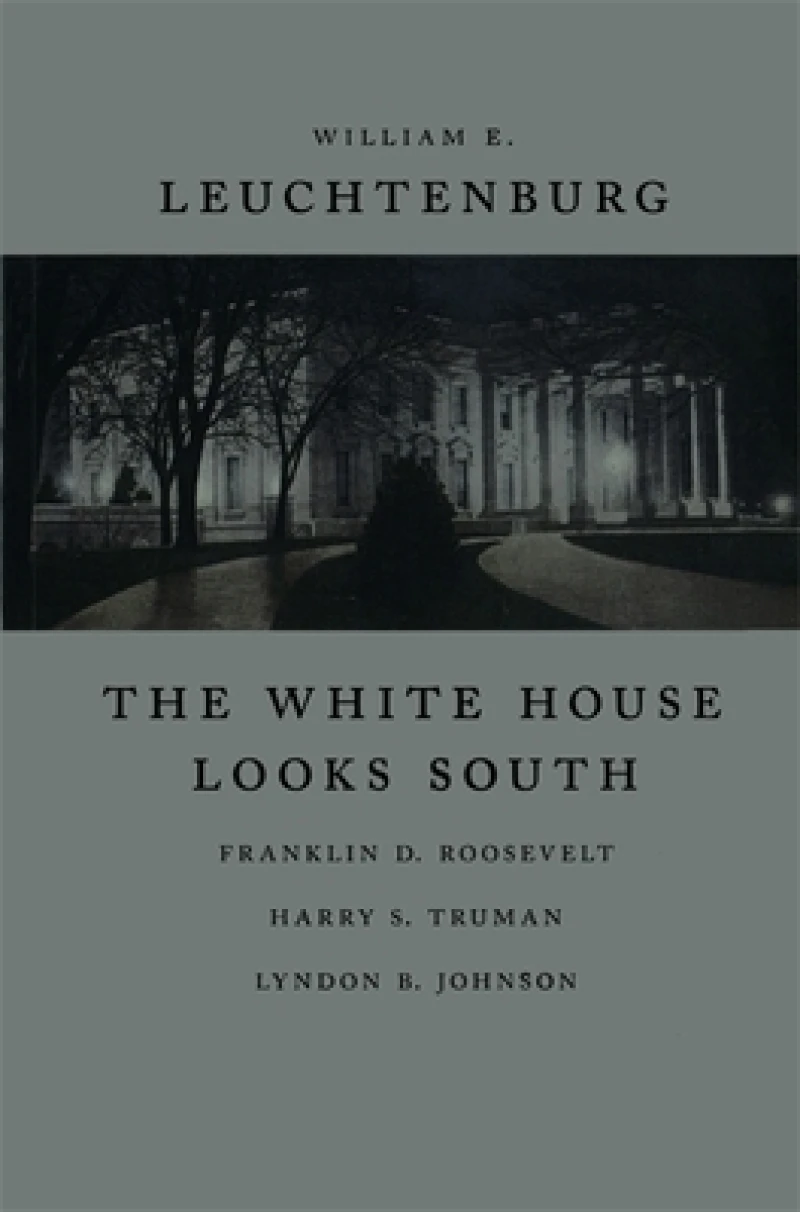
The White House Looks South : Franklin D. Roosevelt, Harry S. Truman, Lyndon B. Johnson
Book Details
Format
Paperback / Softback
ISBN-10
0807132861
ISBN-13
9780807132869
Publisher
Louisiana State University Press
Imprint
Louisiana State University Press
Country of Manufacture
US
Country of Publication
GB
Publication Date
Aug 1st, 2007
Print length
688 Pages
Weight
333 grams
Dimensions
22.60 x 15.20 x 4.30 cms
Ksh 5,650.00
Temporarily out of stock, due soon
0 in stock
Delivery Location
Delivery fee: Select location
Secure
Quality
Fast
Perhaps not southerners in the usual sense, Franklin D. Roosevelt, Harry S. Truman, and Lyndon B. Johnson each demonstrated a political style and philosophy that helped them influence the South and unite the country in ways that few other presidents have. Combining vivid biography and political insight, William E. Leuchtenburg offers an engaging account of relations between these three presidents and the South while also tracing how the region came to embrace a national perspective without losing its distinctive sense of place.
According to Leuchtenburg, each man ""had one foot below the Mason-Dixon Line, one foot above."" Roosevelt, a New Yorker, spent much of the last twenty-five years of his life in Warm Springs, Georgia, where he built a ""Little White House."" Truman, a Missourian, grew up in a pro-Confederate town but one that also looked West because of its history as the entrepôt for the Oregon Trail. Johnson, who hailed from the former Confederate state of Texas, was a westerner as much as a southerner.
Their intimate associations with the South gave these three presidents an empathy toward and acceptance in the region. In urging southerners to jettison outworn folkways, Roosevelt could speak as a neighbor and adopted son, Truman as a borderstater who had been taught to revere the Lost Cause, and Johnson as a native who had been scorned by Yankees. Leuchtenburg explores in fascinating detail how their unique attachment to ""place"" helped them to adopt shifting identities, which proved useful in healing rifts between North and South, in altering behavior in regard to race, and in fostering southern economic growth.
The White House Looks South is the monumental work of a master historian. At a time when race, class, and gender dominate historical writing, Leuchtenburg argues that place is no less significant. In a period when America is said to be homogenized, he shows that sectional distinctions persist. And in an era when political history is devalued, he demonstrates that government can profoundly affect people's lives and that presidents can be change-makers.
According to Leuchtenburg, each man ""had one foot below the Mason-Dixon Line, one foot above."" Roosevelt, a New Yorker, spent much of the last twenty-five years of his life in Warm Springs, Georgia, where he built a ""Little White House."" Truman, a Missourian, grew up in a pro-Confederate town but one that also looked West because of its history as the entrepôt for the Oregon Trail. Johnson, who hailed from the former Confederate state of Texas, was a westerner as much as a southerner.
Their intimate associations with the South gave these three presidents an empathy toward and acceptance in the region. In urging southerners to jettison outworn folkways, Roosevelt could speak as a neighbor and adopted son, Truman as a borderstater who had been taught to revere the Lost Cause, and Johnson as a native who had been scorned by Yankees. Leuchtenburg explores in fascinating detail how their unique attachment to ""place"" helped them to adopt shifting identities, which proved useful in healing rifts between North and South, in altering behavior in regard to race, and in fostering southern economic growth.
The White House Looks South is the monumental work of a master historian. At a time when race, class, and gender dominate historical writing, Leuchtenburg argues that place is no less significant. In a period when America is said to be homogenized, he shows that sectional distinctions persist. And in an era when political history is devalued, he demonstrates that government can profoundly affect people's lives and that presidents can be change-makers.
Get The White House Looks South by at the best price and quality guaranteed only at Werezi Africa's largest book ecommerce store. The book was published by Louisiana State University Press and it has pages.

