
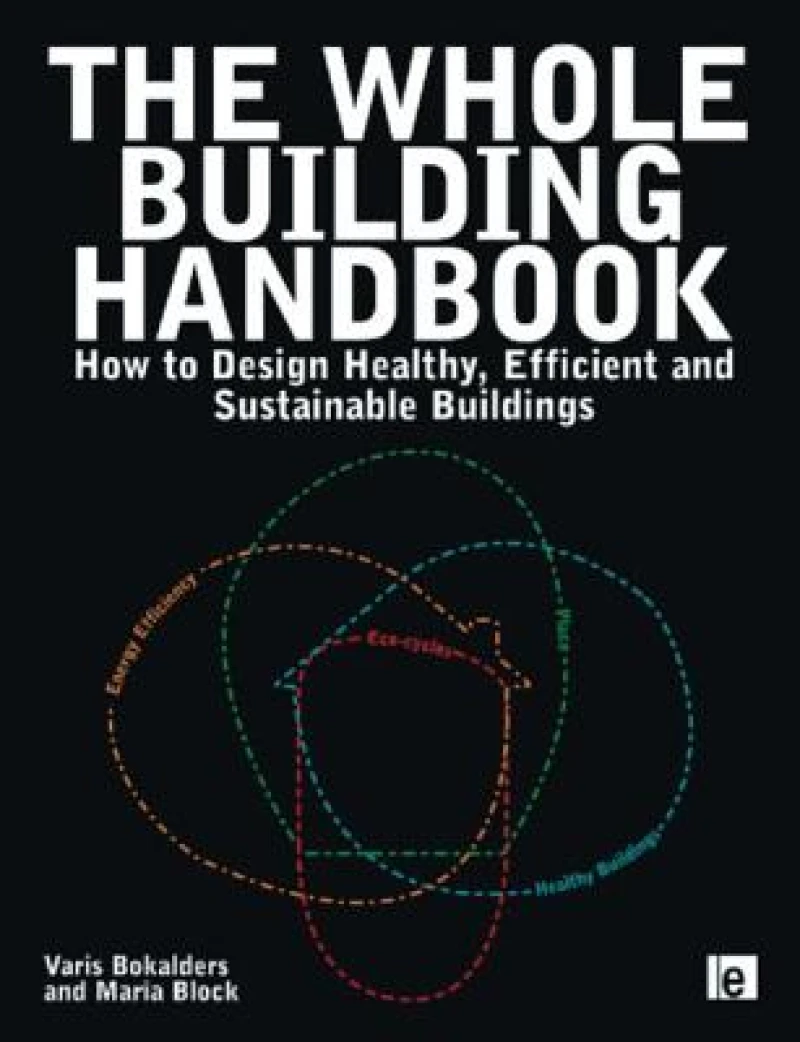
The Whole Building Handbook : How to Design Healthy, Efficient and Sustainable Buildings
Book Details
Format
Paperback / Softback
ISBN-10
1844075230
ISBN-13
9781844075232
Publisher
Taylor & Francis Ltd
Imprint
Earthscan Ltd
Country of Manufacture
GB
Country of Publication
GB
Publication Date
Dec 18th, 2009
Print length
704 Pages
Weight
1,326 grams
Dimensions
24.60 x 18.90 x 3.70 cms
Ksh 16,500.00
Werezi Extended Catalogue
0 in stock
Delivery Location
Delivery fee: Select location
Secure
Quality
Fast
A compendium of the issues and strategies that architects need to understand to design and construct sustainable buildings for a sustainable society. It includes a section on adaptation of buildings to local conditions, looking at how a site must be studied with respect to nature, climate and community structure as well as human activities.
The Whole Building Handbook is a compendium of all the issues and strategies that architects need to understand to design and construct sustainable buildings for a sustainable society. The authors move beyond the current definition of sustainability in architecture, which tends to focus on energy-efficiency, to include guidance for architecture that promotes social cohesion, personal health, renewable energy sources, water and waste recycling systems, permaculture, energy conservation - and crucially, buildings in relation to their place. The authors offer a holistic approach to sustainable architecture and authoritative technical advice, on:* How to design and construct healthy buildings, through choosing suitable materials, healthy service systems, and designing a healthy and comfortable indoor climate, including solutions for avoiding problems with moisture, radon and noise as well as how to facilitate cleaning and maintenance. * How to design and construct buildings that use resources efficiently, where heating and cooling needs and electricity use is minimized and water-saving technologies and garbage recycling technologies are used. * How to ''close'' organic waste, sewage, heat and energy cycles. For example, how to design a sewage system that recycles nutrients. * Includes a section on adaptation of buildings to local conditions, looking at how a site must be studied with respect to nature, climate and community structure as well as human activities. The result is a comprehensive, thoroughly illustrated and carefully structured textbook and reference.
Get The Whole Building Handbook by at the best price and quality guaranteed only at Werezi Africa's largest book ecommerce store. The book was published by Taylor & Francis Ltd and it has pages.

