

The Will to Believe : And Other Essays in Popular Philosophy
Book Details
Format
Paperback / softback
Book Series
Cambridge Library Collection - Philosophy
ISBN-10
1108067239
ISBN-13
9781108067232
Publisher
Cambridge University Press
Imprint
Cambridge University Press
Country of Manufacture
GB
Country of Publication
GB
Publication Date
Mar 20th, 2014
Print length
356 Pages
Weight
466 grams
Dimensions
21.50 x 14.00 x 2.30 cms
Product Classification:
PhilosophyPhilosophy
KSh 6,700.00
Currently unavailable
0 in stock
Delivery Location
Delivery fee: Select location
Secure
Quality
Fast
William James (1842–1910) originally published these ten non-technical essays in popular journals and reviews. Collected in this 1897 volume, they illustrate his pragmatic approach to questions of morality and religious belief. He argues that in cases of insufficient evidence we both can and must act on the best hypothesis.
For this 1897 publication, the American philosopher William James (1842–1910) brought together ten essays, some of which were originally talks given to Ivy League societies. Accessible to a broader audience, these non-technical essays illustrate the author's pragmatic approach to belief and morality, arguing for faith and action in spite of uncertainty. James thought his audiences suffered 'paralysis of their native capacity for faith' while awaiting scientific grounds for belief. His response consisted in an attitude of 'radical empiricism', which deals practically rather than ideologically with real-world phenomena. When facing a 'momentous' decision about belief, he says, we both can and must choose the best hypothesis. The first four essays apply this principle to religious faith, and the rest explore the pragmatic approach to such topics as determinism, ethics and individual achievement. James developed his ideas further in The Varieties of Religious Experience (1902) and Pragmatism (1907), both of which are reissued in this series.
Get The Will to Believe by William James at the best price and quality guaranteed only at Werezi Africa's largest book ecommerce store. The book was published by Cambridge University Press and it has 356 pages.
Customers Who Bought This Also Bought

Decolonizing Language and Other Revolutionary Ideas
KSh 2,350.00

How to Read a Book
KSh 2,000.00
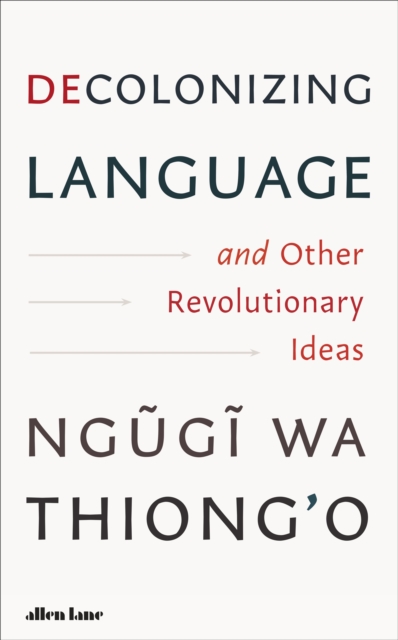
Decolonizing Language and Other Revolutionary Ideas
KSh 3,600.00

Creative Act
KSh 3,250.00

Groundwork for the Metaphysics of Morals
KSh 2,000.00

Things in Nature Merely
KSh 2,000.00

Meditations – The Philosophy Classic
KSh 2,150.00

Great Ideas Social Contract
KSh 1,450.00
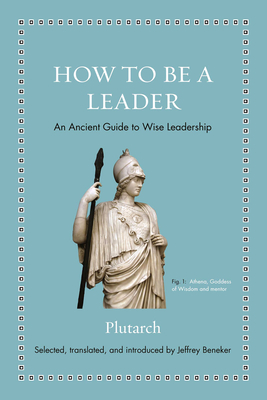
How to Be a Leader – An Ancient Guide to Wise Leadership
KSh 2,800.00

The Daily Laws
KSh 2,350.00

Three Critiques, 3-volume Set
KSh 14,000.00

Philosophical Dictionary
KSh 2,700.00
More by William James

The Correspondence of William James, Volume 3
KSh 15,850.00

Some Problems of Philosophy
KSh 3,050.00

The Naval History of Great Britain - Volume 6
KSh 8,200.00
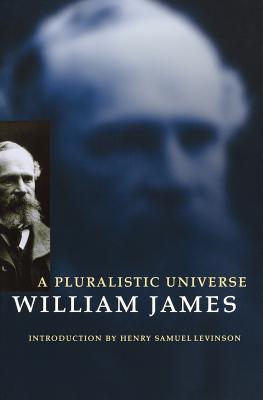
A Pluralistic Universe
KSh 3,150.00

The Varieties of Religious Experience
KSh 2,350.00
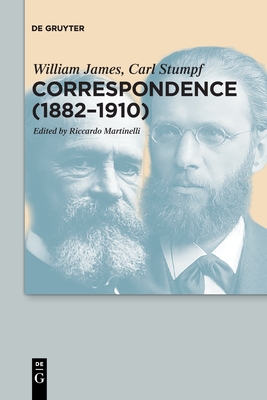
Correspondence (1882–1910)
KSh 4,650.00
Correspondence (1882–1910)
KSh 24,300.00

The Correspondence of William James V. 12; April 1908-August 1910
KSh 15,850.00

The Naval History of Great Britain - Volume 5
KSh 8,400.00

Is Life Worth Living (Classic Reprint)
KSh 3,650.00

The Naval History of Great Britain, Vol. 4 of 6
KSh 5,550.00

The Principles of Psychology (Volumes I and II)
KSh 6,150.00
