
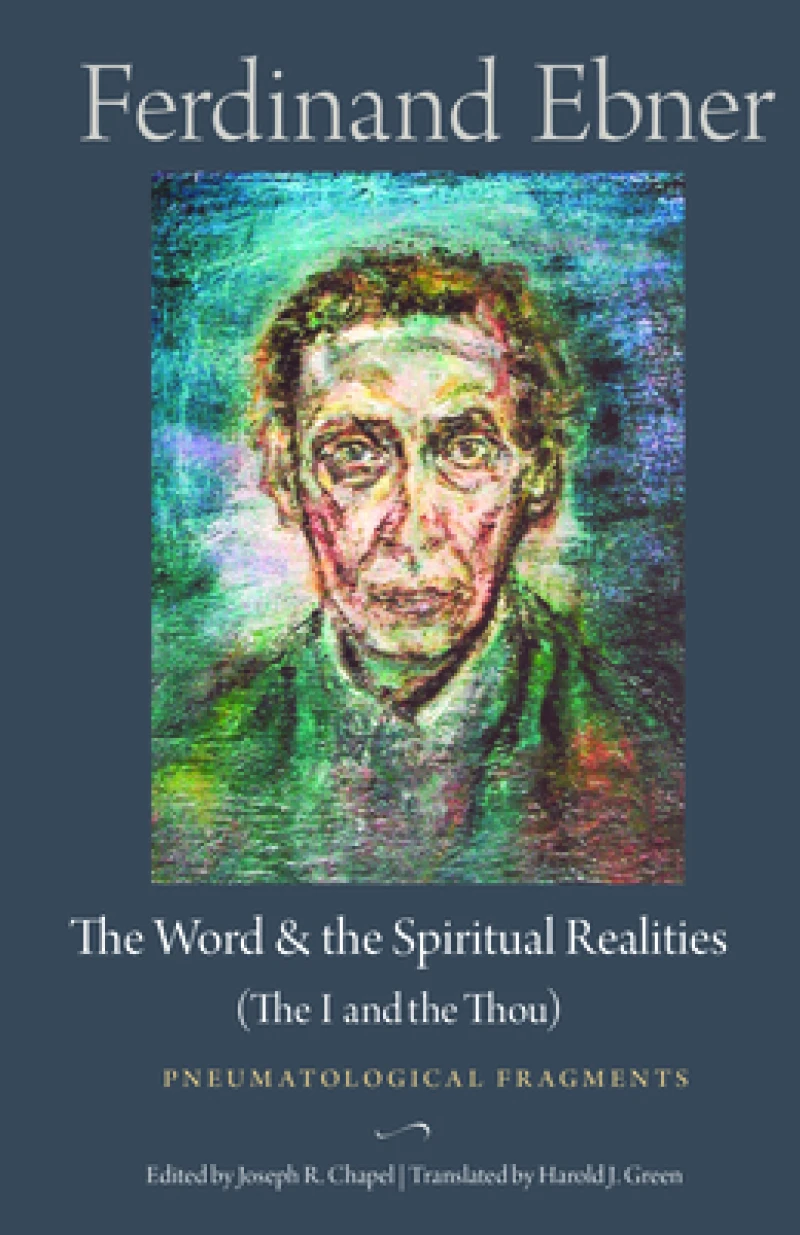
The Word and the Spiritual Realities (the I and the Thou) : Pneumatological Fragments
Book Details
Format
Hardback or Cased Book
ISBN-10
0813234069
ISBN-13
9780813234069
Publisher
The Catholic University of America Press
Imprint
The Catholic University of America Press
Country of Manufacture
GB
Country of Publication
GB
Publication Date
Oct 31st, 2021
Print length
256 Pages
Weight
560 grams
Dimensions
14.70 x 22.40 x 2.80 cms
Product Classification:
PhilosophyChristianityPhilosophyChristianity
Ksh 10,800.00
Werezi Extended Catalogue
0 in stock
Delivery Location
Delivery fee: Select location
Secure
Quality
Fast
Provides the first published English translation of Ferdinand Ebner's seminal 1921 work, Das Wort und die geistigen realitäten - long available in major languages but never in English. It is frequently compared with Martin Buber's I and Thou, published in 1923, which actually draws its central I-Thou insight from Ebner.
This volume will constitute the first published English translation of Ferdinand Ebner’s seminal 1921 work, Das Wort und die geistigen realitäten - long available in major languages but never in English. It is frequently compared with Martin Buber’s I and Thou, published in 1923, which actually draws its central I-Thou insight from Ebner.
In recent centuries, Philosophy reflects a turn toward the autonomous subject versus a biblical sense of person. The limits/failures of science manifest in the horrors of World War I led to the emergence of a “Dialogical Personalist Philosophy” in reaction to the universal doubt of Cartesian thought and to German idealism, which engages the idea or representation but not the reality of “things-in-themselves.”
The core of Ebner: human speech is constitutive of human existence: humans are given the “word.” “Having the word” is a miraculous gift from God. It is only in the word, in language, that an “I” meets a “Thou,” that relationship and self-identity can occur, and this word is given in Jesus Christ, the Word made flesh: “In the beginning was the Word”; Jesus, the Logos of St. John’s Gospel, mediates between God and man and “stands” between I and Thou. It is through Jesus that it is possible to address God in the human thou. The key to life’s meaning, to the centrality of relationship, and to God’s continuous action in HIs creation, is found in the I-Thou question: why the I can never be found in itself, and so must look in the thou, while the false I will try to possess the thou as an object of power. This is Ebner’s critique of idealist thought: reality, truth, and personal identity are neither ideas, nor found in ideas, therefore, Descartes’ cogito must be rejected, for the existence of the I can’t be founded or proved by solitary thinking, but only in relation with a thou.
In recent centuries, Philosophy reflects a turn toward the autonomous subject versus a biblical sense of person. The limits/failures of science manifest in the horrors of World War I led to the emergence of a “Dialogical Personalist Philosophy” in reaction to the universal doubt of Cartesian thought and to German idealism, which engages the idea or representation but not the reality of “things-in-themselves.”
The core of Ebner: human speech is constitutive of human existence: humans are given the “word.” “Having the word” is a miraculous gift from God. It is only in the word, in language, that an “I” meets a “Thou,” that relationship and self-identity can occur, and this word is given in Jesus Christ, the Word made flesh: “In the beginning was the Word”; Jesus, the Logos of St. John’s Gospel, mediates between God and man and “stands” between I and Thou. It is through Jesus that it is possible to address God in the human thou. The key to life’s meaning, to the centrality of relationship, and to God’s continuous action in HIs creation, is found in the I-Thou question: why the I can never be found in itself, and so must look in the thou, while the false I will try to possess the thou as an object of power. This is Ebner’s critique of idealist thought: reality, truth, and personal identity are neither ideas, nor found in ideas, therefore, Descartes’ cogito must be rejected, for the existence of the I can’t be founded or proved by solitary thinking, but only in relation with a thou.
Get The Word and the Spiritual Realities (the I and the Thou) by at the best price and quality guaranteed only at Werezi Africa's largest book ecommerce store. The book was published by The Catholic University of America Press and it has pages.

