
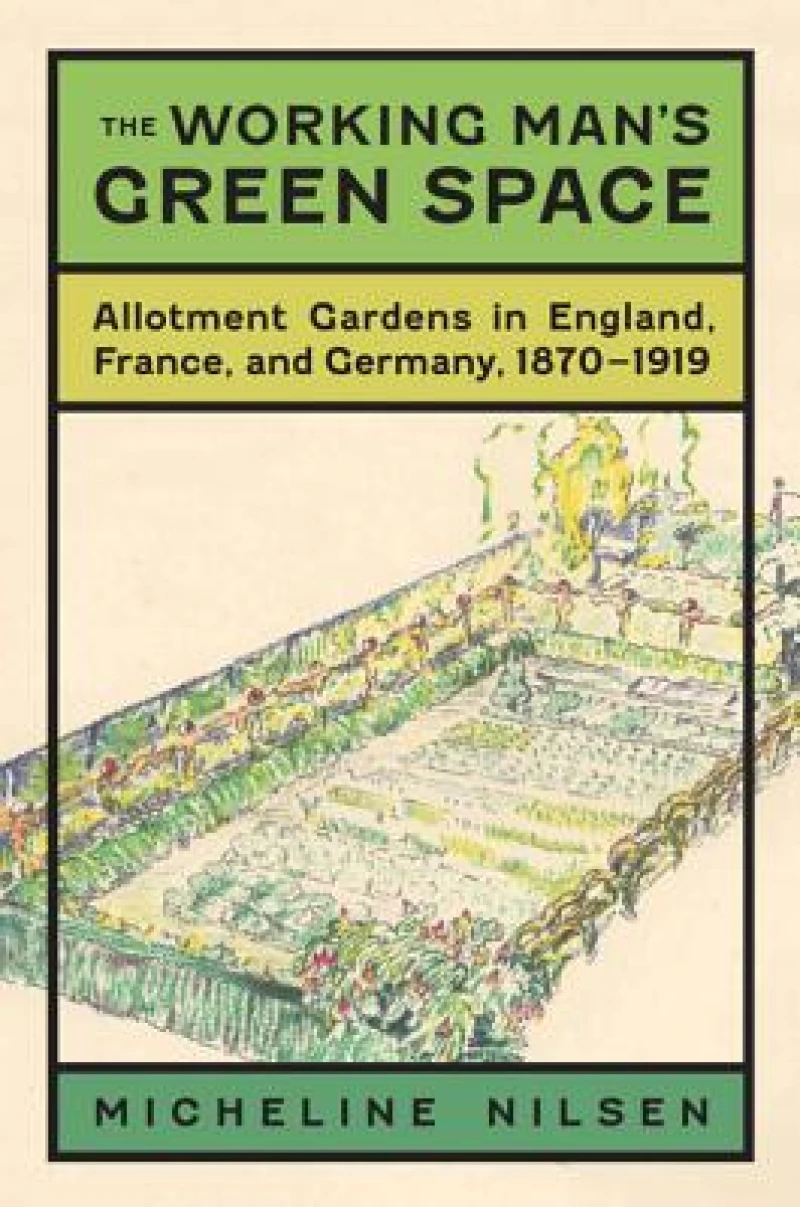
The Working Man''s Green Space : Allotment Gardens in England, France, and Germany, 1870-1919
Book Details
Format
Hardback or Cased Book
ISBN-10
0813935083
ISBN-13
9780813935089
Publisher
University of Virginia Press
Imprint
University of Virginia Press
Country of Manufacture
US
Country of Publication
GB
Publication Date
Feb 28th, 2014
Print length
248 Pages
Weight
501 grams
Dimensions
23.80 x 16.20 x 2.20 cms
Ksh 6,650.00
Werezi Extended Catalogue
0 in stock
Delivery Location
Delivery fee: Select location
Secure
Quality
Fast
With antecedents dating back to the Middle Ages, the community garden is more popular than ever as a means of procuring the freshest food possible and instilling community cohesion. But as Micheline Nilsen shows, the small-garden movement, which gained impetus in the nineteenth century as rural workers crowded into industrial cities, was for a long time primarily a repository of ideas concerning social reform, hygienic improvement, and class mobility. Complementing efforts by worker cooperatives, unions, and social legislation, the provision of small garden plots offered some relief from bleak urban living conditions. Urban planners often thought of such gardens as a way to insert ""lungs"" into a city.
Standing at the intersection of a number of disciplines--including landscape studies, horticulture, and urban history-- The Working Man’s Green Space focuses on the development of allotment gardens in European countries in the nearly half-century between the Franco-Prussian War and World War I, when the French Third Republic, the German Empire, and the late Victorian era in England saw the development of unprecedented measures to improve the lot of the ""labouring classes."" Nilsen shows how community gardening is inscribed within a social contract that differs from country to country, but how there is also an underlying aesthetic and social significance to these gardens that transcends national borders.
Standing at the intersection of a number of disciplines--including landscape studies, horticulture, and urban history-- The Working Man’s Green Space focuses on the development of allotment gardens in European countries in the nearly half-century between the Franco-Prussian War and World War I, when the French Third Republic, the German Empire, and the late Victorian era in England saw the development of unprecedented measures to improve the lot of the ""labouring classes."" Nilsen shows how community gardening is inscribed within a social contract that differs from country to country, but how there is also an underlying aesthetic and social significance to these gardens that transcends national borders.
Get The Working Man''s Green Space by at the best price and quality guaranteed only at Werezi Africa's largest book ecommerce store. The book was published by University of Virginia Press and it has pages.

