
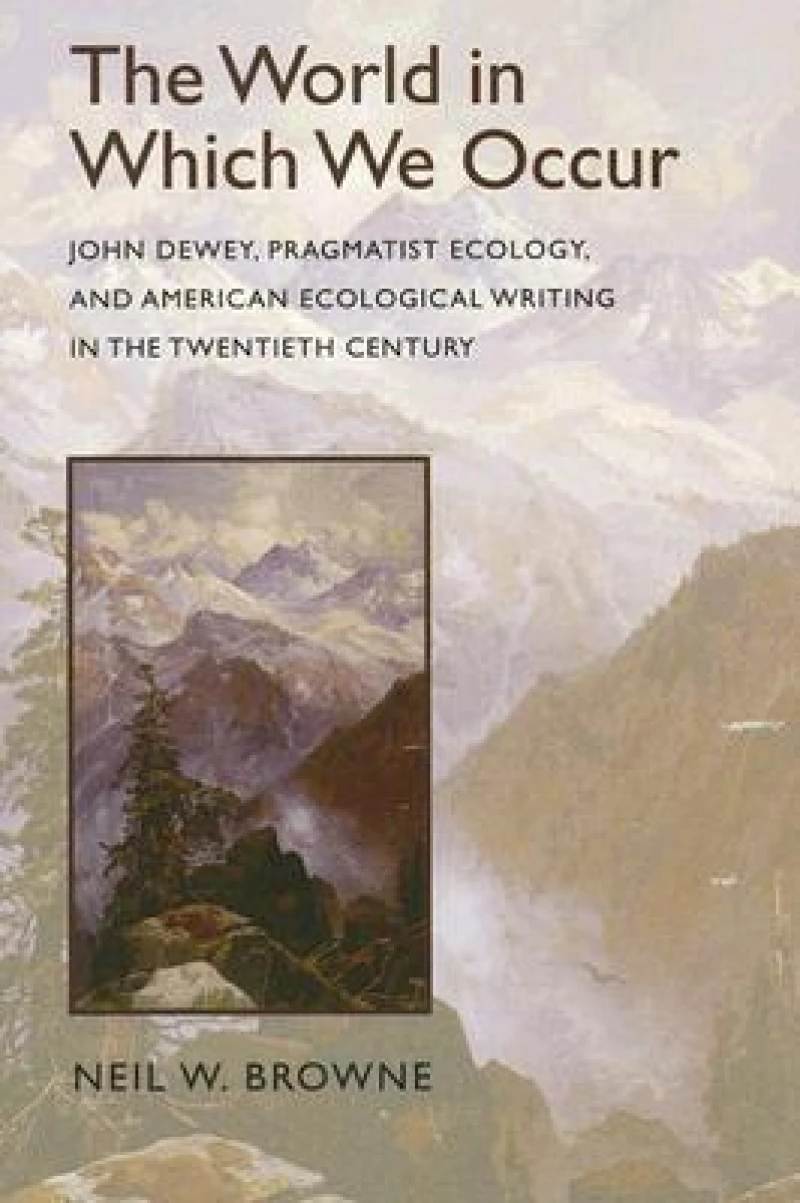
The World in Which We Occur : John Dewey, Pragmatist Ecology, and American Ecological Writing in the Twentieth Century
Book Details
Format
Hardback or Cased Book
ISBN-10
0817315810
ISBN-13
9780817315818
Publisher
The University of Alabama Press
Imprint
The University of Alabama Press
Country of Manufacture
US
Country of Publication
GB
Publication Date
Oct 31st, 2007
Print length
256 Pages
Weight
526 grams
Dimensions
23.40 x 18.30 x 2.20 cms
Product Classification:
Literary studies: c 1900 to c 2000Literary studies: from c 1900 -
Ksh 6,100.00
Temporarily out of stock, due soon
0 in stock
Delivery Location
Delivery fee: Select location
Secure
Quality
Fast
American philosopher John Dewey considered all human endeavors to be continuous with the natural world. This book insists on the primacy of the environment in aesthetic experience. It probes the work of a number of major American writers through the lens of Dewey's philosophy.
American philosopher John Dewey considered all human endeavors to be continuous with the natural world. In his writings, particularly Art as Experience (1934), Dewey insists on the primacy of the environment in aesthetic experience. Dewey''s conception of environment includes both the natural and the man-made. Neil Browne highlights this notion in order to define what he terms ""pragmatist ecology,"" a practice rooted in the interface of the cultural and the natural, which he finds to be a significant feature of some of the most important ecological writing of the last century. To fully understand human involvement in the natural world, Browne argues, disciplinary boundaries must be opened up. This is primarily important between the arts and science, with profound implications for the practice of democracy. The degradation of the physical environment and democratic decay, for Browne, are rooted in the same problem: our persistent belief that humans are somehow separate from their physical environment. Browne probes the work of a number of major American writers through the lens of Dewey''s philosophy. Among other texts, he examines John Muir''s ""My First Summer in the Sierra"" (1911); ""Sea of Cortez"" (1941) by John Steinbeck and Edward Ricketts; Rachel Carson''s three books about the sea, ""Under the Sea Wind"" (1941), ""The Sea Around Us"" (1951), and ""The Edge of the Sea"" (1955); John Haines'' ""The Stars, the Snow, the Fire"" (1989); Barry Lopez''s ""Arctic Dreams"" (1986); and Terry Tempest Williams'' ""Refuge"" (1991). Together, these texts - with their combinations of scientific observation and personal meditation - challenge the dichotomies to which we''ve become accustomed and affirm the values of a pragmatist ecology, one in which ecological and democratic values go hand in hand.
Get The World in Which We Occur by at the best price and quality guaranteed only at Werezi Africa's largest book ecommerce store. The book was published by The University of Alabama Press and it has pages.

