
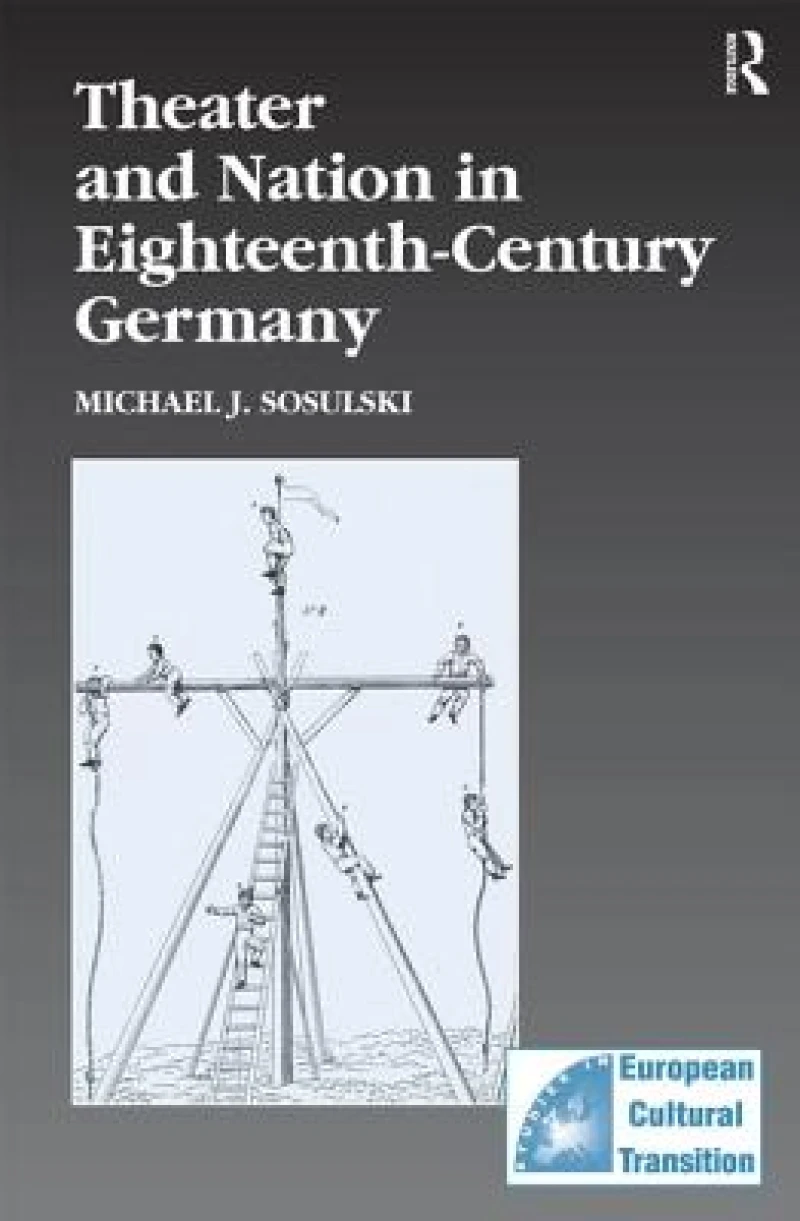
Theater and Nation in Eighteenth-Century Germany
Book Details
Format
Hardback or Cased Book
Book Series
Studies in European Cultural Transition
ISBN-10
0754637190
ISBN-13
9780754637196
Publisher
Taylor & Francis Ltd
Imprint
Routledge
Country of Manufacture
GB
Country of Publication
GB
Publication Date
May 28th, 2007
Print length
190 Pages
Weight
453 grams
Product Classification:
Theatre studiesLiterary studies: c 1500 to c 1800
Ksh 27,900.00
Werezi Extended Catalogue
0 in stock
Delivery Location
Delivery fee: Select location
Secure
Quality
Fast
In 1767, Hamburg chartered the first Deutsches Nationaltheater. Michael Sosulski connects the performance of body discipline by professional actors, soldiers, and schoolchildren to the growing interest in German national identity, long before Germany''s incorporation as a nation-state. Through the efforts of literary intellectuals and advocates, including G.E. Lessing and Friedrich Schiller, the Nationaltheater emerged as an ideal space in which to imagine the nation, because for Germans, nationality emerged as a performed identity.
In 1767, more than a century before Germany was incorporated as a modern nation-state, the city of Hamburg chartered the first Deutsches Nationaltheater. What can it have meant for a German playhouse to have been a national theater, and what did that imply about the way these theaters operated? Michael Sosulski contends that the idea of German nationhood not only existed prior to the Napoleonic Wars but was decisive in shaping cultural production in the last third of the eighteenth century, operating not on the level of popular consciousness but instead within representational practices and institutions. Grounding his study in a Foucauldian understanding of emergent technologies of the self, Sosulski connects the increasing performance of body discipline by professional actors, soldiers, and schoolchildren to the growing interest in German national identity. The idea of a German cultural nation gradually emerged as a conceptual force through the work of an influential series of literary intellectuals and advocates of a national theater, including G. E. Lessing and Friedrich Schiller. Sosulski combines fresh readings of canonical and lesser-known dramas, with analysis of eighteenth-century theories of nationhood and evolving acting theories, to show that the very lack of a strong national consciousness in the late eighteenth century actually spurred the emergence of the German Nationaltheater, which were conceived in the spirit of the Enlightenment as educational institutions. Since for Germans, nationality was a performed identity, theater emerged as an ideal space in which to imagine that nation.
Get Theater and Nation in Eighteenth-Century Germany by at the best price and quality guaranteed only at Werezi Africa's largest book ecommerce store. The book was published by Taylor & Francis Ltd and it has pages.

