
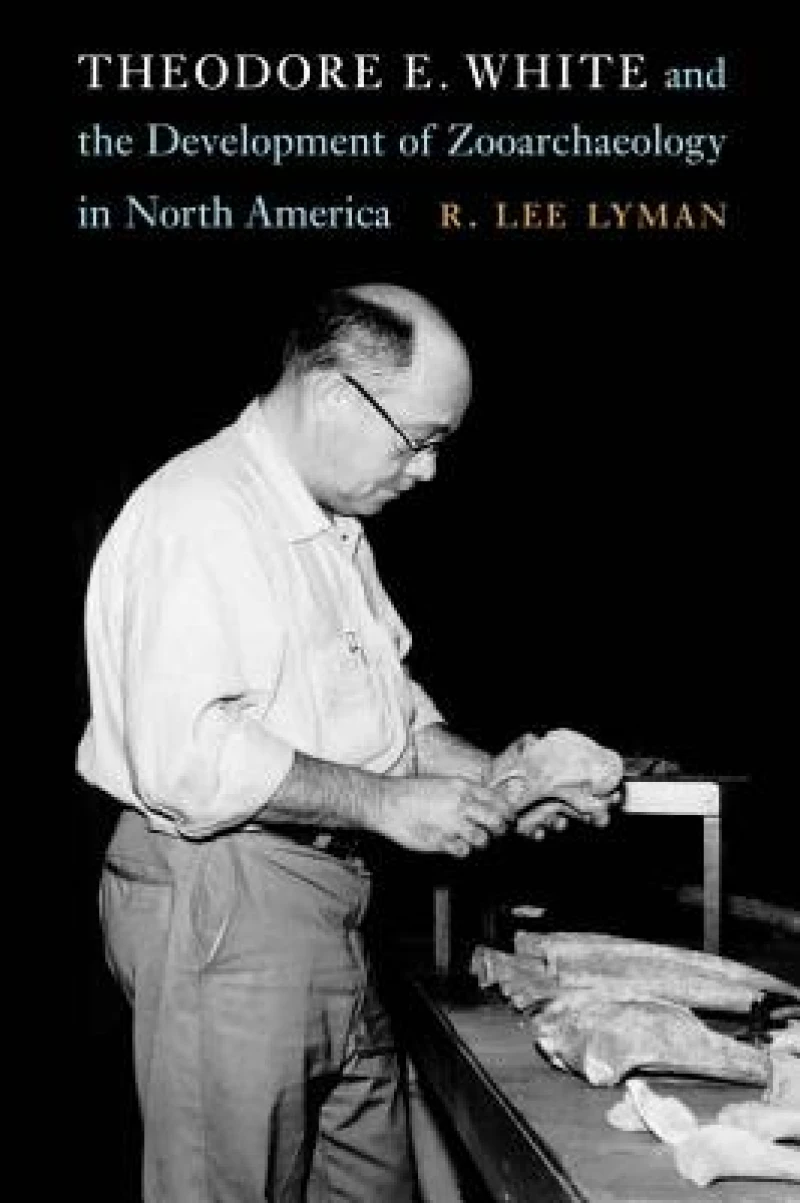
Theodore E. White and the Development of Zooarchaeology in North America
by
R. Lee Lyman
Book Details
Format
Hardback or Cased Book
Book Series
Critical Studies in the History of Anthropology
ISBN-10
0803285574
ISBN-13
9780803285576
Publisher
University of Nebraska Press
Imprint
University of Nebraska Press
Country of Manufacture
GB
Country of Publication
GB
Publication Date
Jul 1st, 2016
Print length
277 Pages
Product Classification:
Archaeological science, methodology & techniquesAnimals & society
Ksh 8,300.00
Werezi Extended Catalogue
0 in stock
Delivery Location
Delivery fee: Select location
Secure
Quality
Fast
Illuminates the career of Theodore E. White and his lasting contribution to a field that has largely ignored him in its history. R. Lee Lyman works to fill gaps in the historical record and revisits some of White’s analytical innovations from a modern perspective.
Theodore E. White and the Development of Zooarchaeology in North America illuminates the researcher and his lasting contribution to a field that has largely ignored him in its history. The few brief histories of North American zooarchaeology suggest that Paul W. Parmalee, John E. Guilday, Elizabeth S. Wing, and Stanley J. Olsen laid the foundation of the field. Only occasionally is Theodore White (1905–77) included, yet his research is instrumental for understanding the development of zooarchaeology in North America.
R. Lee Lyman works to fill these gaps in the historical record and revisits some of White’s analytical innovations from a modern perspective. A comparison of publications shows that not only were White’s zooarchaeological articles first in print in archaeological venues but that he was also, at least initially, more prolific than his contemporaries. While the other “founders” of the field were anthropologists, White was a paleontologist by training who studied long-extinct animals and their evolutionary histories. In working with remains of modern mammals, the typical paleontological research questions were off the table simply because the animals under study were too recent. And yet White demonstrated clearly that scholars could infer significant information about human behaviors and cultures. Lyman presents a biography of Theodore White as a scientist and a pioneer in the emerging field of modern anthropological zooarchaeology.
R. Lee Lyman works to fill these gaps in the historical record and revisits some of White’s analytical innovations from a modern perspective. A comparison of publications shows that not only were White’s zooarchaeological articles first in print in archaeological venues but that he was also, at least initially, more prolific than his contemporaries. While the other “founders” of the field were anthropologists, White was a paleontologist by training who studied long-extinct animals and their evolutionary histories. In working with remains of modern mammals, the typical paleontological research questions were off the table simply because the animals under study were too recent. And yet White demonstrated clearly that scholars could infer significant information about human behaviors and cultures. Lyman presents a biography of Theodore White as a scientist and a pioneer in the emerging field of modern anthropological zooarchaeology.
Get Theodore E. White and the Development of Zooarchaeology in North America by at the best price and quality guaranteed only at Werezi Africa's largest book ecommerce store. The book was published by University of Nebraska Press and it has pages.

