
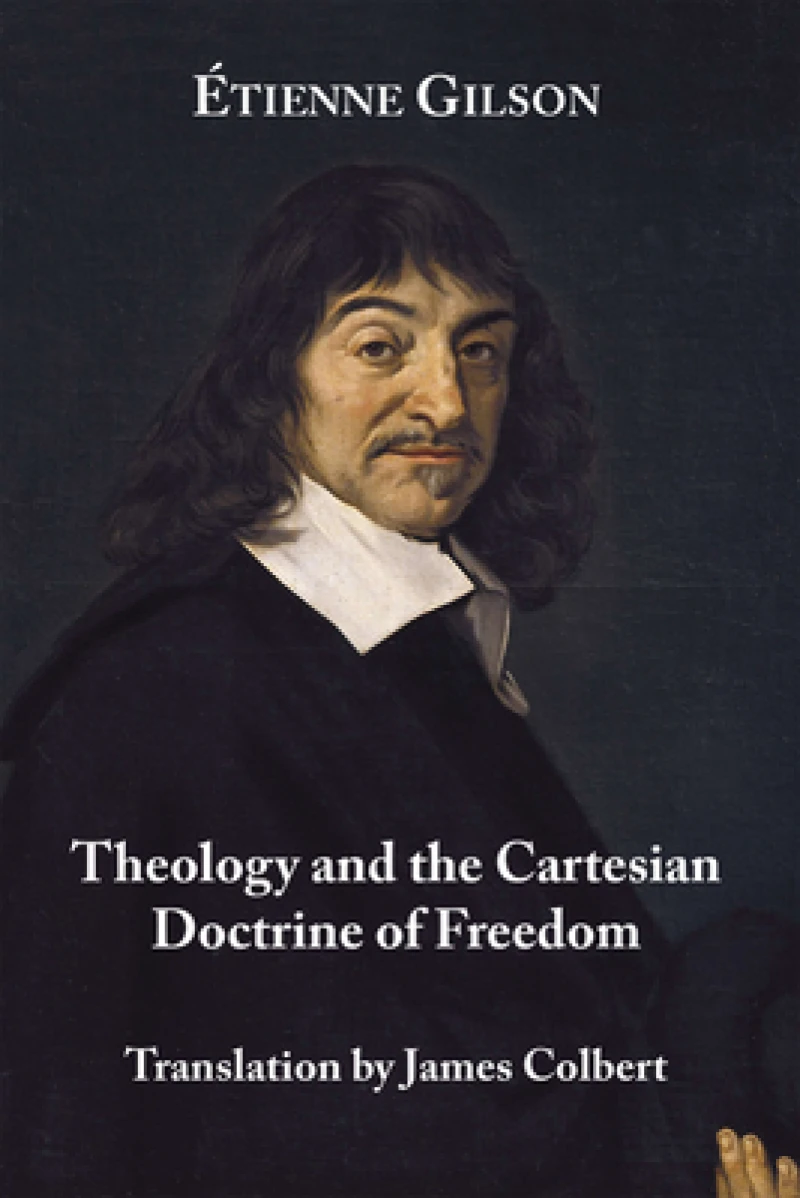
Theology and the Cartesian Doctrine of Freedom
Book Details
Format
Hardback or Cased Book
ISBN-10
158731858X
ISBN-13
9781587318580
Publisher
St Augustine's Press
Imprint
St Augustine's Press
Country of Manufacture
US
Country of Publication
GB
Publication Date
Apr 8th, 2019
Print length
336 Pages
Weight
646 grams
Dimensions
24.20 x 15.30 x 3.10 cms
Product Classification:
PhilosophyTheologyHistory of ideas
Ksh 6,250.00
Werezi Extended Catalogue
0 in stock
Delivery Location
Delivery fee: Select location
Secure
Quality
Fast
Theology and the Cartesian Doctrine of Freedom, now for the first time available in English, was Étienne Gilson’s doctoral thesis and part of a larger project to show the medieval roots of Descartes at a time when the very existence of medieval philosophy was often ignored. Young Descartes was sent to La Flèche, one of the Jesuits schools that offered a complete philosophical program, and Descartes would have had the same philosophical training as a Jesuit. There is some controversy about the exact dates of Descartes’s stay at La Flèche and consequently about his philosophy instructor. By Gilson’s calculations François Véron taught Descartes for three years. Véron eventually left the Jesuits to be free to engage in extraordinarily aggressive anti-Calvinist polemics. If anything, Véron’s overbearing manner may have contributed to Descartes antipathy toward Scholastic philosophy. (Whatever Descartes’s objections to its philosophy curriculum, later in life he recommended la Flèche as the best school in France.) Descartes,s great intellectual mission in life was not his mathematics but his physics, which was understood as a part of philosophy. We see him navigate the shoals of heated theological and religious strife in his attempt to articulate the metaphysical foundations (and in particular a philosophical vision of God) for his physics or theory of nature. As a layman, he always pleaded ignorance in technically theological matters. He presented himself as a loyal Catholic, quite sincerely in the portrait Gilson paints. Descartes certainly did not avoid controversial philosophical positions. For example, he held that God has created eternal truths rather than the latter being eternal participations in God’s essence, which seems to put in doubt the necessity of these truths. Descartes took sides in the great seventeenth-century debate between Thomists and Molinists on human freedom. Gilson presents a Descartes influenced personally and intellectually by the Augustinianism of the founder of the French Oratory, Cardinal Pierre de Bérulle, who encouraged Descartes in his intellectual quest to renovate European intellectual life. De Bérulle and his disciple, the theologian Guillaume Gibieuf, rather than Thomism and Scotism would have influenced Descartes. Still, we also meet a Descartes determined to have his Principles of Philosophy adopted as the textbook for the schools run by the Jesuits who had educated him. Indeed, Descartes is somewhat opportunistic in reinventing his theory of freedom to bring it closer to the Molinist doctrine held by the Jesuits. Alas, the Jesuits had their own textbooks. This is not Gilson’s last work on the development of Descartes’ thinking, but the book already shows the engaging, vivid historian of thought who would become world famous. As Gilson guides us through Descartes’ voluminous correspondence, the feelers he sends out through his friend Marin Mersenne, his attempts to make peace with the Jesuits, we feel we have lived in seventeenth-century French intellectual circles
Get Theology and the Cartesian Doctrine of Freedom by at the best price and quality guaranteed only at Werezi Africa's largest book ecommerce store. The book was published by St Augustine's Press and it has pages.

