
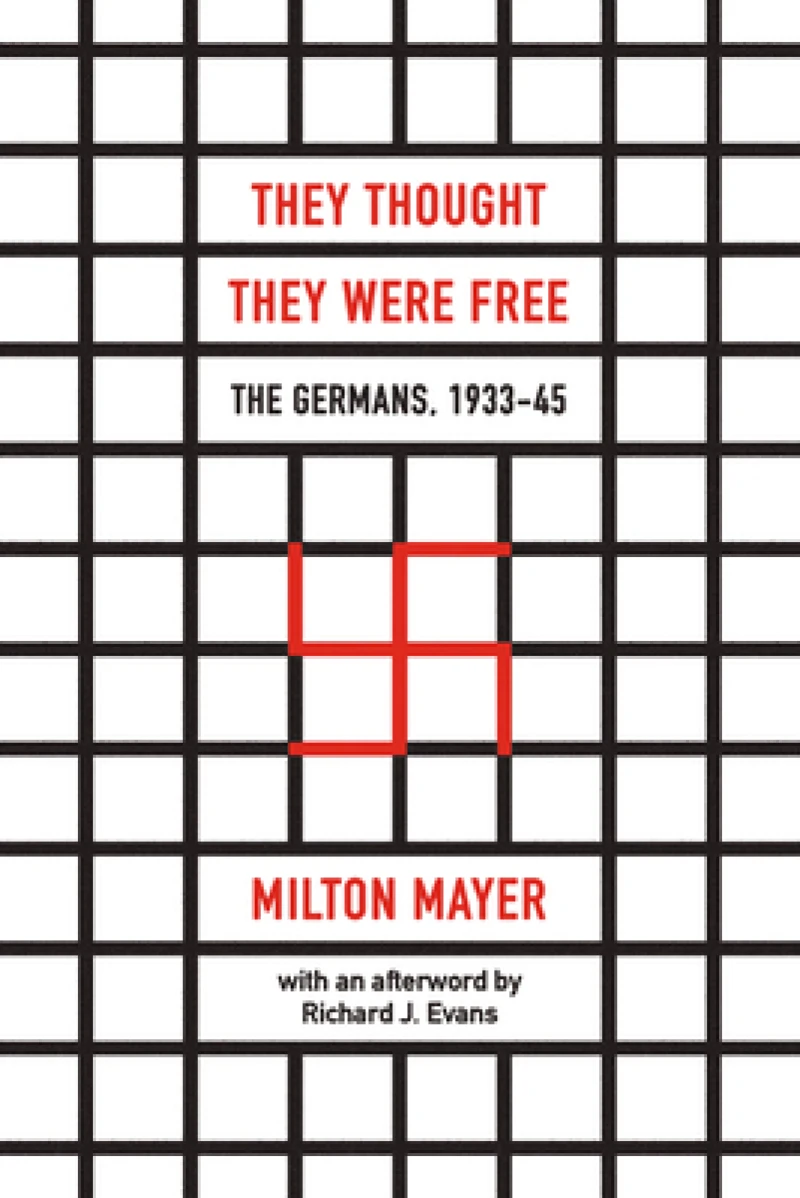
They Thought They Were Free – The Germans, 1933–45
Book Details
Format
Paperback / Softback
ISBN-10
022652583X
ISBN-13
9780226525839
Publisher
The University of Chicago Press
Imprint
University of Chicago Press
Country of Manufacture
US
Country of Publication
GB
Publication Date
Nov 28th, 2017
Print length
384 Pages
Weight
486 grams
Dimensions
14.00 x 21.40 x 2.10 cms
Product Classification:
History
Ksh 3,700.00
Werezi Extended Catalogue
Delivery in 14 days
8 copies in stock
Delivery Location
Delivery fee: Select location
Delivery in 14 days
Secure
Quality
Fast
How do people become acclimated to fascism? What leads them down the slippery slope from rational intentions to atrocious actions?and how does that slope get greased? Milton Mayers eloquent and provocative examination of the development of fascism among ten everyday Germans between 1933 and 1945 is still sobering?and more timely than ever. These ten men were average Germans who all became Nazis. But how? Mayer shows how the gradual habitation of people to a government that they do not feel they can predict, understand, or influence led to global catastrophe.
When this book was first published it received some attention from the critics but none at all from the public. Nazism was finished in the bunker in Berlin and its death warrant signed on the bench at Nuremberg. That's Milton Mayer, writing in a foreword to the 1966 edition of They Thought They Were Free. He's right about the critics: the book was a finalist for the National Book Award in 1956. General readers may have been slower to take notice, but over time they did what we've seen over decades is that any time people, across the political spectrum, start to feel that freedom is threatened, the book experiences a ripple of word-of-mouth interest. And that interest has never been more prominent or potent than what we've seen in the past year. Mayer, an American journalist of German descent, traveled to Germany in 1935 in attempt to secure an interview with Hitler. He failed, but what he saw in Berlin chilled him. He quickly determined that Hitler wasn't the person he needed to talk to after all. Nazism, he realized, truly was a mass movement; he needed to talk with the average German. He found ten, and his discussions with them of Nazism, the rise of the Reich, and mass complicity with evil became the backbone of this book, an indictment of the ordinary German that is all the more powerful for its refusal to let the rest of us pretend that our moment, our society, our country are fundamentally immune. A new foreword to this edition by eminent historian of the Reich Richard J. Evans puts the book in historical and contemporary context. We live in an age of fervid politics and hyperbolic rhetoric. They Thought They Were Free cuts through that, revealing instead the slow, quiet accretions of change, complicity, and abdication of moral authority that quietly mark the rise of evil.
The classic, chilling account of how fascism took over Germanyand of the constant danger of complacency
When this book was first published it received some attention from the critics but none at all from the public. Nazism was finished in the bunker in Berlin and its death warrant signed on the bench at Nuremberg.
Thats Milton Mayer, writing in a foreword to the 1966 edition of They Thought They Were Free. Hes right about the critics: the book was a finalist for the National Book Award in 1956. General readers may have been slower to take notice, but over time they didwhat weve seen over decades is that any time people, across the political spectrum, start to feel that freedom is threatened, the book experiences a ripple of word-of-mouth interest.
They Thought They Were Free is an eloquent and provocative examination of the development of fascism in Germany. Mayers book is a study of ten Germans and their lives from 1933-45, based on interviews he conducted after the war when he lived in Germany. Mayer had a position as a research professor at the University of Frankfurt and lived in a nearby small Hessian town which he disguised with the name Kronenberg. These ten men were not men of distinction, Mayer noted, but they had been members of the Nazi Party; Mayer wanted to discover what had made them Nazis. His discussions with them of Nazism, the rise of the Reich, and mass complicity with evil became the backbone of this book, an indictment of the ordinary German that is all the more powerful for its refusal to let the rest of us pretend that our moment, our society, our country are fundamentally immune.
A new foreword to this edition by eminent historian of the Reich Richard J. Evans puts the book in historical and contemporary context. We live in an age of fervid politics and hyperbolic rhetoric. They Thought They Were Free cuts through that, revealing instead the slow, quiet accretions of change, complicity, and abdication of moral authority that quietly mark the rise of evil.
When this book was first published it received some attention from the critics but none at all from the public. Nazism was finished in the bunker in Berlin and its death warrant signed on the bench at Nuremberg.
Thats Milton Mayer, writing in a foreword to the 1966 edition of They Thought They Were Free. Hes right about the critics: the book was a finalist for the National Book Award in 1956. General readers may have been slower to take notice, but over time they didwhat weve seen over decades is that any time people, across the political spectrum, start to feel that freedom is threatened, the book experiences a ripple of word-of-mouth interest.
They Thought They Were Free is an eloquent and provocative examination of the development of fascism in Germany. Mayers book is a study of ten Germans and their lives from 1933-45, based on interviews he conducted after the war when he lived in Germany. Mayer had a position as a research professor at the University of Frankfurt and lived in a nearby small Hessian town which he disguised with the name Kronenberg. These ten men were not men of distinction, Mayer noted, but they had been members of the Nazi Party; Mayer wanted to discover what had made them Nazis. His discussions with them of Nazism, the rise of the Reich, and mass complicity with evil became the backbone of this book, an indictment of the ordinary German that is all the more powerful for its refusal to let the rest of us pretend that our moment, our society, our country are fundamentally immune.
A new foreword to this edition by eminent historian of the Reich Richard J. Evans puts the book in historical and contemporary context. We live in an age of fervid politics and hyperbolic rhetoric. They Thought They Were Free cuts through that, revealing instead the slow, quiet accretions of change, complicity, and abdication of moral authority that quietly mark the rise of evil.
Get They Thought They Were Free – The Germans, 1933–45 by at the best price and quality guaranteed only at Werezi Africa's largest book ecommerce store. The book was published by The University of Chicago Press and it has pages.

