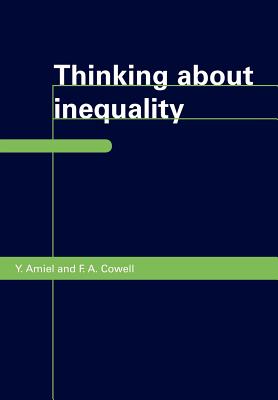
Thinking about Inequality : Personal Judgment and Income Distributions
Book Details
Format
Paperback / softback
ISBN-10
0521466962
ISBN-13
9780521466967
Publisher
Cambridge University Press
Imprint
Cambridge University Press
Country of Manufacture
GB
Country of Publication
GB
Publication Date
Dec 9th, 1999
Print length
196 Pages
Weight
430 grams
Dimensions
24.40 x 17.00 x 1.10 cms
Product Classification:
Economic theory & philosophyEconomic theory and philosophyMacroeconomics
KSh 7,600.00
Currently unavailable
0 in stock
Delivery Location
Delivery fee: Select location
Secure
Quality
Fast
This 1999 book offers a non-technical analysis of inequality and income distribution. It considers the way that broad ideas about the meaning of inequality are translated into specific statistical tools and with the appropriateness of the assumptions used in the literature.
What is inequality? In the late 1990s there was an explosion of interest in the subject that yielded a substantial body of formal tools and results for income-distribution analysis. Nearly all of this is founded on a small set of core assumptions - such as the Principle of Transfers, scale independence, the population principle? - that are used to give meaning to specific concepts of inequality measurement, inequality ranking and, indeed, to inequality itself. But does the standard axiomatic structure coincide with public perceptions of inequality? Or is the economist's concept of inequality a thing apart, perpetuated through serial brainwashing in the way the subject is studied and taught? In this 1999 book, Amiel and Cowell examine the evidence from a large international questionnaire experiment using student respondents. Along with basic 'cake-sharing' issues, related questions involving social-welfare rankings, the relationship between inequality and overall income growth and the meaning of poverty comparisons are considered.
Get Thinking about Inequality by Frank Cowell, Yoram Amiel at the best price and quality guaranteed only at Werezi Africa's largest book ecommerce store. The book was published by Cambridge University Press and it has 196 pages.
Customers Who Bought This Also Bought

Economics Book
KSh 4,250.00
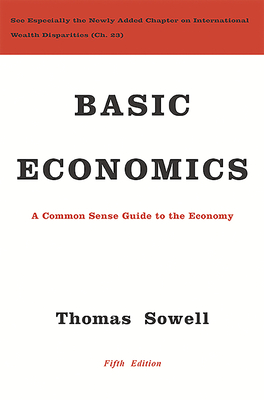
Basic Economics
KSh 6,850.00

The Essential Keynes
KSh 2,350.00
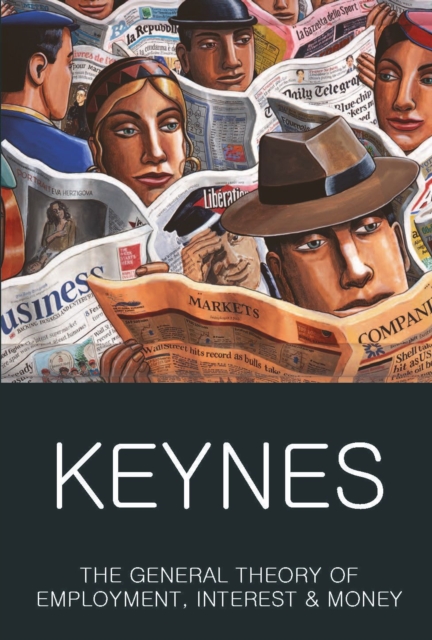
General Theory of Employment, Interest and Money
KSh 1,400.00
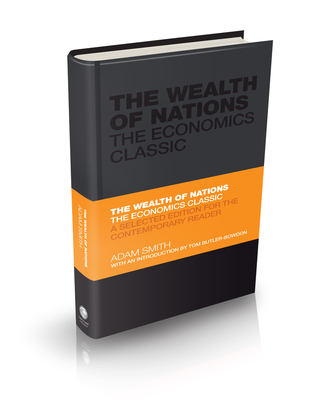
The Wealth of Nations – The Economics Classic – A Selected Edition for the Contemporary Reader
KSh 2,350.00

Wealth of Nations
KSh 1,800.00
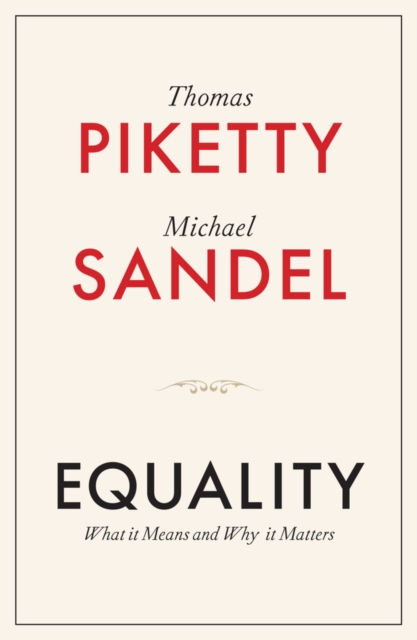
Equality
KSh 2,150.00
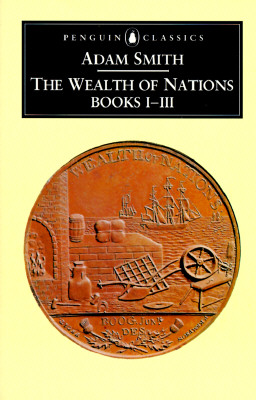
The Wealth of Nations
KSh 2,350.00
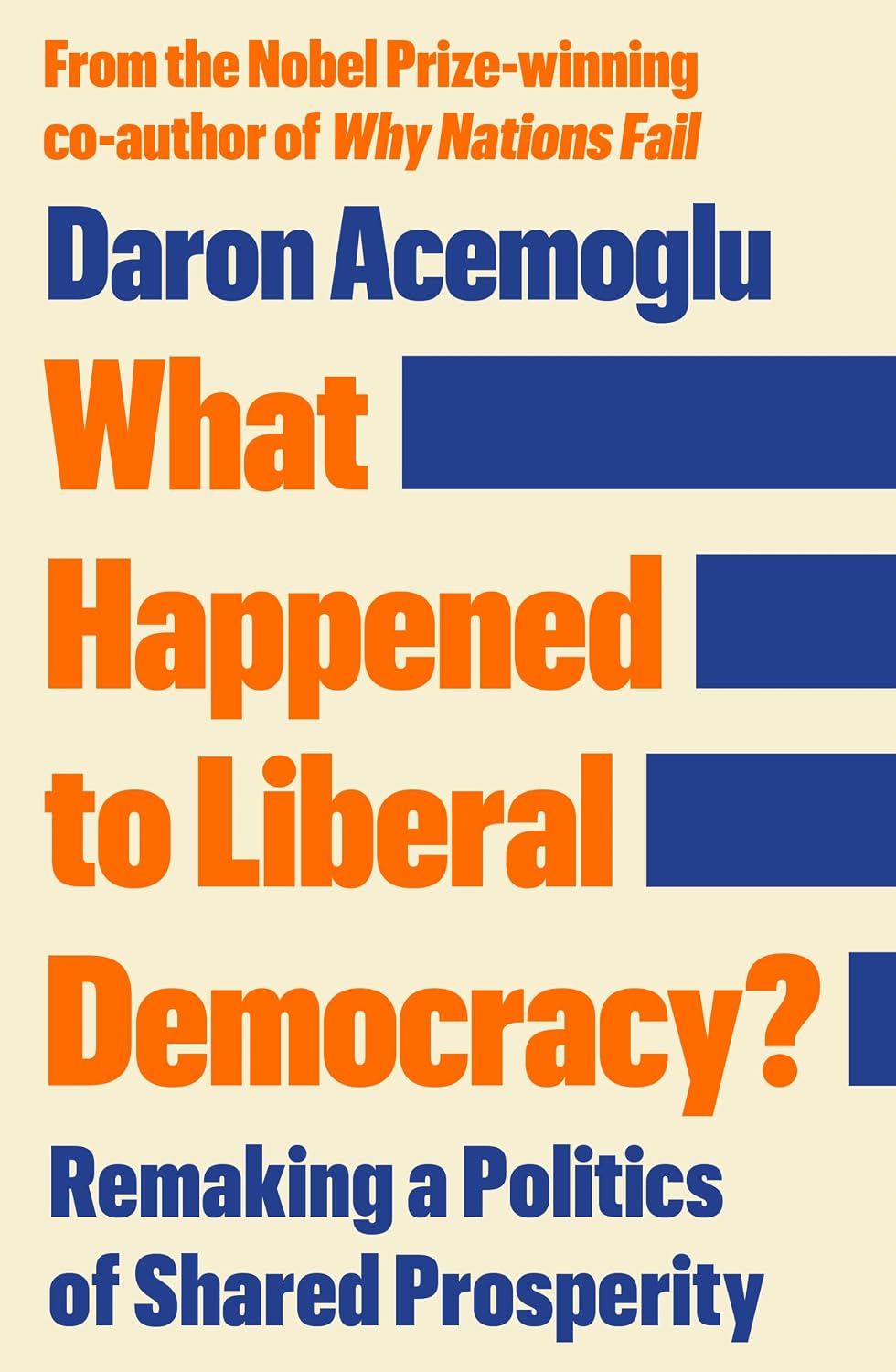
What Happened to Liberal Democracy?
KSh 3,050.00

Good Economics for Hard Times
KSh 2,350.00
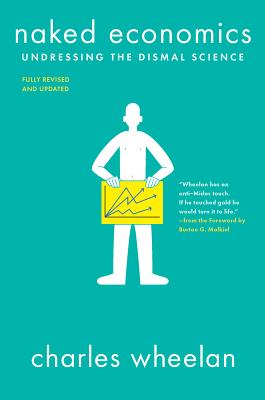
Naked Economics – Undressing the Dismal Science
KSh 2,550.00
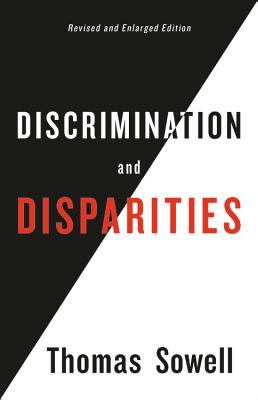
Discrimination and Disparities
KSh 5,400.00