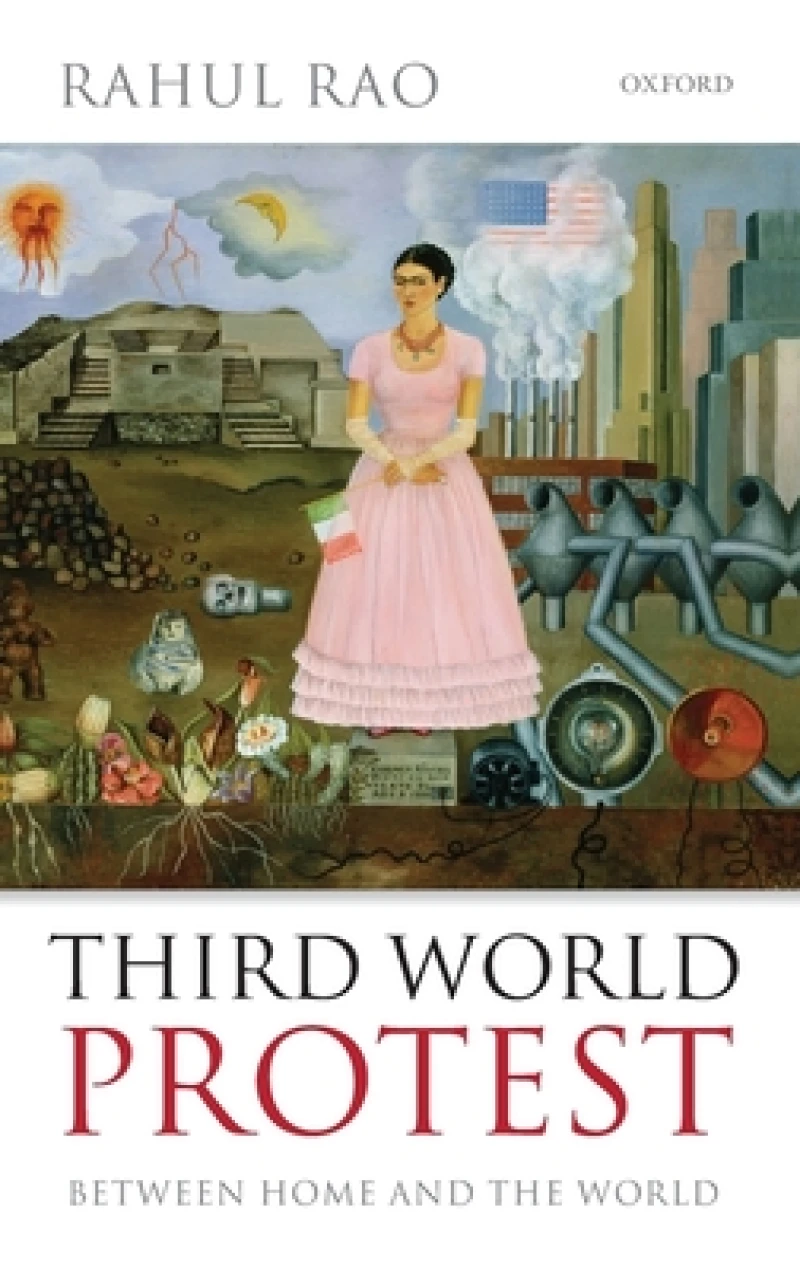
Third World Protest : Between Home and the World
by
Rahul Rao
Book Details
Format
Hardback or Cased Book
ISBN-10
0199560374
ISBN-13
9780199560370
Publisher
Oxford University Press
Imprint
Oxford University Press
Country of Manufacture
GB
Country of Publication
GB
Publication Date
Jul 8th, 2010
Print length
288 Pages
Weight
582 grams
Dimensions
16.60 x 24.10 x 2.30 cms
Product Classification:
Social & political philosophyPolitical science & theoryInternational relations
Ksh 21,350.00
Temporarily out of stock, due soon
0 in stock
Delivery Location
Delivery fee: Select location
Secure
Quality
Fast
Journeying through the writings and activism of anti-colonial thinkers, anti-globalization protesters, and queer activists, Rao demonstrates that important currents of Third World protest have long battled against both the international and the domestic, in a manner that combines nationalist and cosmopolitan sensibilities.
If boundaries protect us from threats, how should we think about the boundaries of states in a world where threats to human rights emanate from both outside the state and the state itself? Arguing that attitudes towards boundaries are premised on assumptions about the locus of threats to vital interests, Rahul Rao digs beneath two major normative orientations towards boundaries-cosmopolitanism and nationalism-which structure thinking on questions of public policy and identity. Insofar as the Third World is concerned, hegemonic versions of both orientations are underpinned by simplistic imageries of threat. In the cosmopolitan gaze, political and economic crises in the Third World are attributed mainly to factors internal to the Third World state with the international playing the role of heroic saviour. In Third World nationalist imagery, the international is portrayed as a realm of neo-imperialist predation from which the domestic has to be secured. Both images capture widely held intuitions about the sources of threats to human rights, but each by itself provides a resolutely partial inventory of these threats. By juxtaposing critical accounts of both discourses, Rao argues that protest sensibilities in the current conjuncture must be critical of hegemonic variants of both cosmopolitanism and nationalism. The second half of the book illustrates what such a critique might look like. Journeying through the writings of James Joyce, Rabindranath Tagore, Edward Said and Frantz Fanon, the activism of ''anti-globalisation'' protesters, and the dilemmas of queer rights activists, Rao demonstrates that important currents of Third World protest have long battled against both the international and the domestic, in a manner that combines nationalist and cosmopolitan sensibilities.
Get Third World Protest by at the best price and quality guaranteed only at Werezi Africa's largest book ecommerce store. The book was published by Oxford University Press and it has pages.