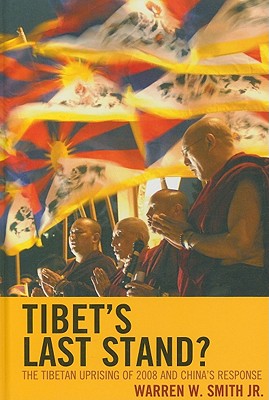
Tibet''s Last Stand? : The Tibetan Uprising of 2008 and China's Response
Book Details
Format
Hardback
ISBN-10
0742566854
ISBN-13
9780742566859
Publisher
Bloomsbury Publishing Plc
Imprint
Rowman & Littlefield
Country of Manufacture
GB
Country of Publication
GB
Publication Date
Dec 16th, 2009
Print length
320 Pages
Weight
630 grams
Dimensions
23.70 x 15.90 x 2.40 cms
KSh 9,900.00
Currently unavailable
0 in stock
Delivery Location
Delivery fee: Select location
Secure
Quality
Fast
This deeply knowledgeable book offers the first sustained analysis of the 2008 uprising in Tibet, which revealed much about Tibetan nationalism and even more about Chinese nationalism. Retracing the complex history between China and Tibet, noted expert Warren W. Smith Jr. describes the uprising itself and explores its broader significance for Chinese-Tibetan relations. He sharply critiques China's use of heavy-handed propaganda to recast the uprising and obscure its origins and significance. The book convincingly shows that far from becoming more lenient in response to Tibetan discontent, China has determined to eradicate Tibetan opposition internally and coerce the international community to conform to China's version of Tibetan history and reality.
Get Tibet''s Last Stand? by Warren W. Smith Jr. at the best price and quality guaranteed only at Werezi Africa's largest book ecommerce store. The book was published by Bloomsbury Publishing Plc and it has 320 pages.
Customers Who Bought This Also Bought

From Third World to First
KSh 3,200.00

Breakneck
KSh 4,500.00

India After Gandhi
KSh 4,850.00

Anarchy
KSh 2,700.00

On China
KSh 3,400.00

Apostles of Development
KSh 5,600.00

Shattered Lands
KSh 2,000.00

Indira Gandhi and the Years that Transformed India
KSh 5,050.00

India: A Wounded Civilization
KSh 2,000.00

Shattered Lands
KSh 3,200.00

Games without Rules
KSh 2,900.00

Ghost Nation
KSh 3,950.00