
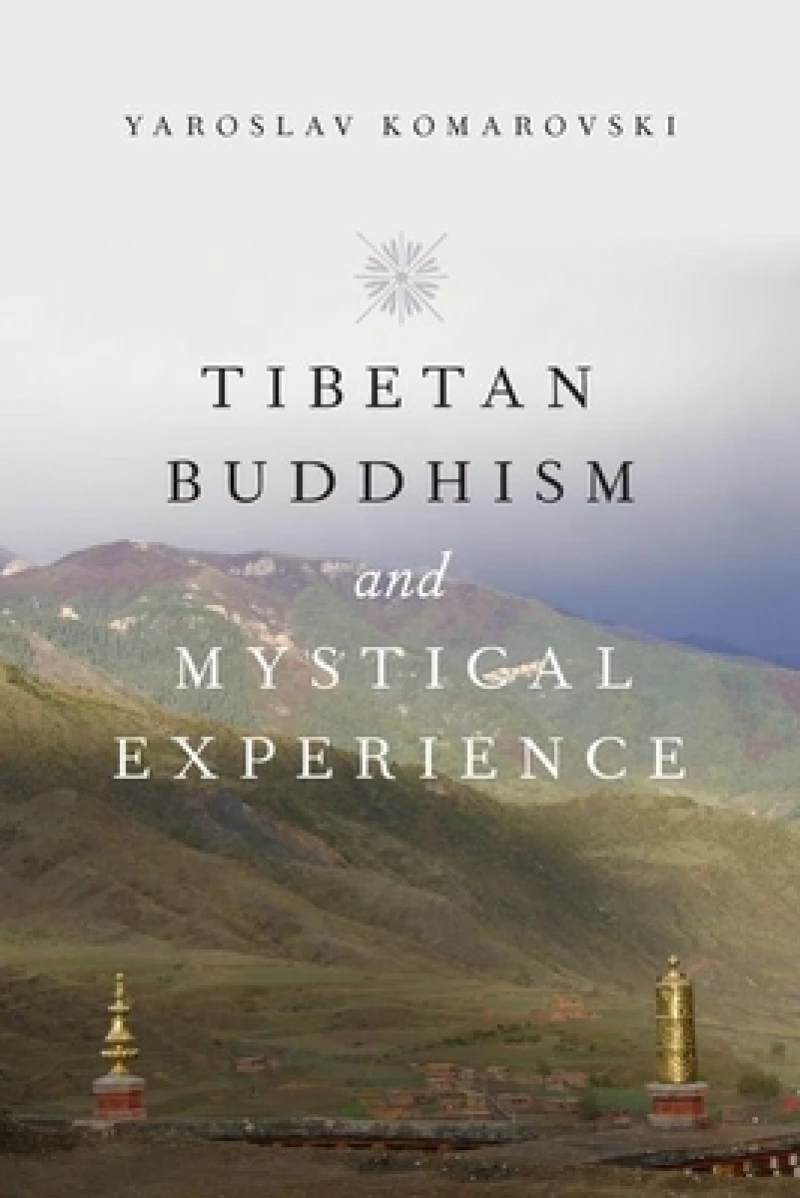
Tibetan Buddhism and Mystical Experience
Book Details
Format
Hardback or Cased Book
ISBN-10
019024495X
ISBN-13
9780190244958
Publisher
Oxford University Press Inc
Imprint
Oxford University Press Inc
Country of Manufacture
US
Country of Publication
GB
Publication Date
Jul 16th, 2015
Print length
304 Pages
Weight
533 grams
Dimensions
14.50 x 21.80 x 2.30 cms
Product Classification:
Philosophy of religionTibetan BuddhismMysticism
Ksh 18,450.00
Manufactured on Demand
0 in stock
Delivery Location
Delivery fee: Select location
Secure
Quality
Fast
This book argues that the Tibetan Buddhist interpretation of the realization of ultimate reality both resembles and challenges contemporary interpretations of unmediated mystical experience.
In this book, Yaroslav Komarovski argues that the Tibetan Buddhist interpretations of the realization of ultimate reality both contribute to and challenge contemporary interpretations of unmediated mystical experience. The model used by the majority of Tibetan Buddhist thinkers states that the realization of ultimate reality, while unmediated during its actual occurrence, is necessarily filtered and mediated by the conditioning contemplative processes leading to it, and Komarovski argues that therefore, in order to understand this mystical experience, one must focus on these processes, rather than on the experience itself. Komarovski also provides an in-depth comparison of seminal Tibetan Geluk thinker Tsongkhapa and his major Sakya critic Gorampa''s accounts of the realization of ultimate reality, demonstrating that the differences between these two interpretations lie primarily in their conflicting descriptions of the compatible conditioning processes that lead to this realization. Komarovski maintains that Tsongkhapa and Gorampa''s views are virtually irreconcilable, but demonstrates that the differing processes outlined by these two thinkers are equally effective in terms of actually attaining the realization of ultimate reality. Tibetan Buddhism and Mystical Experience speaks to the plurality of mystical experience, perhaps even suggesting that the diversity of mystical experience is one of its primary features.
Get Tibetan Buddhism and Mystical Experience by at the best price and quality guaranteed only at Werezi Africa's largest book ecommerce store. The book was published by Oxford University Press Inc and it has pages.

